1 hr ago
NCERT’s 2026 Textbooks Aim to Decolonise Indian Education

NCERT is preparing new textbooks for 2026.
The books will include more ideas and discoveries from India’s intellectual history.
This includes mathematics, astronomy, medicine, architecture, music and environmental knowledge.
A Class 9 mathematics book will explain the history of zero and place value.
It will mention thinkers such as Brahmagupta and Baudhayana.
Social science books will discuss historical ideas about society, leadership and good governance.
They will also teach ideas such as Vasudhaiva Kutumbakam, which means the world is one family.
NCERT says the goal is not to reject all outside ideas or praise the past without question.
Instead, students should understand India’s contributions and think critically about how to use that knowledge in the future.

NCERT Director Dinesh Prasad Saklani says the 2026 textbooks will integrate Indian Knowledge Systems across subjects.
The curriculum aims to change how students understand India, rather than merely adding Indian names or chapters.
Class 9 mathematics introduces the history of zero, place value, Vedanga Jyotisha, Brahmagupta and Baudhayana.
Social science lessons discuss Varna and Jati historically, along with Rajdharma, Kautilya and ethical governance.
The textbooks include concepts such as Vasudhaiva Kutumbakam and Panchamahabhutas while saying India’s past should not be glorified uncritically.
- Who
- The National Council of Educational Research and Training and its Director, Prof Dinesh Prasad Saklani.
- What
- NCERT is introducing Indian Knowledge Systems into its 2026 textbooks as part of a broader effort to change how India is taught.
- Where
- In NCERT textbooks and classrooms in India.
- When
- The changes are discussed in an interview published September 4, 2026, with the textbooks planned for 2026.
- Why
- NCERT says students should understand India’s intellectual traditions, contributions and history through a broader lens and develop confidence to carry that knowledge forward.
Supporters of the Curriculum Shift
Caution About the Curriculum Shift
Purpose of decolonisation
Supporters of the Curriculum Shift
NCERT says the textbooks should move beyond external or Western frameworks and place Indian intellectual traditions within mainstream knowledge.
Caution About the Curriculum Shift
The article notes that the social science changes are likely to generate debate, particularly over the historical treatment of Varna and Jati.
Treatment of India’s past
Supporters of the Curriculum Shift
Supporters see the inclusion of Indian mathematical, astronomical, political and environmental traditions as a way to build intellectual self-confidence.
Caution About the Curriculum Shift
NCERT itself cautions that the aim is not to replace one civilisational lens with another or glorify the past uncritically.
Key facts
- Institution
- National Council of Educational Research and Training (NCERT)
- Director quoted
- Prof Dinesh Prasad Saklani
- Textbook timeline
- New textbooks discussed for 2026
- Curricular framework
- Indian Knowledge Systems under the National Education Policy
- Mathematics example
- Class 9 Ganita Manjari covers zero, place value, Vedanga Jyotisha, Brahmagupta and Baudhayana
- Social science themes
- Varna and Jati, Rajdharma, Kautilya, justice and ethical governance
- Additional concepts
- Vasudhaiva Kutumbakam and Panchamahabhutas
Quotes
Prof Dinesh Prasad Saklani
Director of the National Council of Educational Research and Training.
“It means introducing children to Baudhayana’s mathematical traditions, Brahmagupta’s work on numbers, India’s astronomical knowledge, its architectural and engineering achievements, and its understanding of sound, language, nature and the environment.”
 news18.com
“If children do not know the ideas, discoveries and traditions produced by their own civilisation, they cannot develop a complete sense of its place in history.”
news18.com
Sources
Related news
Angmo Urges Government to Treat Education Protests as Wake-Up Call

Two Gen Zs, One Bharat: Author Urges Rooting in Hindutva
Will July 2026 protests and Satluj ban reach school textbooks?
Search for Indianness needs open sky, not parochial Indian theory

Governor Calls On Youth To Blend Technology, Heritage

How Foreign Rule and Institutions Reshaped Bharatiya Cultural Life
SRM University-AP Celebrates Teachers’ Influence and Honors Faculty
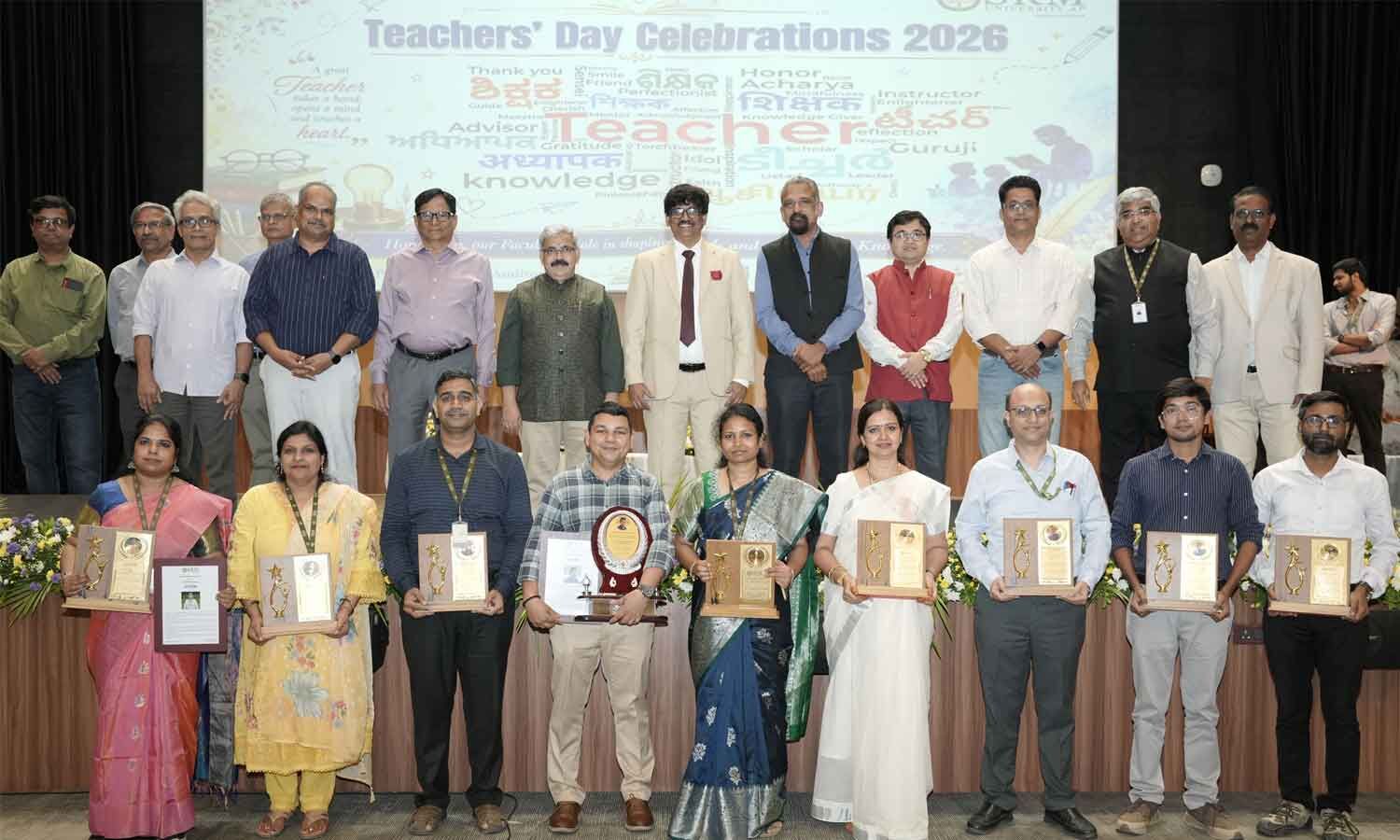
SRM University-AP Honours Outstanding Educators on Teachers’ Day

Lodha Urges Schools to Prioritize Welfare, Skills and Drug Prevention