Archive · 4 Oct 2026
Kim Oversees North Korean Hypersonic Missile Drill, Defends Deterrent

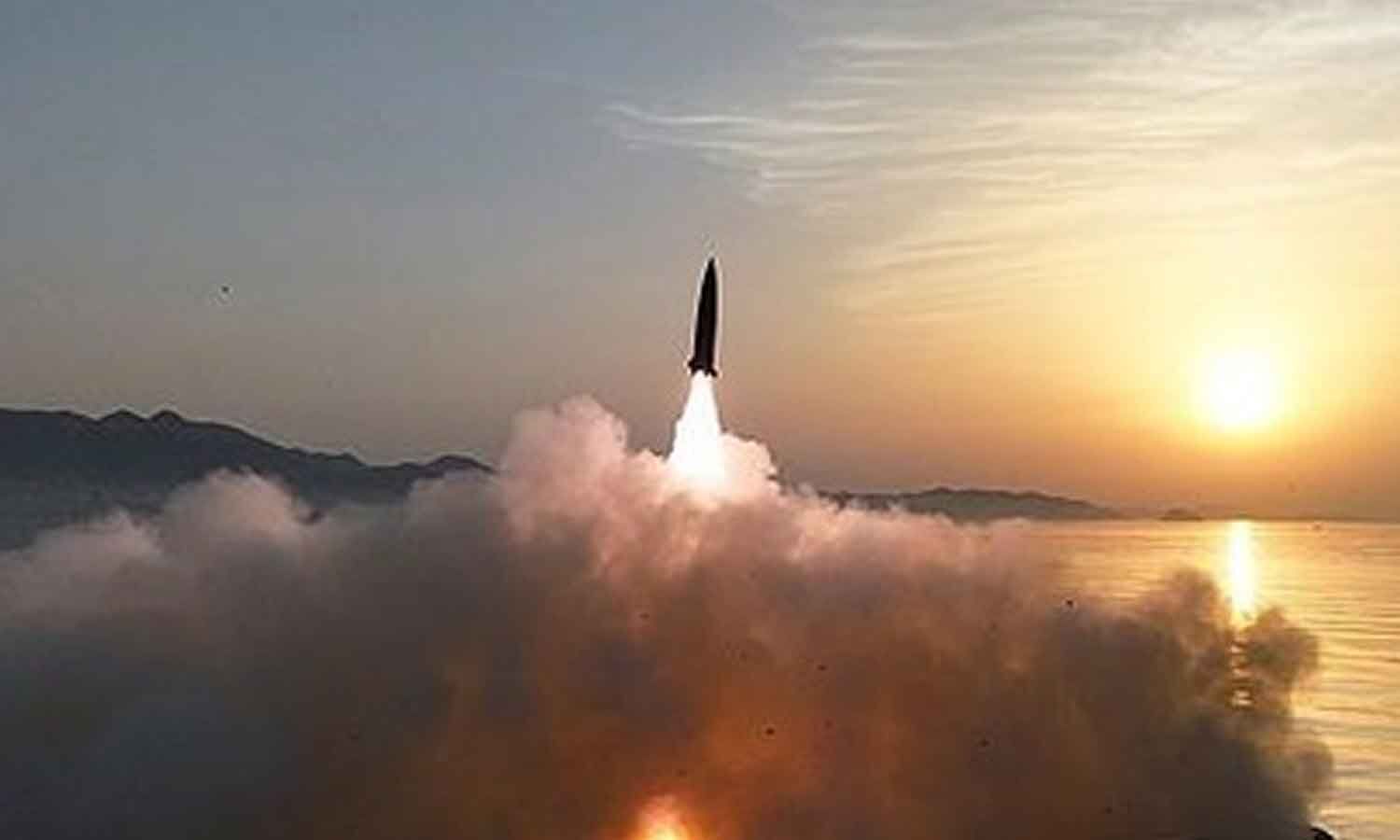
North Korea said it launched a missile on Saturday while leader Kim Jong Un watched.
Its state media said the missile travelled about 1,000 kilometres to a target in the sea.
South Korea said it detected the launch and estimated the missile flew more than 700 kilometres.
North Korea said the drill trained its missile troops and tested its weapons system.
Kim said the country should keep strengthening its weapons and nuclear deterrent.
Experts suggested the missile might be a Hwasong-16 Na, but that has not been confirmed.
North Korea said South Korea and Japan failed to track the missile, while South Korea said it detected and tracked it.
The launch came during a dispute over a landmine blast that injured South Korean soldiers.
South Korea blamed North Korea, which denied responsibility.

North Korean state media said Kim Jong Un oversaw an intermediate-range missile drill launched from eastern North Korea on Saturday.
KCNA said the missile struck a target about 1,000 kilometres away; South Korea assessed that it flew more than 700 kilometres.
North Korea said the drill trained troops operating a hypersonic weapon system and assessed the reliability, efficiency and mobility of its deterrent.
Kim said North Korea should continue strengthening its strategic offensive weapons and nuclear war deterrent; experts suggested the missile could be a Hwasong-16 Na, but this was not confirmed.
The launch came amid a dispute over a DMZ landmine blast that injured South Korean soldiers; South Korea blamed North Korea, which denied responsibility.
- Who
- North Korea conducted the drill; state media said Kim Jong Un oversaw it.
- What
- An intermediate-range strategic missile drill described by North Korea as involving a hypersonic weapon system.
- When
- The launch took place on Saturday; KCNA reported it on Sunday, October 4.
- Where
- The missile was launched from eastern North Korea toward waters off its east coast.
- Why
- North Korea said the drill trained missile troops and assessed its deterrent; Kim said strengthening the nuclear war deterrent was important for national security.
South Korean Account
North Korean Account
Missile tracking
South Korean Account
South Korea's military said it detected the launch and assessed the missile flew more than 700 kilometres. Its Defence Ministry said it closely monitored preparations and tracked the missile immediately after liftoff.
North Korean Account
Kim Yo Jong said South Korea and Japan failed to track the missile because its alleged wave-like trajectory exposed limitations in their tracking capabilities. KCNA said it reached a target about 1,000 kilometres away.
Landmine blast responsibility
South Korean Account
South Korea blamed North Korea for the mines, described the blast as a violation of the armistice, and demanded an apology and responsible measures.
North Korean Account
North Korea denied responsibility. Kim Yo Jong called Seoul's accusation groundless and said North Korea had not deliberately laid mines targeting South Korean troops.
- Launch timing
- Saturday; KCNA described the firing drill as taking place at dawn.
- Reported distance
- KCNA said the missile hit a target about 1,000 kilometres away; South Korea assessed its flight at more than 700 kilometres.
- Launch area
- Eastern North Korea; South Korea's military identified the Wonsan area.
- North Korea's stated purpose
- Train missile troops and assess the reliability, efficiency and mobility of the country's deterrent.
- Possible missile type
- Experts raised the possibility it was a Hwasong-16 Na; the identification was not confirmed.
- Tracking dispute
- Kim Yo Jong said South Korea and Japan failed to track the missile; South Korea's Defence Ministry said it detected and tracked it after liftoff.
- Testing this year
- North Korea had carried out more than 10 missile tests this year.
- DMZ landmine blast
- The blast injured South Korean soldiers. South Korea blamed North Korea, which denied responsibility.