4 days ago
Bernstein warns government support may mask India’s economic weakness
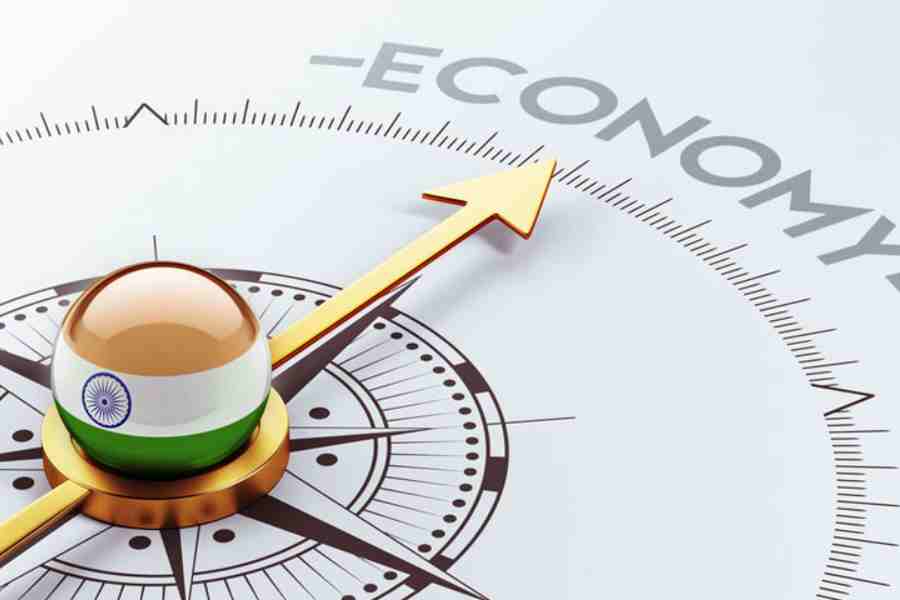
Bernstein is worried that India’s economy may look stronger than it really is.
It says government subsidies and other financial support have helped people and companies spend more money.
For example, fuel-related support transferred about $10 billion-$12 billion to consumers.
GST cuts also gave consumers about $20 billion to spend.
This helped company sales grow, but profits grew more slowly.
Bernstein says some companies benefited from selling more products rather than from being able to charge higher prices.
It also points to manufacturing incentives and welfare payments as sources of support.
The brokerage warns that these boosts may not last forever.
A domestic analyst disagrees with the gloomy interpretation and says government and central-bank actions have made the economy more resilient.

Bernstein described India’s market as a “distortion economy,” warning that government support may obscure structural weaknesses.
Oil company losses and government subsidies transferred an estimated $10 billion-$12 billion to consumers, supporting wider spending.
GST cuts put about $20 billion into consumers’ hands, while NSE 200 revenues rose over 12% but profits grew only 7%-8%.
Bernstein said production-linked incentives, welfare payments and liquidity were also supporting manufacturing, rural demand and corporate activity.
Domestic analyst Sandipan Roy said government and central-bank interventions had strengthened resilience and that India’s equity market had broad growth drivers.
- Who
- Global brokerage Bernstein, analysts Venugopal Garre and Nikhil Arela, and domestic analyst Sandipan Roy of Motilal Oswal Private Wealth.
- What
- Bernstein warned that subsidies, fiscal measures, incentives and liquidity may be masking underlying economic weakness and inflating company valuations.
- Where
- India.
- When
- The report discussed the June quarter and first-quarter performance; production-linked incentives have been disbursed since FY23, and GST cuts occurred in 2025.
- Why
- Bernstein said temporary policy support should not be mistaken for lasting productivity, income or demand growth, while domestic analysts said interventions had strengthened resilience.
Bernstein’s caution
Domestic resilience view
What is driving economic strength?
Bernstein’s caution
Bernstein said subsidies, fiscal support, welfare transfers, manufacturing incentives and external liquidity may be masking structural weaknesses rather than reflecting broad productivity gains.
Domestic resilience view
Sandipan Roy of Motilal Oswal Private Wealth said government and Reserve Bank of India interventions had helped strengthen economic resilience, while India’s equity market had a breadth of growth drivers.
How durable is the support?
Bernstein’s caution
Bernstein said stimulus is a one-time benefit and warned that treating temporary transfers as permanent earnings support could lead investors to assign excessive valuations.
Domestic resilience view
The domestic view presented in the report emphasizes the resilience created by policy interventions, without specifically addressing whether the support will be permanent.
Key facts
- Estimated consumer transfer from oil support
- About $10 billion-$12 billion, including losses absorbed by oil marketing companies and government support.
- GST-related consumer transfer
- Bernstein estimated that 2025 GST cuts put around $20 billion into consumers’ hands.
- NSE 200 revenue growth
- More than 12% in the first quarter, the strongest topline growth in 10 quarters.
- NSE 200 net profit growth
- Approximately 7%-8% in the same period.
- Consumer pricing
- Bernstein found that 78% of 30 large consumer companies either did not raise prices or raised them only partially.
- Production-linked incentives
- More than ₹28,700 crore was disbursed since FY23.
- Rural demand
- Tractor sales and rural discretionary spending remained relatively strong despite below-normal monsoon rainfall.
Quotes
Venugopal Garre and Nikhil Arela
Bernstein analysts who authored the report
“A roughly $20 billion transfer to consumers did prove vital to improve demand, but stimulus is a one-time benefit, and in the absence of a strong macro that leads to a virtuous cycle, the effects too are rather short-lived.”
 telegraphindia.com
“The defining feature of India’s equity market is the breadth of its growth drivers.”
telegraphindia.com
Sources
Related news

Bernstein Says India’s Economic Growth Reflects Policy Distortions

Bernstein Identifies India Policy Stimulus Winners Amid Market Distortions

Bernstein Adds Adani Ports, Eternal, Paytm to India Portfolio

Modi Hails 7.8% GDP Growth as Congress Challenges Numbers
Nifty 50 profit growth hits 10-quarter high, lifting FY27 outlook

Foreign Investors Deliver India's Strongest Stock Inflow In 23 Months

Auto stocks plunge despite strong August sales and demand outlook

Brokerages See Up to 55% Upside in Seven Stocks

Lumino Industries IPO Set for Debut as GMP Signals Gains
Mumbai EOW Arrests Vadodara Man In ₹16 Crore Share Fraud