

Archive · 24 Dec 2025
Chernobyl Fungus May Shield Astronauts from Space Radiation
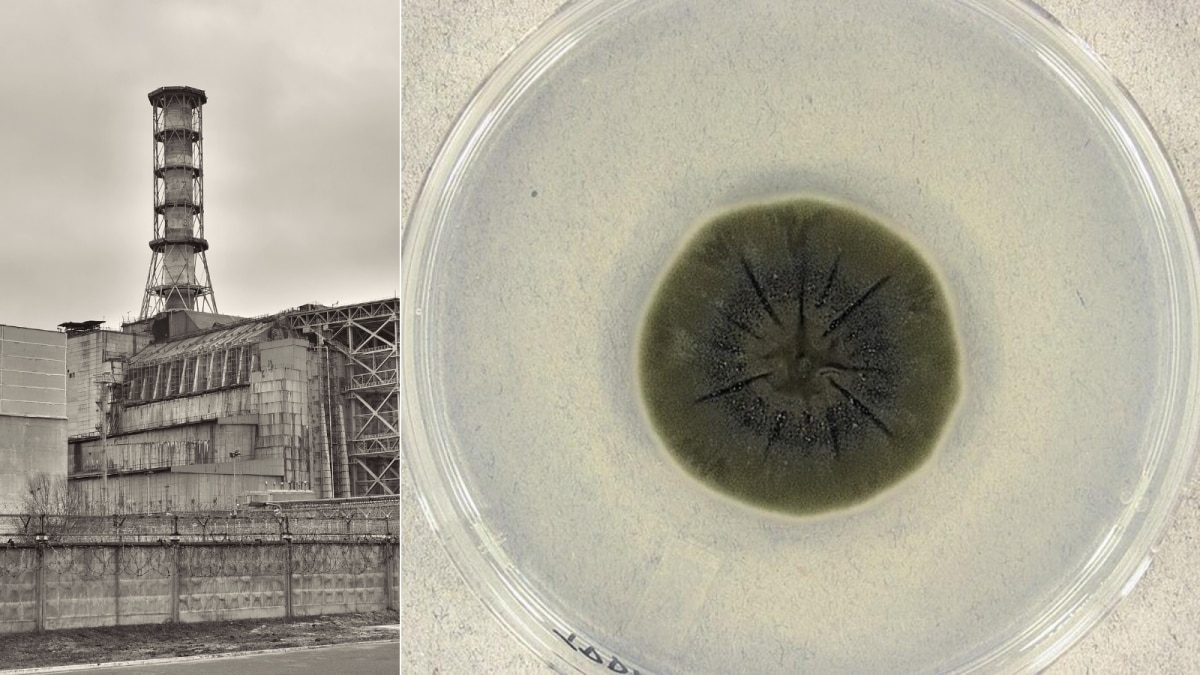
A special black fungus was found growing inside the Chernobyl nuclear reactor, which exploded in 1986.
This fungus is unique because it can survive in very high radiation levels.
Scientists think this fungus might help protect astronauts from harmful space radiation.
The fungus has a dark pigment called melanin that helps it absorb and dissipate radiation.
NASA sent samples of this fungus to the International Space Station to test its ability to shield against radiation.
The fungus grew faster in space and reduced radiation levels.
This could be useful for future space missions because it can grow and repair itself, making it a lightweight and effective shield.
The fungus might also help recycle waste in space, making it a valuable resource for long-duration missions.

A black fungus, Cladosporium sphaerospermum, was discovered growing in Chernobyl's reactor, thriving in high radiation levels.
The fungus contains melanin, a pigment that absorbs and dissipates radiation, potentially shielding astronauts from cosmic radiation.
NASA conducted experiments on the ISS, where the fungus grew 1.21 times faster and reduced radiation exposure.
The fungus offers advantages such as self-repairing DNA, growing toward radiation sources, and forming dense protective layers.
Researchers are exploring additional applications, including waste recycling and reducing reliance on resupply missions.
- Who
- Scientists, including Nelli Zhdanova and NASA researchers
- What
- A black fungus growing in Chernobyl's reactor may shield astronauts from space radiation
- When
- The fungus was discovered in 1997, with ongoing research
- Where
- Chernobyl reactor and International Space Station (ISS)
- Why
- The fungus absorbs and dissipates radiation, potentially protecting astronauts from cosmic radiation
- Fungus Type
- Cladosporium sphaerospermum
- Discovery Location
- Chernobyl reactor
- Key Pigment
- Melanin
- Radiation Shielding
- Absorbs and dissipates radiation
- NASA Experiment
- Grew 1.21 times faster in space
- Potential Applications
- Passive radiation shielding, waste recycling
- Researchers
- Nelli Zhdanova, Ekaterina Dadachova, Aaron Berliner, Nils Averesch