

Archive · 23 Dec 2025
Indoor Air Quality Affects India's Productivity
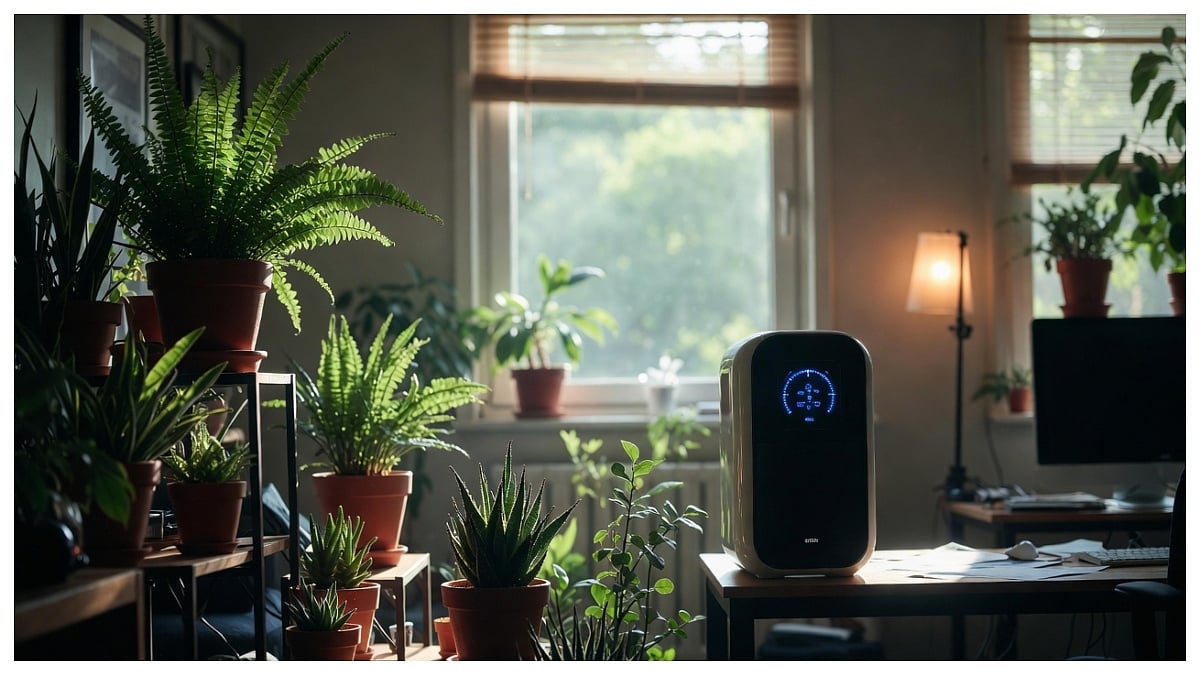
In India, people spend most of their time indoors, where the air can be full of things that make it hard to think clearly.
Things like carbon dioxide (CO2), tiny particles, and chemicals from furniture and cleaners can build up inside.
This can make people feel tired, have trouble focusing, and not work as well.
Experts say that fixing the air inside buildings can help people feel better and work more efficiently.
Simple things like opening windows, using air purifiers, and reducing strong-smelling cleaners can make a big difference.
This shows that clean air inside is important for how well people can think and work.

Indoor air quality significantly impacts cognitive performance and productivity in India.
High CO2 levels in closed rooms reduce deep sleep and morning energy.
Elevated CO2 and particulate matter in offices slow decision-making and mental clarity.
Volatile organic compounds (VOCs) from furniture and cleaners subtly affect focus and alertness.
Simple interventions like improving ventilation and using air purifiers can boost productivity.
- Who
- Indians, especially those in urban areas
- What
- The impact of indoor air quality on productivity and cognitive performance
- When
- Ongoing, with significant effects during work and sleep
- Where
- Indoor environments, including homes and offices in India
- Why
- Due to high levels of CO2, particulate matter, and volatile organic compounds (VOCs) in indoor air
- Time Spent Indoors
- 80-90%
- Ideal CO2 Range
- 600-900 ppm
- CO2 Levels in Closed Bedrooms
- 2000-4000 ppm
- Cognitive Score Increase with Improved Ventilation
- 61%
- Cognitive Throughput Decline per 500 ppm CO2 Increase
- 2-4%
- Number of VOCs in Indian Homes and Workplaces
- Over 1,200