Archive · 20 Jan 2026
11th-Century Ganesha Idol Discovered in Telangana
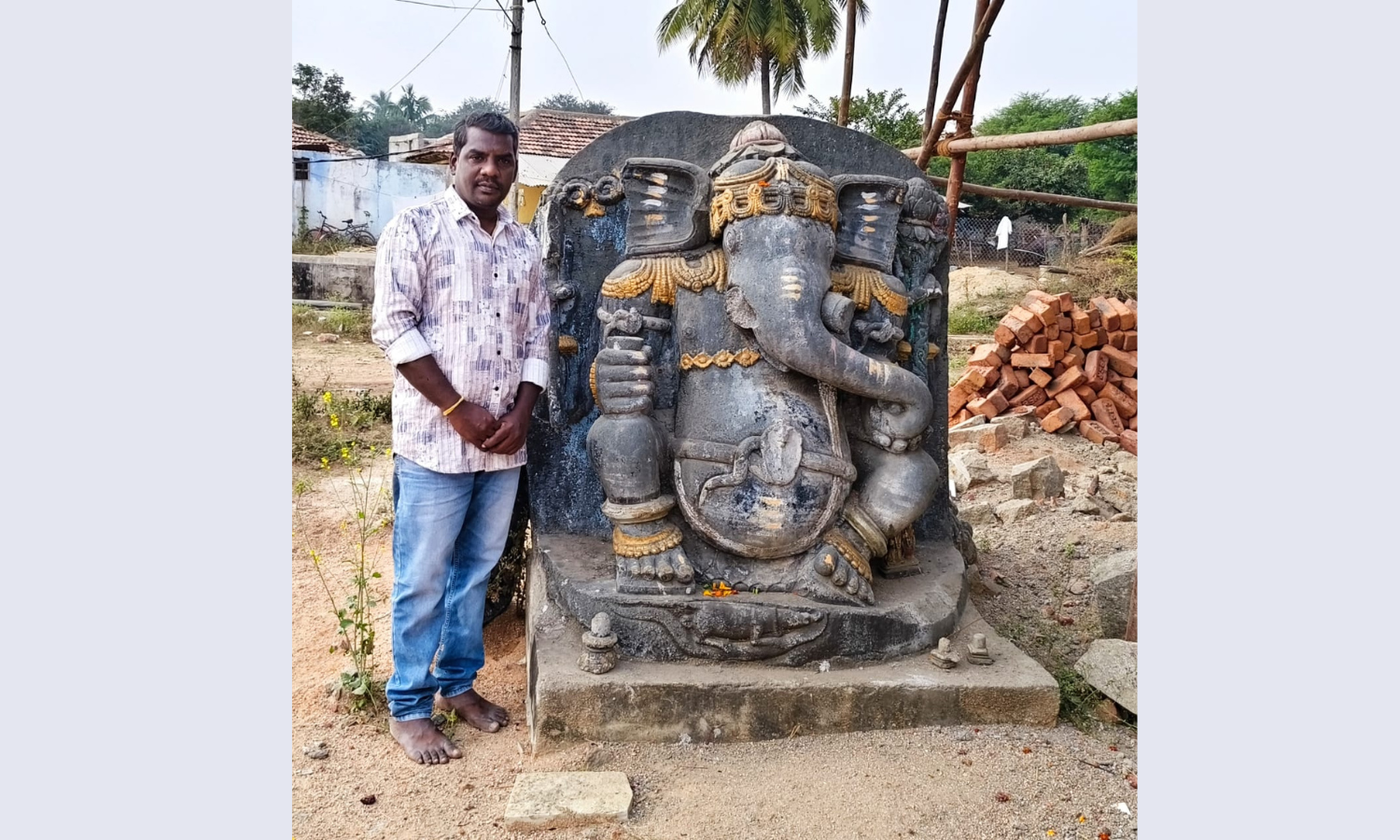
A very old stone statue of Lord Ganesha was found in a village in Telangana, India.
The statue is about 1,000 years old and is very big, about five feet tall.
It shows Ganesha with four arms, holding special things like a battle-axe, a flower, a broken tusk, and a sweet called modak.
The statue also has a snake belt around its belly and a sacred thread over its shoulder.
A small mouse, which is Ganesha's vehicle, is at the base of the statue.
Experts think this statue is important because it shows that people in that area long ago worshipped Ganesha and other gods in special ways.
The discovery helps us learn more about the history and culture of that time.

A rare 11th-century stone idol of Lord Ganesha was discovered in Vallampatla village, Telangana.
The five-foot-tall 'Chaturbhuja' (four-armed) Ganesha sculpture depicts the deity in the Lalitasana pose.
The idol features intricate details like a Nagabandham (snake belt), Jandhyam (sacred thread), and a mouse vehicle at the base.
Experts have dated the idol to the Chalukya period, around 1,000 years ago.
The discovery highlights the prominence of Kalamukha Shaivism and Ganapatya traditions in ancient Telangana.
- Who
- Dr. Samaleti Mahesh, a researcher from Kotha Telangana Charitra Brundham (KTCB)
- What
- Discovery of an 11th-century stone idol of Lord Ganesha
- When
- Recently identified during an inspection of ancient sculptures
- Where
- Vallampatla village, Maddur mandal, Siddipet district, Telangana
- Why
- The idol is significant for understanding the religious landscape and cultural heritage of ancient Telangana
- Location
- Vallampatla village, Maddur mandal, Siddipet district, Telangana
- Discoverer
- Dr. Samaleti Mahesh (KTCB researcher)
- Idol Height
- Five feet
- Idol Form
- Chaturbhuja (four-armed) Ganesha
- Idol Pose
- Lalitasana (relaxed royal pose)
- Idol Features
- Parasu (battle-axe), flower, broken tusk, modak (sweet), Nagabandham (snake belt), Jandhyam (sacred thread), mouse vehicle
- Historical Period
- Chalukya period (11th century)
- Significance
- Reflects prominence of Kalamukha Shaivism and Ganapatya traditions in ancient Telangana