

Archive · 21 Jul 2026
James Webb Telescope Maps Supermassive Black Hole Growth
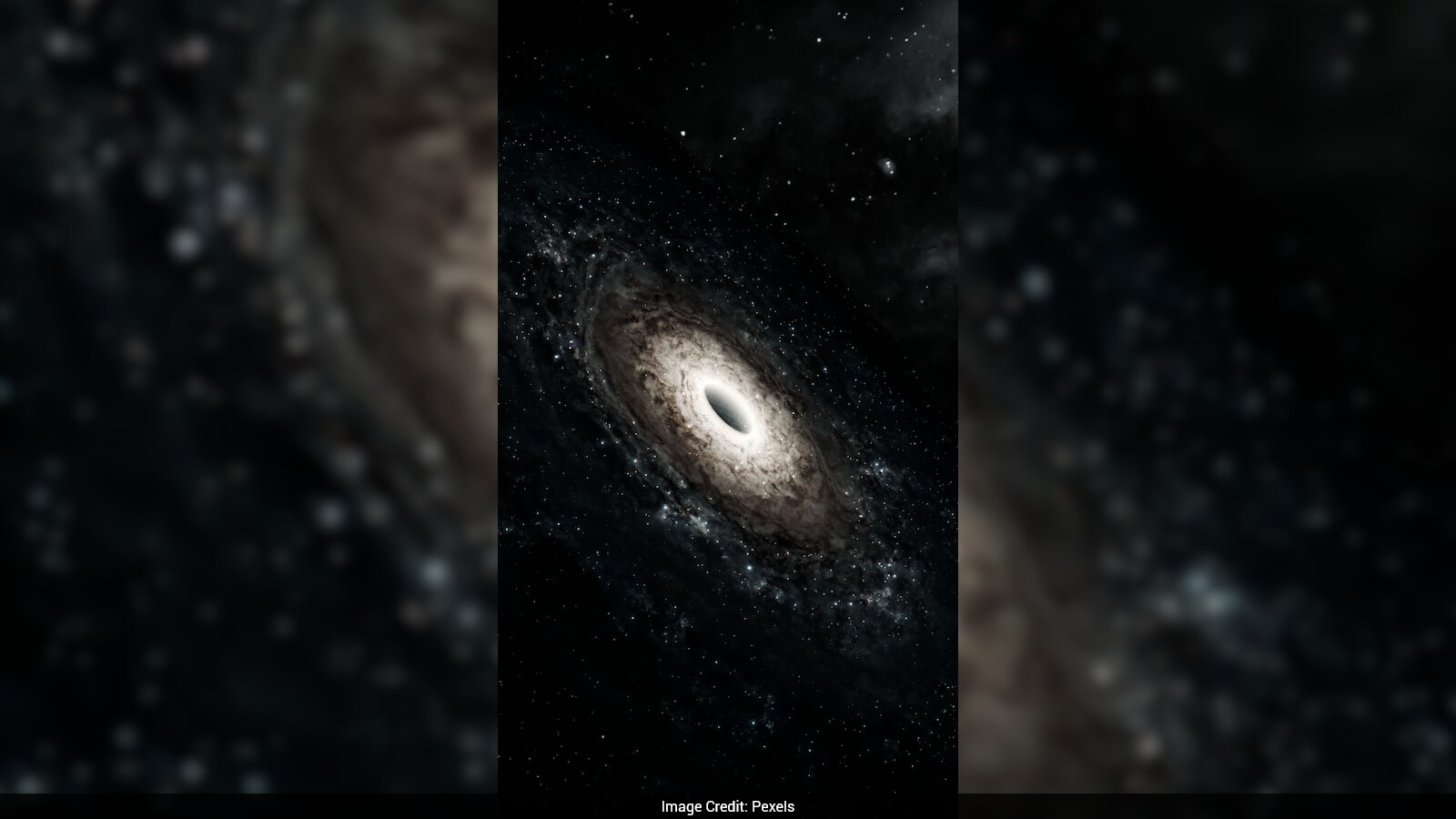
The James Webb Space Telescope has helped scientists understand how supermassive black holes at the centers of galaxies grow.
These black holes can be millions or billions of times more massive than the Sun.
Some black holes are quiet, while others actively feed on gas and dust, creating bright regions.
The telescope observed a nearby galaxy and found a swirling disk of gas around a black hole, connected to a large filament of material.
This suggests that black holes might follow a cycle of feeding and fasting, where they push away gas and later receive more material.
This process helps them grow quickly.
The observations were compared to computer simulations to confirm the findings.

The James Webb Space Telescope observed a nearby active galactic nucleus in the galaxy NGC 4696.
Astronomers found a hook-shaped swirl of gas around the supermassive black hole, connected to a large filament.
The gas swirl is about 800 light-years wide and moves at speeds of around 1.3 million miles per hour.
The observations suggest a cycle of feeding and fasting, where black holes push away gas and later receive more material.
This process helps explain how supermassive black holes grew so large so quickly after the Big Bang.
- Who
- Astronomers using the James Webb Space Telescope
- What
- Mapped how supermassive black holes gain mass
- When
- Recent observations, published in the Astrophysical Journal Letters
- Where
- Galaxy NGC 4696 in the Centaurus Cluster, 145 million light-years from Earth
- Why
- To understand how supermassive black holes grew so large so quickly after the Big Bang
Traditional Growth Models
Cycle of Feeding and Fasting
Growth Mechanism
Traditional Growth Models
Black holes grow primarily through slow accretion and mergers over billions of years.
Cycle of Feeding and Fasting
Black holes follow a cycle of feeding and fasting, where they push away gas and later receive more material.
- Telescope Used
- James Webb Space Telescope
- Galaxy Observed
- NGC 4696
- Distance from Earth
- 145 million light-years
- Gas Speed
- 1.3 million miles per hour (600 km/s)
- Hook-shaped Feature Size
- 800 light-years wide
- Journal
- Astrophysical Journal Letters