

Archive · 19 Sep 2026
Kushal Ray’s Calcutta Photographs Capture the City Without Romanticism
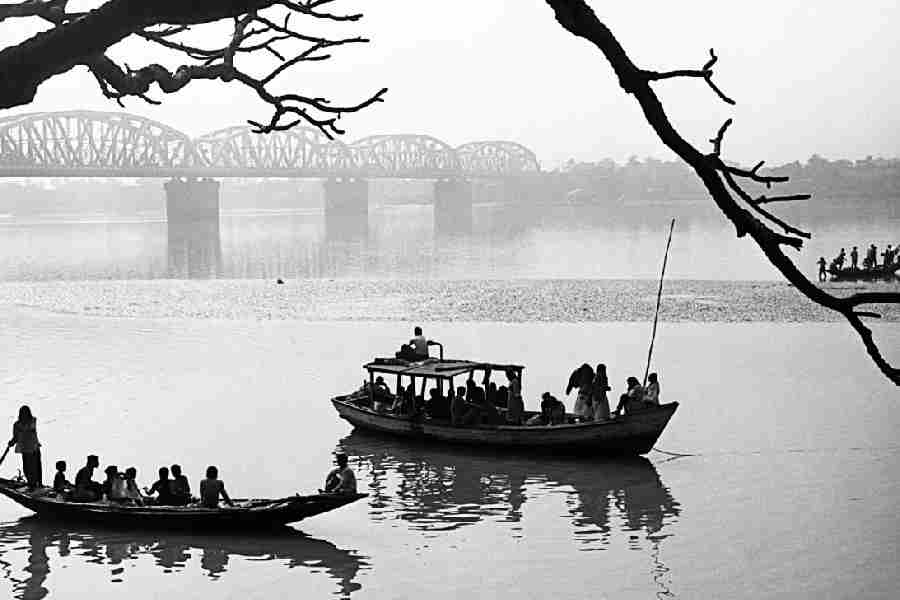
Kushal Ray made a photo book about Calcutta between 1990 and 1993.
He wanted to show the city honestly, without making it look more beautiful than it was.
Most of his pictures are black and white.
Many were taken in North Calcutta and near the ghats.
The photos show people, buildings, political drawings, and everyday conversations.
Some pictures capture important moments as they happen.
One image shows someone reading about the death of filmmaker Satyajit Ray.
Kushal Ray studied the work of Henri Cartier-Bresson and Robert Frank and used different camera lenses to create his own style.

Kushal Ray’s Saharnama: Calcutta 1990–1993 presents the city without idealising it.
The black-and-white photographs focus mainly on North Calcutta and the ghats.
Ray captures street life, political caricatures, architecture, and people in conversation.
His images often preserve decisive moments, including religious rituals and reactions to news events.
Influenced by Henri Cartier-Bresson and Robert Frank, Ray used 50mm and 35mm lenses to develop a distinct style.
- Who
- Photographer Kushal Ray.
- What
- The book Saharnama: Calcutta 1990–1993 documents Calcutta through unsentimental black-and-white photography.
- When
- The photographs were made from 1990 to 1993.
- Where
- Mostly in North Calcutta and around the ghats.
- Why
- Ray sought to portray the city without romanticising it and to capture moments that words could not fully express.
- Photographer
- Kushal Ray
- Book
- Saharnama: Calcutta 1990–1993
- Photographic period
- 1990–1993
- Format
- Black-and-white photographs with uniform framing
- Main locations
- North Calcutta and the ghats
- Subjects
- Street scenes, political caricatures, architecture, rituals, and conversations
- Lenses
- 50mm and 35mm