

6 hrs ago
Kushal Ray’s Calcutta Photographs Capture the City Without Romanticism
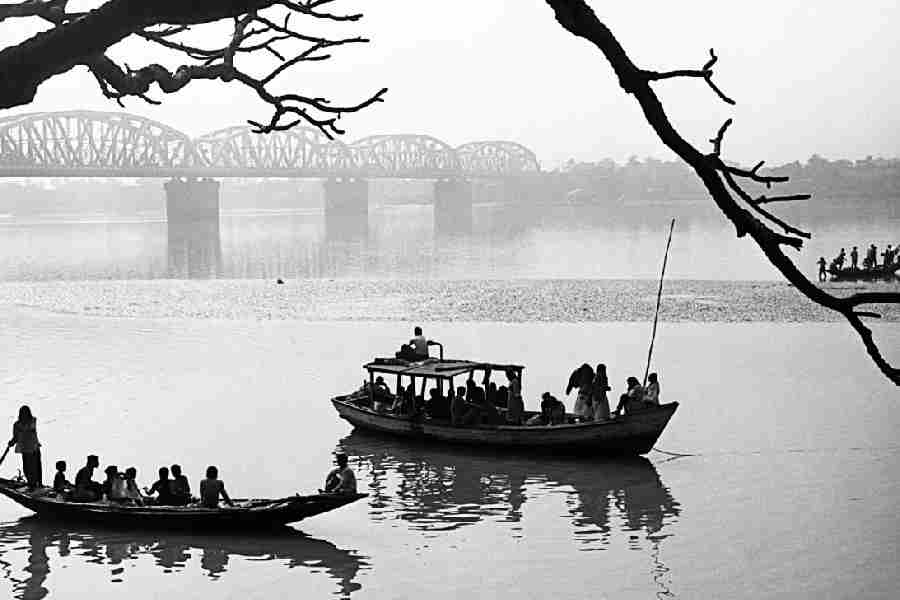
Kushal Ray made a photo book about Calcutta between 1990 and 1993.
He wanted to show the city honestly, without making it look more beautiful than it was.
Most of his pictures are black and white.
Many were taken in North Calcutta and near the ghats.
The photos show people, buildings, political drawings, and everyday conversations.
Some pictures capture important moments as they happen.
One image shows someone reading about the death of filmmaker Satyajit Ray.
Kushal Ray studied the work of Henri Cartier-Bresson and Robert Frank and used different camera lenses to create his own style.

Kushal Ray’s Saharnama: Calcutta 1990–1993 presents the city without idealising it.
The black-and-white photographs focus mainly on North Calcutta and the ghats.
Ray captures street life, political caricatures, architecture, and people in conversation.
His images often preserve decisive moments, including religious rituals and reactions to news events.
Influenced by Henri Cartier-Bresson and Robert Frank, Ray used 50mm and 35mm lenses to develop a distinct style.
- Who
- Photographer Kushal Ray.
- What
- The book Saharnama: Calcutta 1990–1993 documents Calcutta through unsentimental black-and-white photography.
- Where
- Mostly in North Calcutta and around the ghats.
- When
- The photographs were made from 1990 to 1993.
- Why
- Ray sought to portray the city without romanticising it and to capture moments that words could not fully express.
Key facts
- Photographer
- Kushal Ray
- Book
- Saharnama: Calcutta 1990–1993
- Photographic period
- 1990–1993
- Format
- Black-and-white photographs with uniform framing
- Main locations
- North Calcutta and the ghats
- Subjects
- Street scenes, political caricatures, architecture, rituals, and conversations
- Lenses
- 50mm and 35mm
Quotes
Kushal Ray
Photographer whose Calcutta series is discussed in the article
“a photograph can go where there are no words.”
 telegraphindia.com
Sources
Related news
How Man Ray Made Familiar Subjects Look Unsettling
Shailaja Kamat’s Solo Show Traces India’s Changing Urban Landscapes
Heirloom Cities Book Captures Calcutta’s Layered Food Culture
Delhi Contemporary Art Week Explores the Capital’s Overlooked Everyday Lives
David Malaker’s Nocturnal Paintings Trace Freedom, Cities and Identity
Cheenapara Gallery to Preserve Calcutta’s Chinese Community Heritage

Anju Dodiya's 'Geometry of Ash' Explores Loss and Hope

Exhibition Honors Dashrath Patel's Artistic Legacy
