

Archive · 13 Sep 2026
Modi and Xi Vow to Address India-China Trade Imbalance
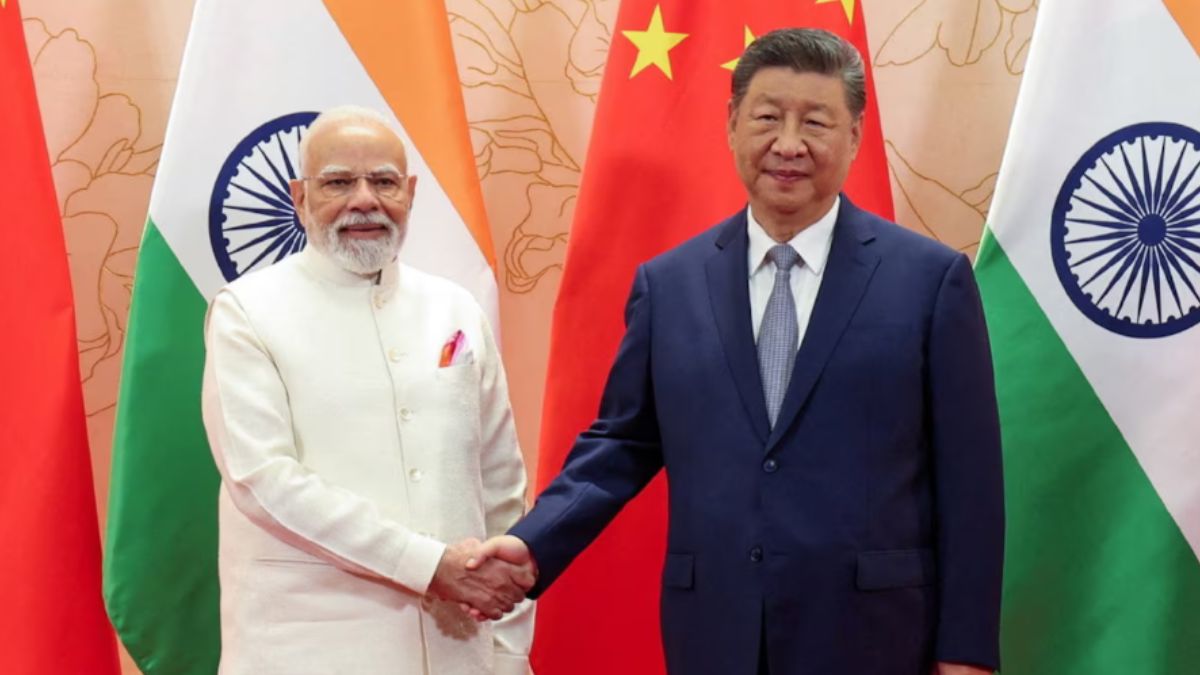
Narendra Modi of India and Xi Jinping of China met during the BRICS Summit in New Delhi.
They talked about the large gap between what India sells to China and what it buys.
India bought much more from China than it sold there in 2025-26.
The gap was about $112 billion.
Much of India’s buying involves machines, electronics parts, chemicals, and other materials used by Indian factories.
This dependence can cause problems if supplies from China are restricted.
India also wants its companies to have better access to China’s markets.
The leaders said disagreements should not turn into disputes.
They also agreed to encourage business ties and make trade more predictable.

Prime Minister Narendra Modi and Chinese President Xi Jinping met Saturday on the sidelines of the BRICS Summit in New Delhi.
The leaders agreed to address the structural trade imbalance, market-access barriers, and supply-chain vulnerabilities.
India’s trade deficit with China reached $112.16 billion in 2025-26, up from $99.21 billion the previous year.
China became India’s largest trading partner after bilateral merchandise trade rose 18.31% to $151.10 billion.
Both sides supported greater business links and predictable market access, while India remains heavily dependent on Chinese industrial inputs and critical minerals.
- Who
- Prime Minister Narendra Modi and Chinese President Xi Jinping.
- What
- A meeting on trade and economic relations, including the trade deficit, market access, investment, and supply chains.
- When
- Saturday during the 2026 BRICS Summit.
- Where
- New Delhi, India.
- Why
- To address India’s widening trade imbalance, market-access barriers, and dependence on Chinese industrial inputs and critical minerals.
Trade-Balance and Security Concerns
Industrial and Investment Needs
Growing trade deficit
Trade-Balance and Security Concerns
India’s widening deficit, which reached $112.16 billion in 2025-26, shows the need for more balanced and sustainable trade.
Industrial and Investment Needs
The deficit is partly driven by imports of machinery, components, chemicals, and other capital goods that support Indian manufacturing and employment.
Dependence on Chinese supplies
Trade-Balance and Security Concerns
Heavy reliance on China for electronics, machinery, critical minerals, and rare-earth magnets creates vulnerabilities for India’s electric-vehicle, renewable-energy, and defence supply chains.
Industrial and Investment Needs
Chinese industrial inputs are important to domestic production, and access to Chinese technology, capital, and manufacturing capabilities may strengthen Indian industry.
Chinese investment
Trade-Balance and Security Concerns
India’s 2020 requirement for government approval of investments from countries sharing a land border reflected concerns about national security and opportunistic acquisitions.
Industrial and Investment Needs
India’s later calibrated relaxation of investment restrictions could provide access to Chinese capital and capabilities while supporting domestic manufacturing.
- India’s exports to China
- $19.47 billion in 2025-26, up 36.62% from $14.25 billion.
- India’s imports from China
- $131.63 billion in 2025-26, up 16.03% from $113.46 billion.
- Trade deficit
- Reported as approximately $112.1 billion, with the detailed figure given as $112.16 billion in 2025-26, compared with $99.21 billion in 2024-25.
- Total merchandise trade
- India-China merchandise trade reached $151.10 billion in 2025-26, an 18.31% increase.
- Major import categories
- Electronics, machinery, computers, and organic chemicals account for roughly 66% of India’s imports from China.
- Critical mineral dependence
- India imports more than 40% of six key critical minerals from China.
- Rare-earth processing
- China controls more than 90% of global rare-earth magnet processing capacity, according to the article.
- Investment policy
- India introduced limited automatic-route approval for certain non-controlling investments of up to 10% from land-bordering countries in March 2026.
