

Archive · 4 Jan 2026
INSV Kaundinya Overcomes Early Challenges on Historic Voyage
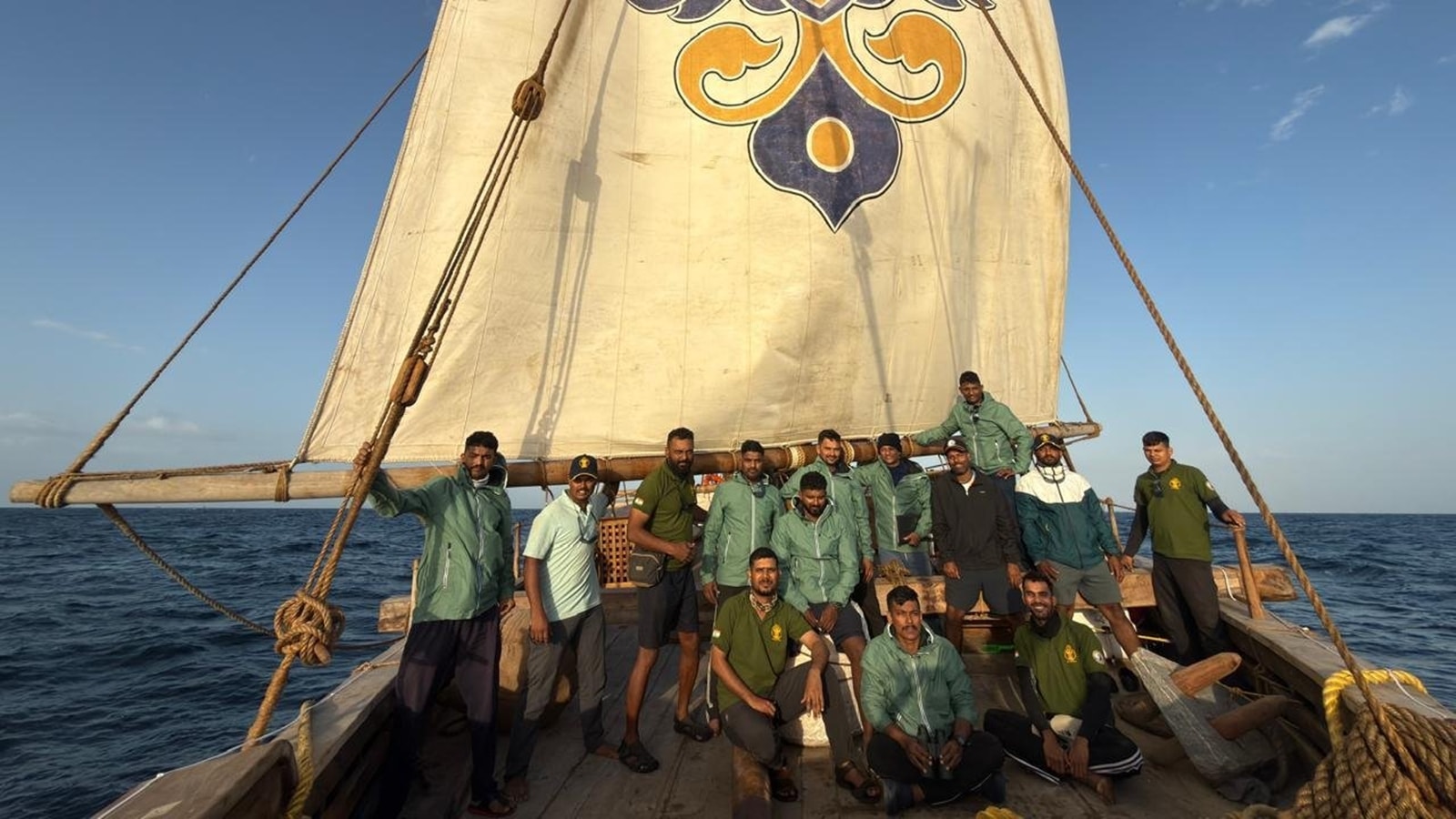
The INSV Kaundinya, a special ship made like ones from long ago, started its first big trip from Porbandar to Muscat.
At first, the winds and waves made it hard to stay on course, but by the fourth day, things got better.
The ship is made with old methods and materials, like coconut fibre and wood, and it doesn't have an engine.
The crew had to deal with rough seas and strong winds, but they are making progress.
They even celebrated New Year's with a tradition of blowing a fog horn and eating a special meal.
The ship is named after a famous sailor from a long time ago, and the crew is excited to continue their journey, even though it's tough sometimes.

INSV Kaundinya faced challenging winds and tidal currents in the first 48 hours, pushing it off course.
On Day 4, favorable northeast winds helped the vessel progress towards Muscat, covering over 200 nautical miles.
The ship is modeled after a 5th-century vessel depicted in the Ajanta caves and is constructed using ancient stitching techniques and natural materials.
Crew members experienced heavy rolling and seasickness due to the ship's unique design and lack of modern navigation aids.
Indian fishing vessels followed the ship near Sir Creek for 90 minutes, showing vigilance in a sensitive area.
- Who
- Crew of INSV Kaundinya, including 4 officers, 13 naval sailors, and economist Sanjeev Sanjyal
- What
- A historic maiden voyage to Muscat, Oman, retracing ancient maritime routes
- When
- The voyage began on Monday, with significant events occurring on Day 4 (Thursday)
- Where
- From Porbandar, India, to Muscat, Oman, with challenges near Sir Creek and the Gulf of Kutch
- Why
- To retrace ancient maritime routes that facilitated trade, cultural exchange, and civilisational interactions across the Indian Ocean
- Vessel Name
- INSV Kaundinya
- Destination
- Muscat, Oman
- Distance Covered
- Over 200 nautical miles (370 km)
- Crew Composition
- 4 officers, 13 naval sailors, and economist Sanjeev Sanjyal
- Ship Design
- Based on a 5th-century CE ship from Ajanta Caves
- Construction Materials
- Coconut fibre stitching, traditional wooden joinery, coir rope, natural resins, and cotton sails
- Navigation Method
- Wind-powered with square sails and trailing oars
- Significant Event
- Fishing vessels followed the ship near Sir Creek for 90 minutes
