1 year ago
Scientists Discover Vast Network of Submarine Canyons Off Antarctica
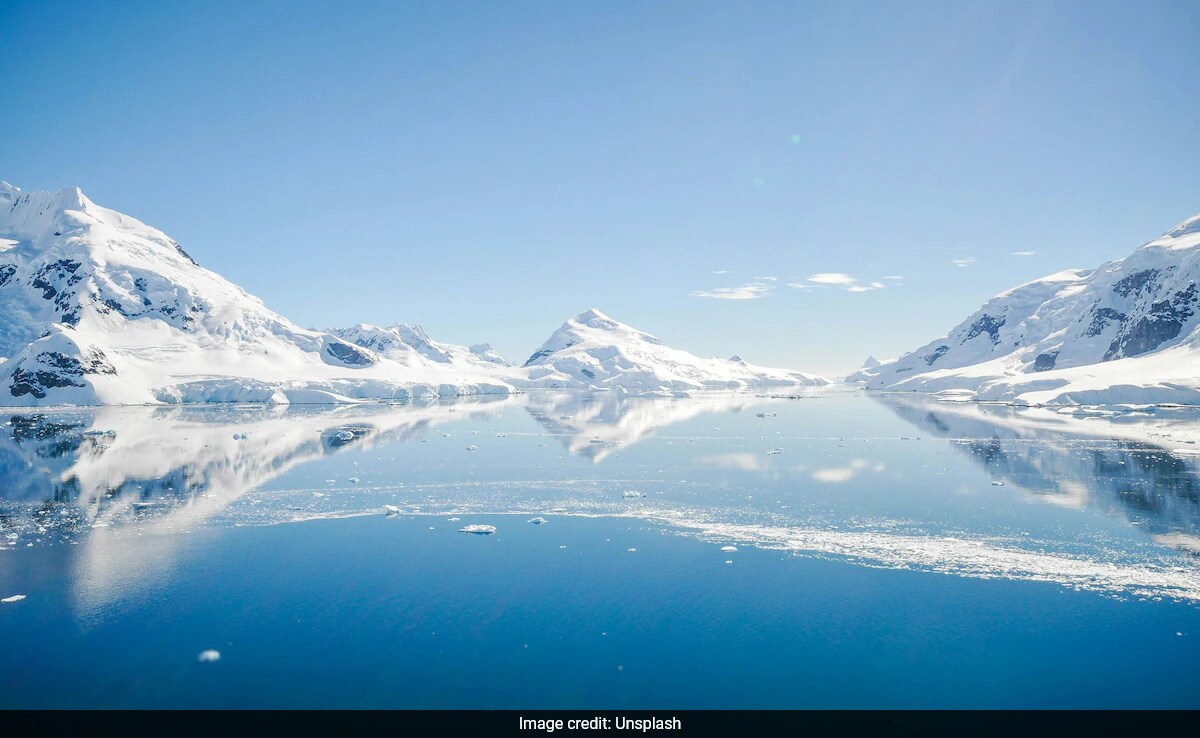
Scientists have found a huge network of underwater canyons off the coast of Antarctica, like giant underwater valleys!
They found 332 of them, which is way more than they knew about before.
These canyons are really deep, some over 4,000 meters down!
They were created by ice and water moving over time.
These canyons are important because they help move water around the ocean, give homes to animals, and affect the climate.
The canyons in East Antarctica are more complex, like big branching rivers, while those in West Antarctica are shorter and steeper.

Researchers discovered 332 submarine canyons off Antarctica, five times more than previously known.
These canyons were mapped using high-resolution bathymetric data.
Canyons can plunge over 4,000 meters deep, shaped by glacial forces.
East Antarctica canyons are complex and branched; West Antarctica canyons are shorter and steeper.
The canyons are important for ocean circulation, biodiversity, and climate.
- Who
- Researchers from University College Cork in Ireland and the University of Barcelona in Spain.
- What
- Discovery of 332 submarine canyons off Antarctica.
- Where
- Off the coast of Antarctica.
- When
- The study was recently published.
- Why
- To understand the influence of submarine canyons on ocean dynamics and climate change.
Key facts
- Number of Canyons Discovered
- 332
- Maximum Depth
- Over 4,000 meters
- Primary Formation Force
- Glacial forces and sediment flows
- East Antarctica Canyon Shape
- Complex, branching, U-shaped cross-sections
- West Antarctica Canyon Shape
- Shorter, steeper, V-shaped cross-sections
Quotes
David Amblas
Researcher from the Consolidated Research Group on Marine Geosciences at the Faculty of Earth Sciences of the University of Barcelona
“The most spectacular of these are in East Antarctica, which is characterised by complex, branching canyon systems. The systems often begin with multiple canyon heads near the edge of the continental shelf and converge into a single main channel that descends into the deep ocean, crossing the sharp, steep gradients of the continental slope.”
 NDTV
NDTV
“Some of the submarine canyons we analysed reach depths of over 4,000 meters.”
NDTV