

Archive · 23 Jul 2026
Trump's Tariff Plan May Benefit Indian Pharma
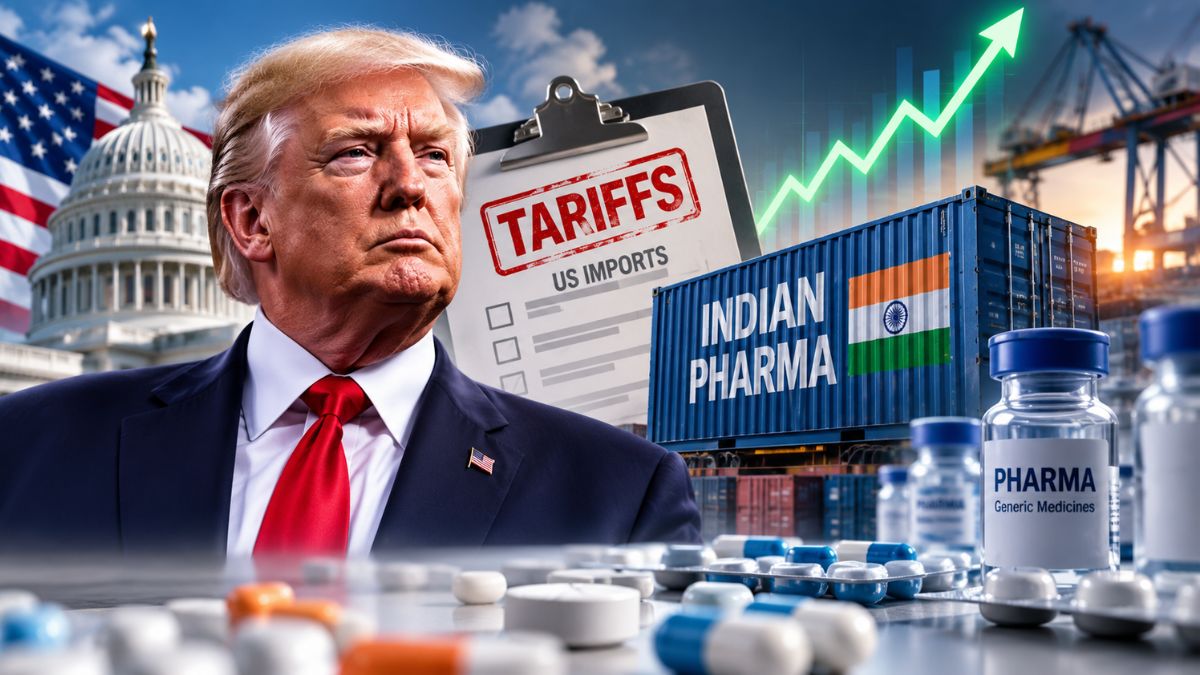
US President Donald Trump has proposed high tariffs on generic medicines imported from India.
Many people think this could hurt Indian drug companies, but a report by Bernstein says it might not be that bad.
They think the tariffs are more of a negotiating tool than a real policy.
Indian companies already make a lot of medicines in the US and could adjust if needed.
However, making medicines in the US is much more expensive, so the tariffs might not make a big difference in the long run.
Bernstein believes Indian pharma companies are more likely to benefit than be hurt by this plan.

US President Donald Trump proposed tariffs of up to 200% on generic medicines imported from India.
Bernstein believes the proposal is more of a negotiating tool than a durable policy change.
Indian pharmaceutical companies already supply about 65% of US generic drug volumes.
Relocating production to the US is costly and complex, making it an impractical solution for most generic drugs.
Higher US manufacturing costs make it difficult for tariffs to make US production competitive without significant price increases.
- Who
- US President Donald Trump, Indian pharmaceutical companies
- What
- Proposed tariffs on generic medicines imported into the US
- When
- Announced on July 21, to be implemented from August 2028
- Where
- United States, India
- Why
- To pressure India in trade negotiations and potentially boost US manufacturing
Pro-Tariff View
Anti-Tariff View
Economic Impact
Pro-Tariff View
Tariffs could make US manufacturing more competitive, potentially benefiting local industries.
Anti-Tariff View
Higher US manufacturing costs make it difficult for tariffs to make US production competitive without significant price increases.
Negotiation Tool
Pro-Tariff View
Tariffs are a strong negotiating tool to pressure India in trade talks.
Anti-Tariff View
Tariffs are more likely a political gesture and not a durable policy change.
Production Relocation
Pro-Tariff View
Tariffs could incentivize Indian companies to move production to the US, boosting local jobs.
Anti-Tariff View
Relocating production is costly and complex, making it an impractical solution for most generic drugs.
- Tariff Proposal
- 100% from August 2028, rising to 200% from 2029
- US Generic Drug Supply
- 65% supplied by Indian companies
- Cost to Relocate Production
- $1 million to $1.5 million for immediate-release tablets, $2 million to $4 million for extended-release tablets
- US Manufacturing Costs
- $25 million to $40 million annually for oral-solid facilities, $55 million to $70 million for sterile ophthalmic
- Bernstein's Stance
- Indian pharma more likely to benefit than be harmed