10 months ago
UAPA Bail Provisions: Legal Expert Explains Court's Decision-Making
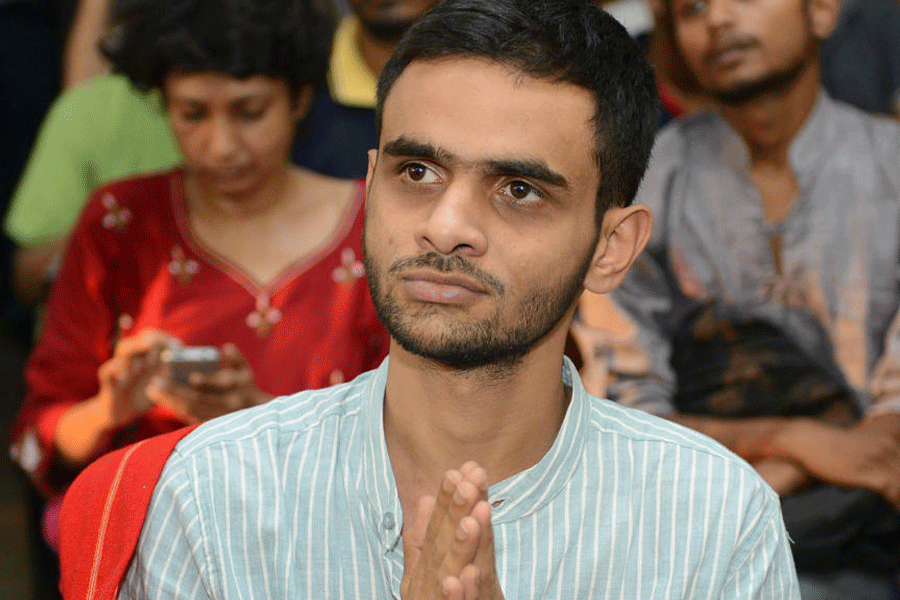
Getting bail in cases filed under the UAPA, a law against terrorism, is usually very difficult.
This is because the law has tough rules that make it hard for someone accused to be released before their trial is over.
To get bail, a person usually needs to pass a 'tripod test,' meaning they are not a flight risk, will face trial, and won't tamper with evidence.
In UAPA cases, there are two extra conditions called 'twin conditions.'
One is that the prosecutor must be heard, and the other is that the court must believe there's a good reason to think the accusation is 'prima facie true,' meaning it looks true based on the initial evidence.
However, courts have also said that if someone has been in jail for too long without a trial, their right to a speedy trial, protected by Article 21 of the Constitution, can override these strict rules.
This means bail might be granted if the person has faced prolonged pre-trial detention.
Legal experts advise defense lawyers to challenge the evidence, question the reliability of co-accused statements, and check if the police followed all the correct legal procedures.

Bail under the Unlawful Activities (Prevention) Act (UAPA) is stringent due to provisions in Chapters IV and VI, making it difficult to secure.
Granting bail requires fulfilling the 'tripod test' (not a flight risk, willing to face trial, no tampering) and 'twin conditions' (prosecution hearing, prima facie true accusation).
Courts can grant bail if there are no 'reasonable grounds to believe the accusation is prima facie true'.
Prolonged pre-trial detention or violation of the right to speedy trial can override UAPA's strict bail provisions, as per Supreme Court rulings.
Defense strategies involve assailing co-accused statements, countering the probative value of evidence, and examining the investigating agency's adherence to legal procedures.
- Who
- Advocate Dhruv Gupta, legal experts, and courts.
- What
- Discussion on the stringent bail provisions under the Unlawful Activities (Prevention) Act (UAPA) and how courts interpret and apply them.
- Where
- Supreme Court of India and other judicial fora.
- When
- Recent times, with references to multiple Supreme Court judgments up to 2024.
- Why
- To understand the evolving legal landscape of bail jurisprudence in UAPA cases, particularly in relation to the 'larger conspiracy' case connected to the Delhi riots.
Key facts
- Key Law
- Unlawful Activities (Prevention) Act (UAPA)
- Relevant Sections
- Chapter IV (Sections 15-23) and Chapter VI (Sections 35-40) make bail difficult
- Bail Conditions
- Tripod test (flight risk, willingness to face trial, no tampering) plus twin conditions (prosecution hearing, prima facie true accusation)
- Bail Grounds
- Absence of reasonable grounds to believe accusation is prima facie true; violation of right to speedy trial/prolonged custody (Article 21)
- Legal Precedents
- P. Chidambaram, K A Najeeb, Sheikh Javed Iqbal v. State of Uttar Pradesh, NIA v. Zahoor Ahmad Shah Watali, Vernon vs. State of Maharashtra, Shoma Kanti Sen v. State of Maharashtra
- Defense Strategy
- Challenge co-accused statements, assail probative value of evidence, ensure compliance with legal procedures by investigating agencies.
Timeline
Supreme Court adjourned Khalid and Imam bail hearing to Sept 22.
It sought police response, setting an October hearing.
The court pressed police for readiness.
Police argued against bail, citing riot conspiracy.
They allegedly planned to embarrass India during a US President's visit.
Quotes
Dhruv Gupta
Advocate practicing in the Supreme Court and other judicial fora, specializing in criminal litigation and white-collar crimes.
“There are various factors that weigh with the courts while adjudicating upon a bail application in UAPA indictments. First of all, the specific allegations in the chargesheets need to be identified and then, the statements of co-accused need to be assailed, as in many cases, the person is arrested on the basis of mere disclosure statements of co-accused and thus, the nexus between the person and other co-accused needs to be broken from the very beginning. The voluntariness and authenticity of the statements need to be challenged. It needs to be seen whether the statements have been retracted. The probative value of the evidence is to be countered. It needs to be seen whether the investigating agency has complied with all the mandatory legal procedures envisaged under UAPA and CrPC and in judicial precedents during investigation, for example, during search & seizure, recording of statements, collection of electronic evidence, etc. The sanction order under Section 45 needs to be examined.”
 indianexpress.com
“The landmark judgment on this issue is the 2019 case of the Supreme Court titled NIA v. Zahoor Ahmad Shah Watali, wherein it was categorically laid down that “By its very nature, the expression “prima facie true” would mean that the materials/evidence collated by the Investigating Agency in reference to the accusation against the concerned accused in the first information report, must prevail until contradicted and overcome or disproved by other evidence, and on the face of it, shows the complicity of such accused in the commission of the stated offence. It must be good and sufficient on its face to establish a given fact or the chain of facts constituting the stated offence, unless rebutted or contradicted. In one sense, the degree of satisfaction is lighter when the Court has to opine that the accusation is “prima facie true”, as compared to the opinion of accused “not guilty” of such offence as required under the other special enactments.””
indianexpress.com
Sources
Delhi Police oppose bail of Umar Khalid; says 2020 riots bid to destabilise State
Delhi Police Opposes Umar Khalid Bail Plea, Calls Riots 'Regime Change Op'
Delhi police oppose Umar Khalid bail plea alleging pan-India plot to incite 2020 riots
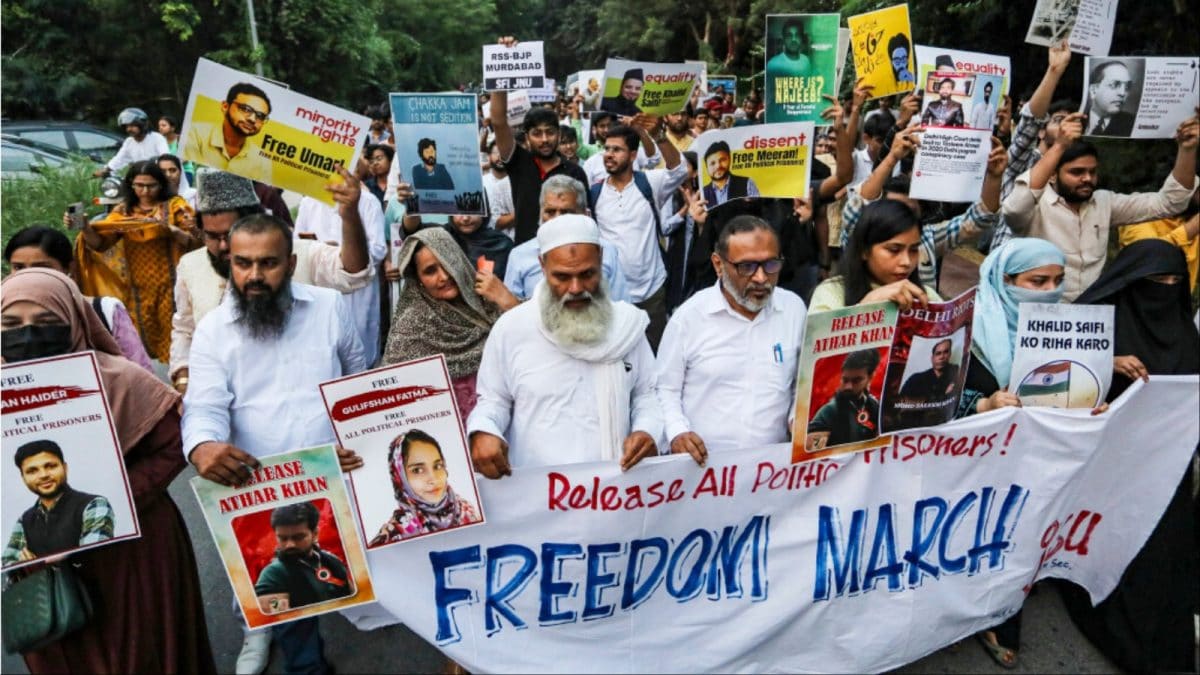
'In Jail For Years': SC Hears Bail Pleas Of Umar Khalid, Sharjeel Imam, Others In Delhi Riots Case

Umar Khalid bail: A timeline of hearings, events in UAPA case against him
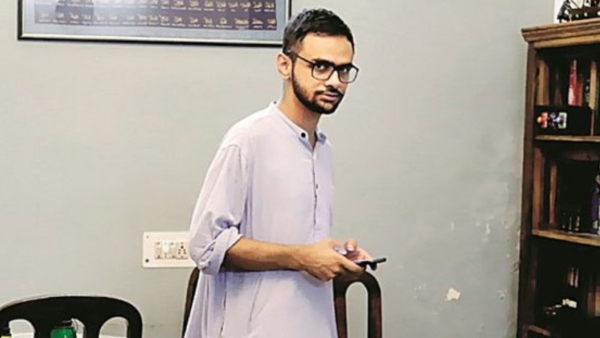
Bit surprising I am charged only in one of 751 FIRs filed in Delhi riots: Umar Khalid in Supreme Court bail hearing

2020 riots: ‘Umar Khalid, Sharjeel Imam playing victim card,’ Delhi Police tells SC
Bail plea of Umar Khalid, others: Supreme Court to resume hearing November 3 - Telegraph India
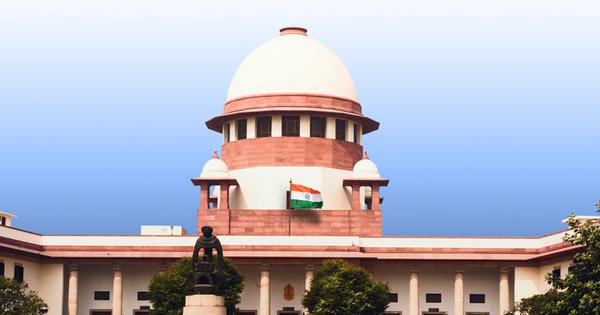
‘In jail for 5 years, no proof of violence’: Umar Khalid, two others to SC in 2020 Delhi riots case