Archive · 21 Nov 2025
Tagore's 'Jana Gana Mana': History and Legacy
A book by Rudrangshu Mukherjee tells the story of India's national anthem, 'Jana Gana Mana'.
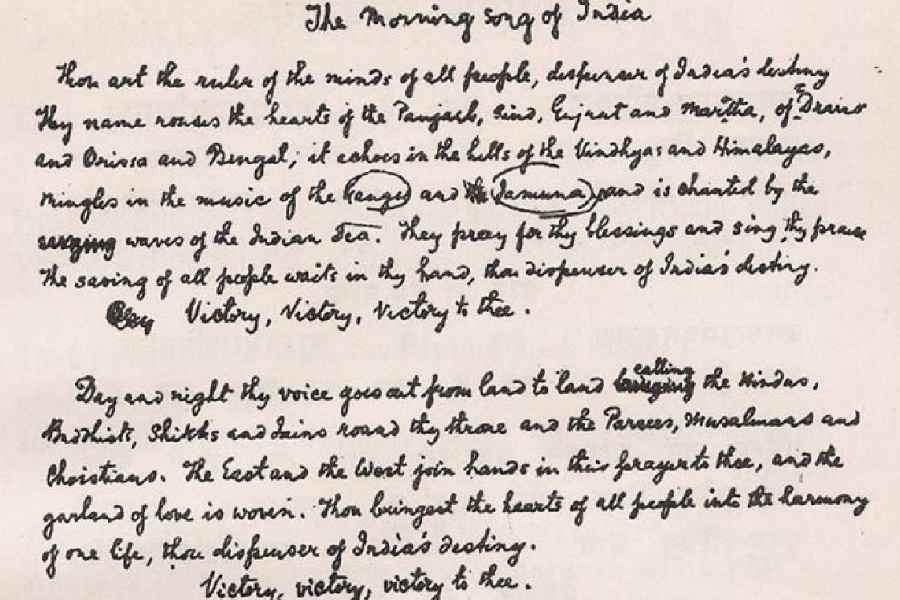
Rabindranath Tagore wrote it in 1911, not for the British king, but to express his love for his country.
The song talks about a kind, caring mother who takes care of everyone in India.
It was not the first choice for the national anthem, but India chose it after becoming independent.
The book helps us understand why this song is special and important for India.

Rabindranath Tagore composed 'Jana Gana Mana' in 1911, not as a tribute to the British king, but as a patriotic song.
The song celebrates an ungendered, divine figure as the 'dispenser of India’s destiny', reflecting Tagore's Upanishadic piety.
It was not initially considered as the national anthem; the Indian National Army used a Hindustani adaptation of the song.
Independent India adopted 'Jana Gana Mana' as the national anthem, honoring Subhas Chandra Bose's legacy.
The book 'Song of India' by Rudrangshu Mukherjee explores the history and significance of the national anthem.
- Who
- Rabindranath Tagore, Jawaharlal Nehru, Subhas Chandra Bose, Rudrangshu Mukherjee
- What
- Composed, chose, wrote about the national anthem 'Jana Gana Mana'
- When
- 1911, 1947
- Where
- India
- Why
- To express patriotism, to honor Subhas Chandra Bose's legacy, to explore the history and significance of the national anthem
Supporters of 'Jana Gana Mana'
Supporters of 'Vande Mataram'
National Anthem Status
Supporters of 'Jana Gana Mana'
Jana Gana Mana is the national anthem of India.
Supporters of 'Vande Mataram'
Vande Mataram should be the national anthem of India.
- Author
- Rudrangshu Mukherjee
- Book Title
- Song of India: A Study of the National Anthem
- Publisher
- Aleph
- Price
- Rs 399
- Year of 'Jana Gana Mana' composition
- 1911
- Year India adopted 'Jana Gana Mana' as national anthem
- 1950