

Archive · 30 Jan 2026
US Declassifies Cold War Spy Satellite Program
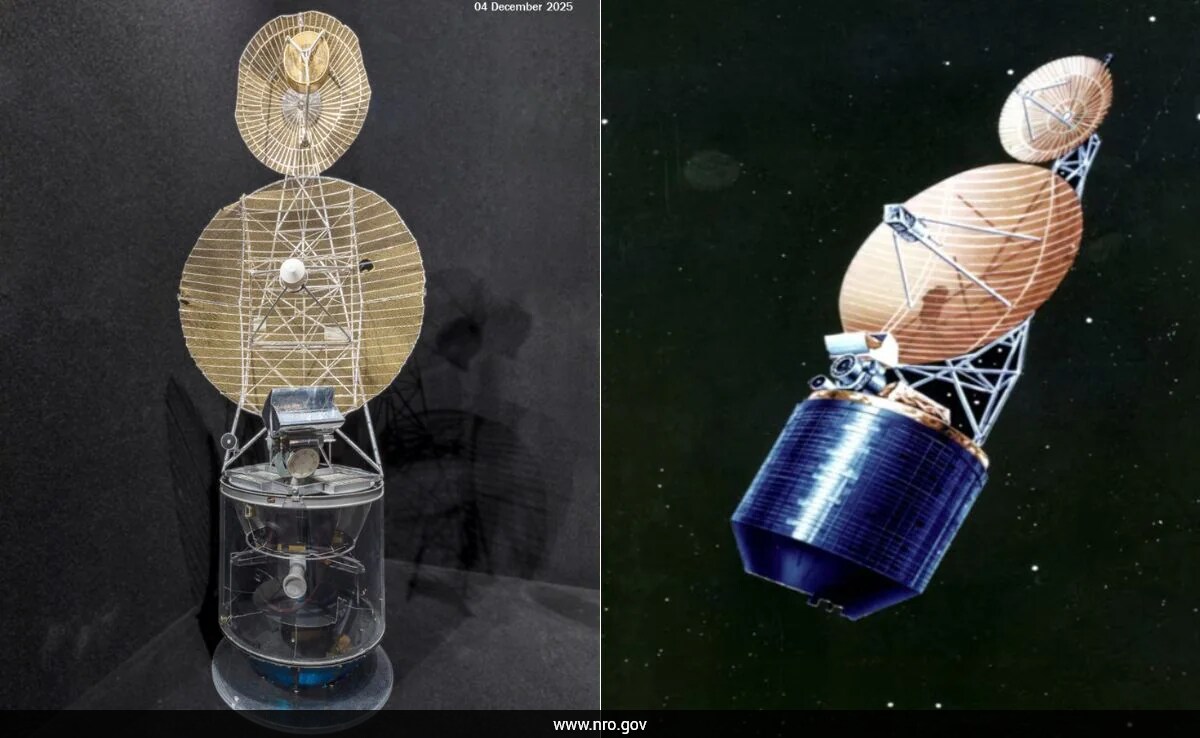
The US government has revealed details about a secret spy satellite program called JUMPSEAT that was used during the Cold War.
This program had eight satellites that were launched between 1971 and 1987.
These satellites were special because they flew in a unique orbit that allowed them to stay over the northern parts of the Soviet Union for a long time.
This helped the US gather important information about the Soviet Union's communications and weapons.
The program was very important and helped develop modern satellite surveillance systems.
The last satellite was launched in 1987, but the program continued to work until 2006.
The US is now working on new satellites that can better handle modern threats.

The US declassified the Cold War-era JUMPSEAT spy satellite program, which operated from 1971 to 2006.
Eight JUMPSEAT satellites were launched between 1971 and 1987 to collect signals intelligence from space.
The satellites used a highly elliptical Molniya orbit to monitor high northern latitudes, particularly the Soviet Union.
JUMPSEAT played a crucial role in gathering intelligence on enemy communications and weapons systems.
The program laid the foundation for modern US space-based surveillance systems.
- Who
- US National Reconnaissance Office (NRO) and US Air Force
- What
- Declassified Cold War-era spy satellite program JUMPSEAT
- When
- Launched between 1971 and 1987, declassified on January 28
- Where
- Satellites operated in Molniya orbit, primarily monitoring the Soviet Union
- Why
- To collect signals intelligence, monitor enemy communications and weapons systems
- Program Name
- JUMPSEAT
- Launch Period
- 1971-1987
- Number of Satellites
- 8
- Orbit Type
- Molniya
- Primary Target
- Soviet Union
- Declassification Date
- January 28
- Operational Period
- 1971-2006
- Agencies Involved
- NRO, US Air Force