

Archive · 11 Nov 2025
The Privilege and Peril of Being Apolitical in a Fractured World
Imagine the world is like a big playground with many different games happening.
Some games are about sharing fairly, some are about keeping things clean, and some are about making sure everyone feels safe.
If you decide not to play any games and just sit on the sidelines, you might think you're staying out of trouble.
But the article says that even by not playing, you might be letting the unfair rules of the games continue.
If someone is being treated badly in a game, and you don't say anything, it's like you're agreeing that it's okay.
The people who get hurt by the unfair rules can't afford to sit out; for them, playing the game right is super important.
So, even though it feels easier to be neutral, the article says it's actually a privilege to be able to ignore problems.
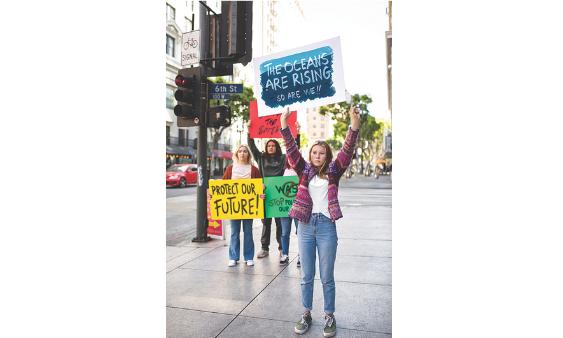
When we see something wrong, like someone being unfair or not taking care of our planet, it's important to speak up.
Speaking up doesn't mean yelling or being mean; it means caring about fairness and everyone's well-being.
By choosing to speak up, we help make the playground a better and safer place for everyone, now and in the future.

Choosing to be apolitical is a privilege for those unaffected by systemic issues, while for others, politics is a matter of survival.
Remaining neutral in times of crisis tacitly supports the status quo and perpetuates injustice and inequality.
Silence does not stop injustice; it sustains it, becoming another form of oppression for marginalized groups.
The digital age has normalized performative apathy, where passive online engagement replaces meaningful activism.
Political engagement is crucial for democracy, demanding participation to question power and uphold fundamental human values like justice and equality.
- Who
- Individuals, privileged groups, marginalized communities, academics, activists, political analysts, educators.
- What
- The concept and consequences of remaining apolitical in a world facing deep social, political, and environmental fractures, arguing that disengagement is a privilege that sustains injustice.
- When
- The present time, characterized by polarization, rapid information spread, and global crises.
- Where
- Globally, with specific reference to India.
- Why
- To critique the notion of apolitical stances, highlighting that silence and inaction in the face of injustice support oppressive systems and that active participation is a moral responsibility crucial for democracy and human values.
Arguments for Political Engagement
Arguments for Political Disengagement (Apolitical Stance)
Neutrality vs. Status Quo
Arguments for Political Engagement
Remaining apolitical tacitly supports the status quo and perpetuates injustice and inequality, especially for marginalized groups.
Arguments for Political Disengagement (Apolitical Stance)
Disengaging from politics is a personal choice for those fatigued by constant news cycles and social media outrage, a form of escape.
Consequences of Silence
Arguments for Political Engagement
Silence in the face of injustice, misinformation, and discrimination allows oppressive systems and authoritarianism to thrive.
Arguments for Political Disengagement (Apolitical Stance)
Choosing to be apolitical is a luxury, a privilege for those not directly affected by systemic issues, allowing them comfort.
Definition of Political Engagement
Arguments for Political Engagement
Political engagement means questioning power, demanding accountability, and upholding human values like justice and equality through various actions.
Arguments for Political Disengagement (Apolitical Stance)
Performative apathy and passive online engagement like likes or shares can be seen as a form of engagement without requiring real accountability.
- The "apolitical" stance
- A choice to disengage from social, political, and environmental issues.
- Consequence of inaction
- Tacitly supports the status quo and sustains injustice.
- Who benefits from neutrality
- Often favors the powerful and those shielded from systemic inequality.
- Digital age impact
- Normalized performative apathy and passive online engagement.
- Historical perspective
- Silence has been a consistent ally of oppression throughout history.
- Democracy requires
- Participation; treating politics as inconvenient hands over power to misuse.
- Forms of engagement
- Voting, protesting, volunteering, educating oneself, speaking against discrimination.