

7 months ago
Eco-Friendly Libraries Transforming Faridabad Schools
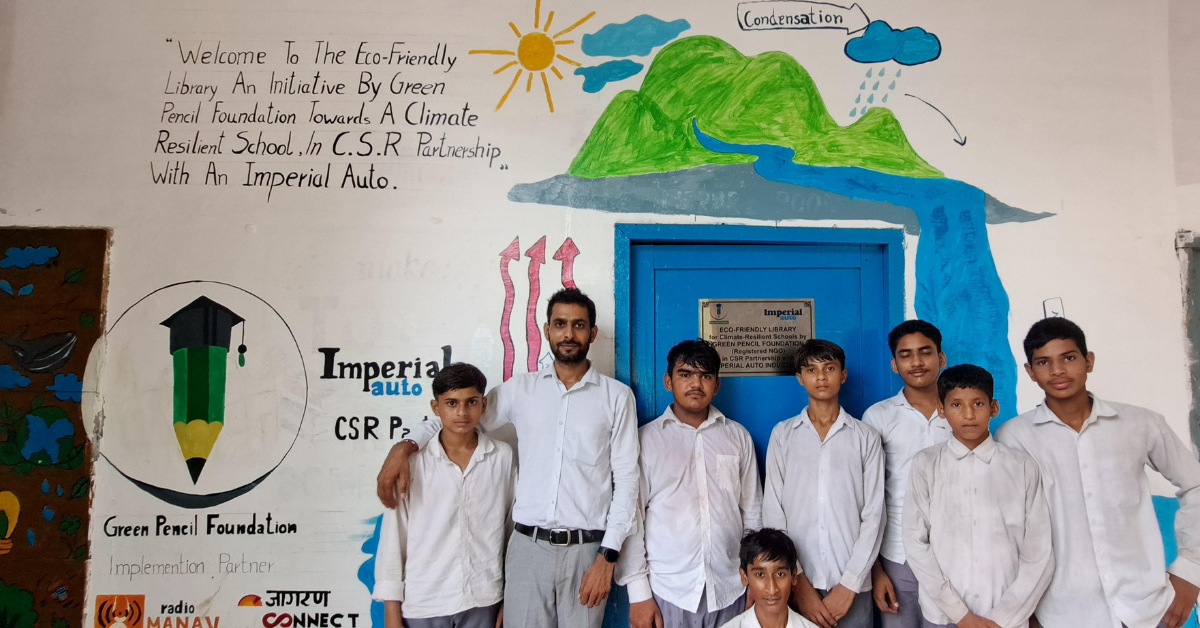
In Faridabad, India, a man named Sandy Khanda started a project to make school libraries more eco-friendly.
These libraries are not just for reading; they also teach kids about taking care of the environment.
The libraries have plants, special bins for trash, and even machines for sanitary pads.
Kids learn about pollution, how to sort trash, and why plants are important.
They also make things like vertical gardens from plastic bottles.
The goal is to help children understand how to protect the planet and make small changes in their daily lives, like using jute bags instead of plastic.
This project has reached many students and is making a big difference in how they think about nature and their future.

Green Pencil Foundation, founded by Sandy Khanda in 2019, transforms government school libraries into eco-friendly spaces in Faridabad.
Four eco-libraries feature vertical gardens made from recycled plastic bottles, bamboo furniture, and waste segregation systems.
Students participate in sustainability workshops, learning about air pollution, waste management, and water conservation through hands-on activities.
The initiative has reached over 2,250 students, encouraging behavior changes like using jute bags and planting saplings at home.
Sandy Khanda aims to expand the model to colleges, police stations, and government offices to promote environmental awareness.
- Who
- Sandy Khanda and the Green Pencil Foundation
- What
- Creation of eco-friendly libraries in government schools
- Where
- Faridabad, India
- When
- Founded in 2019, ongoing
- Why
- To educate children about sustainability and climate action
Key facts
- Founder
- Sandy Khanda
- Organization
- Green Pencil Foundation
- Year Founded
- 2019
- Location
- Faridabad, India
- Number of Libraries
- 4
- Students Reached
- 2,250
- Workshops Conducted
- 1,200 students
Quotes
Sandy Khanda
Founder of Green Pencil Foundation.
“For students studying in government schools, an N95 mask or an air purifier is a luxury. Our first step was to make them aware of why these resources matter, and then help them understand — through experiential learning and practical knowledge, how plastic waste and climate change actively drive pollution.”
 thebetterindia.com
“Nothing stands above nature. We are part of it, and it is because of nature that we exist. We can buy many things, but we cannot create oxygen or food the way nature does.”
thebetterindia.com
Naitik
A 13-year-old student at Government Senior Secondary School in Chhainsa, Faridabad.
“I love that we planted trees while building the eco-friendly library. Studying while feeling the cool breeze from the plants is the best part. I love sitting there with my friends.”
thebetterindia.com
“We now use jute bags when we go out to buy vegetables. I understand how harmful plastic is for the Earth, and this is something I’ve started practising at home.”
thebetterindia.com
Raja
A 15-year-old student at Government Senior Secondary School in Chhainsa, Faridabad.
“We used one-litre plastic bottles. We cut them, painted them, made holes, added compost and soil, planted saplings, and then hung them.”
thebetterindia.com

