

9 months ago
Maharashtra Farmers Reduce Moong Acreage Amid Shifting Crop Trends
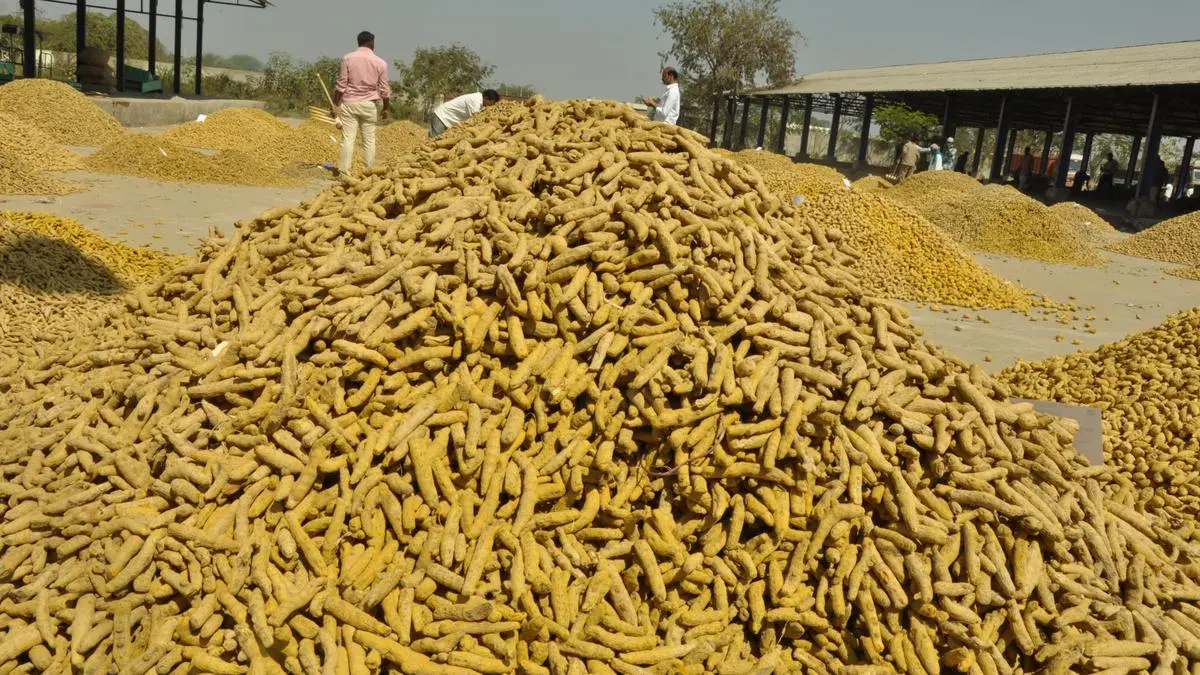
Farmers in Maharashtra are planting different amounts of pulse crops this year.
They are planting much less moong (a type of bean) because they are less sure about this crop.
However, they are planting more urad (another bean) because it's doing well in the market and can handle the unpredictable rainy weather better.
Tur, a main pulse crop, is still being planted at about the same amount as before, even though the weather and prices can be uncertain.
Overall, the total area for planting pulses is a bit less than usual.
This is happening while farmers are planting a lot more of other crops like corn.
Experts say this is because the weather has been unpredictable and farming is getting more expensive.
Some farmers feel that other crops like soybeans give them better profits than pulses.

Maharashtra's Kharif 2025-26 pulse sowing shows a mixed trend, with moong acreage declining significantly while urad acreage has expanded.
Tur cultivation remains stable, reflecting continued farmer reliance despite market and monsoon uncertainties.
The overall pulse cultivation area in Maharashtra is down compared to the five-year average, while cereal crops like maize have seen substantial expansion.
Factors influencing these shifts include erratic rainfall, favorable market conditions for urad, and reduced farmer confidence in moong.
Persistent challenges in India's pulse production, such as limited technology and vulnerability to rainfed farming, impact farmer profitability.
- Who
- Farmers in Maharashtra
- What
- Shifting cultivation of pulses, with a significant decline in moong acreage, stable tur cultivation, and expanded urad acreage.
- Where
- Maharashtra, India
- When
- Kharif 2025-26 season, with final sowing reports published on November 13, 2025.
- Why
- Erratic rainfall, shifting farmer preferences influenced by market conditions and crop adaptability, and a general trend of lower returns from pulses compared to other cash crops like soybean, alongside persistent challenges in pulse production.
Farmer Perspective
Agriculture Department/Expert View
Crop Viability and Returns
Farmer Perspective
Farmers like Ramkrishna Bholse state that compared to other cash crops like soybean, pulses offer minimal returns and most produce stays within the domestic market, leading to shifts to other cash crops.
Agriculture Department/Expert View
Agriculture department officials note favourable market conditions and better adaptability to short-duration rain spells as drivers for increased urad cultivation. The stable acreage of tur signifies continued farmer reliance despite market and monsoon uncertainties.
Acreage Trends and Confidence
Farmer Perspective
Reduced farmer confidence in moong has led to a noticeable fall in its cultivation, with acreage significantly below the five-year average.
Agriculture Department/Expert View
Urad cultivation shows a positive trend, exceeding the five-year average, indicating a strategic shift by farmers towards crops perceived as more adaptable and profitable.
Key facts
- Total Kharif pulses area (Maharashtra)
- 18,84,591 hectares
- Tur acreage (Maharashtra)
- 12,26,440 hectares (96% of 5-year average)
- Moong acreage (Maharashtra)
- 2,11,318 hectares (70% of 5-year average)
- Urad acreage (Maharashtra)
- 3,78,257 hectares (105% of 5-year average)
- Other pulses acreage (Maharashtra)
- 68,575 hectares (75% of 5-year average)
- Maize acreage expansion
- 156% of 5-year average
- Top pulses producing states
- Madhya Pradesh, Maharashtra, Rajasthan (contributing ~55% of India's output)
Quotes
Ramkrishna Bholse
a farmer from Latur
“Compared to soybean and other crops, we hardly get any returns in pulses, and most of our produce goes to the domestic market. In recent years, more farmers are shifting to other cash crops.”
 thehindubusinessline.com
Sources

Related news

Egg Prices Rise 40 Percent as Retail Rates Reach ₹9
Kharif Sowing Declines 3% Despite 81% Coverage
Bommai Calls for Crop-Loss Survey Overhaul, Seeks Maize Price Hike
Farmers Demand Maize Control Order for MSP Like Sugar Sector
