

Archive · 8 Nov 2025
Heirs' Checklist: Claiming Property, EPF, FDs, Mutual Funds, and Lockers After Death
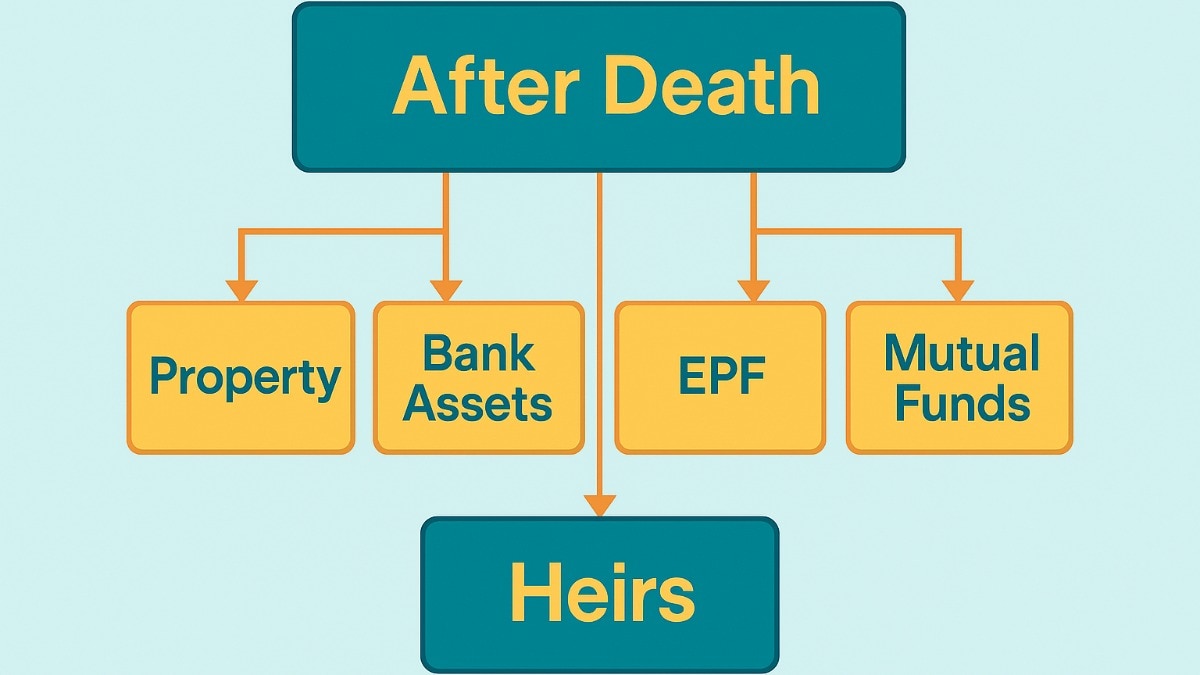
Imagine someone you know passes away, and they left behind things like a house, money in the bank, or special savings.
It's like a treasure hunt to figure out who gets what!
If they named a helper (a nominee) for their savings or accounts, it's usually easier.
The helper just needs to show a death certificate and some papers.
But if no helper was named, it gets trickier.
You might need a special paper from a judge to prove you are the right person to get the money or property.
For a house, you need to officially change the owner's name in the town's records.
Sometimes, even getting into a safe deposit box at the bank needs extra steps if no helper was named.
For work savings like EPF, the helper or family can claim it.
It's important for people to write down all their important things and who should get them, and tell their family where that list is.
This helps everyone later and stops fights.

Claiming assets like property, EPF, FDs, mutual funds, and lockers after a death involves navigating various documentation and legal procedures in India.
Joint account holders or nominees simplify claims for bank accounts and FDs; otherwise, a succession certificate or court order is necessary.
Property transfer requires mutation, official documentation including title deeds, and potentially a No Objection Certificate (NOC) from co-heirs.
Accessing bank lockers without a nominee or Will may necessitate a succession certificate or legal heir certificate, and banks can break open lockers if keys are lost.
Proactive planning, including maintaining a detailed asset spreadsheet and clear nominations, can significantly reduce complications and disputes for heirs.
- Who
- Heirs, executors, and financial institutions
- What
- Navigating the processes to claim and transfer assets of a deceased person, including property, bank accounts, FDs, lockers, EPF, and mutual funds.
- When
- After the death of an individual.
- Where
- Primarily in India, involving civil courts, banks, EPF offices, and property/municipal records.
- Why
- To legally transfer ownership and access financial assets left by a deceased individual, often complicated by a lack of nominees or proper documentation.
Proactive Planning
Reactive Claim Process
Managing Assets After Death
Proactive Planning
Individuals should proactively maintain a detailed, updated spreadsheet of all assets, nominations, and their locations, informing family members. This prevents future confusion and disputes.
Reactive Claim Process
Settling financial affairs after a death involves navigating a maze of paperwork, court procedures, and verification steps for each asset, which can be time-consuming and complex.
Role of Nominations
Proactive Planning
Clear nominations for bank accounts, lockers, and other assets are essential to avoid delays and simplify the claims process for heirs.
Reactive Claim Process
Without nominees, banks and fund houses may require additional documentation like succession certificates, indemnity bonds, or legal heir certificates, prolonging the process.
- Bank Accounts/FDs
- Joint holders or nominees allow for smoother claims. Without them, a succession certificate or court order is needed.
- Property Transfer
- Requires mutation, applying with death certificate, heir KYC, title deed, and proof of inheritance. A No Objection Certificate (NOC) from co-heirs is helpful.
- Bank Lockers
- Needs death certificate, KYC, claim form. If no Will or nominee, a succession certificate or legal heir certificate may be required. Banks can break open lockers if keys are missing.
- EPF
- Nominee or legal heir can claim balance, pension, and EDLI benefits via UMANG app or EPF office. Older accounts without UAN can be challenging to trace.
- Mutual Funds
- Nominees can submit claim forms and death certificates. Without a nominee, transmission requires an indemnity bond, affidavits, and possibly a probate or succession certificate.
- Executor's Duty
- Secure the estate, distribute assets per the Will, and file for probate to formalize authority and prevent disputes.