Archive · 16 Sep 2026
Hyrox Apologises and Changes Rules After Beijing Race Incident

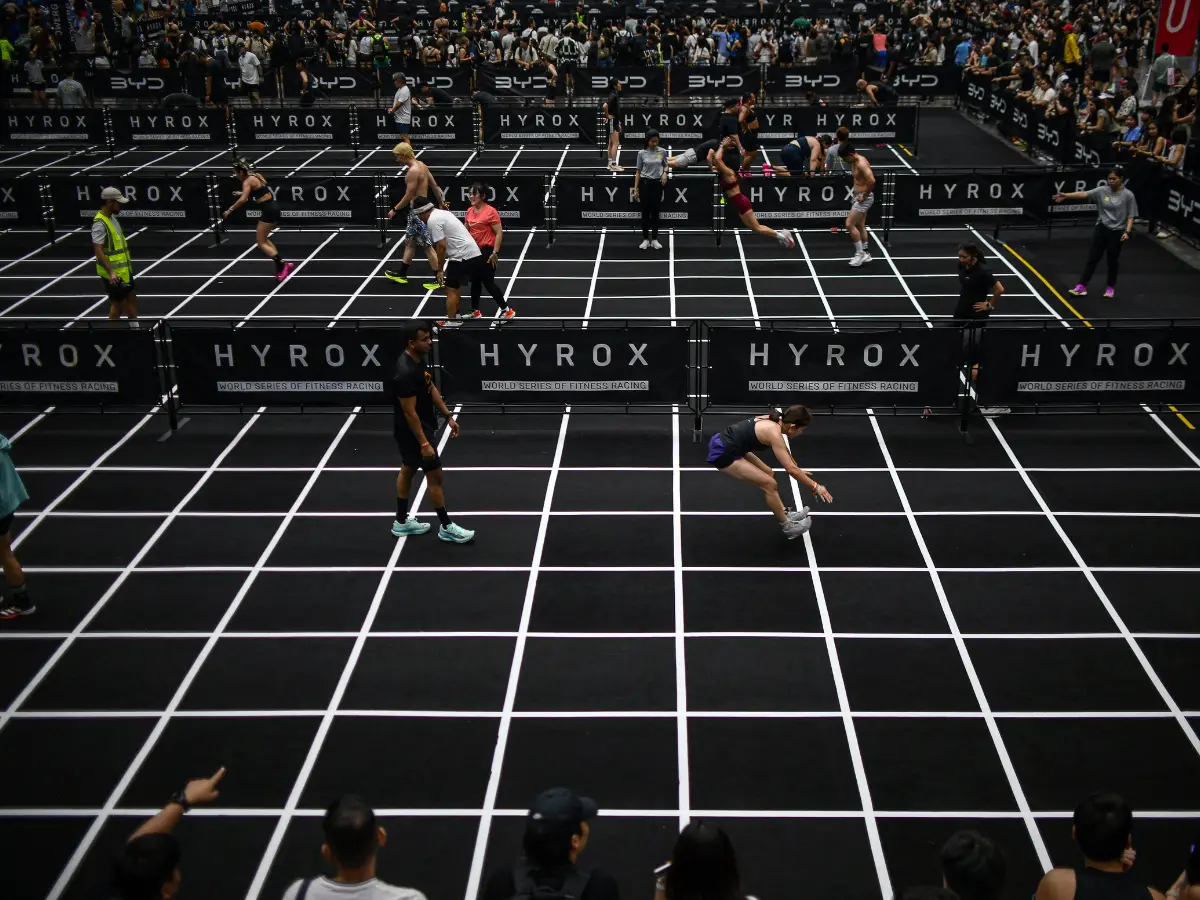
Hyrox is an indoor fitness race that mixes running with difficult exercises.
Athletes run about one kilometre and then complete an exercise station.
They repeat this pattern several times, using equipment shared with other competitors.
During a Beijing race, Australian athlete Joanna Wietrzyk became ill and soiled herself.
She continued racing and eventually won.
Videos of the incident spread online and led to criticism about hygiene and safety.
Hyrox co-founder Moritz Fürste apologised for not stopping the race sooner.
Organisers said they cleaned and isolated the affected area and planned to replace part of the floor.
Hyrox also changed its rules so officials can remove athletes when bodily fluids create a safety risk.

Australian athlete Joanna Wietrzyk continued and won Hyrox Beijing’s women’s pro race after soiling herself.
She completed exercise stations and used equipment shared with other competitors, prompting health and safety criticism.
Hyrox co-founder Moritz Fürste apologised for the organisation’s failure to intervene immediately.
Hyrox China said the affected area and track were isolated, disinfected, and scheduled for floor replacement.
New rules allow race directors to withdraw athletes when blood, vomit, urine, or faeces creates a welfare or contamination risk.
- Who
- Australian athlete Joanna Wietrzyk, Hyrox co-founder Moritz Fürste, and Hyrox organisers.
- What
- Wietrzyk continued and won a Hyrox race after soiling herself, prompting criticism, an apology, and rule changes.
- When
- The incident occurred during a Beijing event on a Saturday identified as September 12; the year is not specified.
- Where
- At an indoor Hyrox competition in Beijing, China.
- Why
- Criticism focused on possible contamination because athletes used shared equipment and competed on the same course.
Critics and Safety Concerns
Hyrox Organisers' Response
Whether Wietrzyk should have continued
Critics and Safety Concerns
Critics argued that allowing Wietrzyk to continue while faecal matter was visible created a contamination risk because competitors shared equipment and the course.
Hyrox Organisers' Response
Hyrox acknowledged that it failed to react immediately and introduced rules allowing race directors to withdraw athletes on medical grounds.
Handling of the competition area
Critics and Safety Concerns
The widely circulated footage raised questions about Hyrox's health and safety standards and its handling of bodily-fluid contamination.
Hyrox Organisers' Response
Hyrox China said it isolated and disinfected the affected area and track, removed the equipment, and planned to replace the floor.
Clarity of existing protocols
Critics and Safety Concerns
The incident suggested that previous rules did not clearly address bodily-fluid risks during a mass-participation event.
Hyrox Organisers' Response
Hyrox World said protocols for elite competition and mass participation had become blurred, while Hyrox said its rulebook and event procedures were being updated.
- Athlete
- Joanna Wietrzyk, an Australian athlete described as a women's world record holder.
- Race result
- Wietrzyk won the women's pro race in 1 hour, 1 minute, and 23 seconds.
- Competition format
- Hyrox combines eight one-kilometre runs with eight workout stations on an indoor course.
- Exercises
- Stations can include rowing, sled pushes, burpee jumps, medicine-ball throws, and sandbag lunges.
- Organiser response
- Hyrox China said the affected area and track were closed, isolated, and comprehensively disinfected.
- Facility response
- Organisers said the venue floor would be replaced to protect future athletes.
- Rule change
- Race directors may withdraw racers when blood, vomit, urine, or faeces poses a welfare or contamination risk.
- Founding-date discrepancy
- The reports differ on whether Hyrox was founded in 2007 or 2017.