

Archive · 5 Nov 2025
Japan's 'Hara Hachi Bu': Ancient Wisdom for Weight Control and Longevity
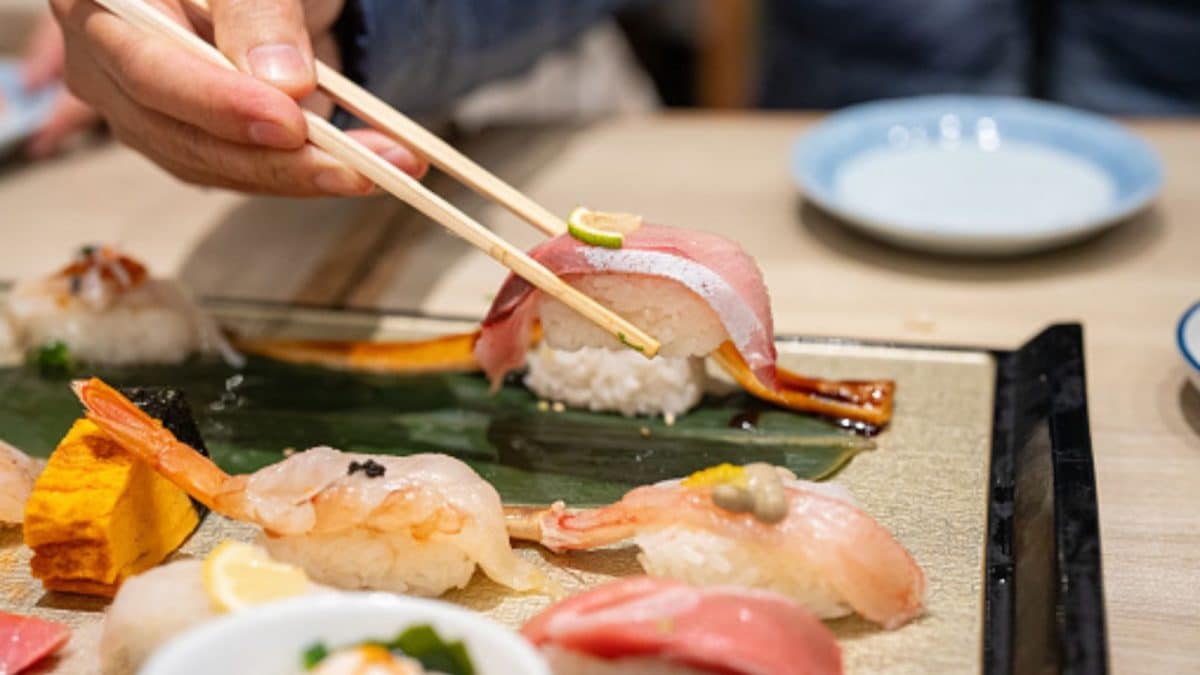
Imagine you're eating your favorite snack.
'Hara Hachi Bu' is like pressing pause right before you feel totally stuffed, when you're just comfortably full.
It's an old Japanese idea from a place called Okinawa where people live a very long time.
Instead of counting every bite or following strict rules, you just pay attention to how your body feels.
You eat slowly, and when you feel about 80% full – not super full, but satisfied – you stop.
This helps your body digest food better and means you eat fewer calories without feeling deprived.
Scientists think this way of eating helps people stay healthy, manage their weight, and live longer, happier lives.
It’s a simple way to be kind to your body and enjoy your food more.

'Hara Hachi Bu' is an ancient Japanese eating principle meaning 'eat until you are eight parts full'.
It encourages mindful eating and stopping when 80% full, rather than eating until stuffed.
This practice is linked to the long lifespans and lower rates of chronic diseases observed in Okinawan centenarians.
Unlike restrictive diets, 'Hara Hachi Bu' focuses on awareness, moderation, and listening to the body's satiety cues.
Adopting 'Hara Hachi Bu' can lead to sustainable weight management, improved metabolism, and a healthier relationship with food.
- Who
- People in Okinawa, Japan, and those adopting the 'Hara Hachi Bu' philosophy.
- What
- An ancient Japanese eating practice focused on mindful moderation, stopping when 80% full.
- When
- Practiced for centuries and continuing today.
- Where
- Originated in Okinawa, Japan, and is gaining global attention.
- Why
- To promote longevity, maintain a healthy weight, improve metabolism, and foster a calmer relationship with food.
Modern Diets
'Hara Hachi Bu'
Approach to Eating
Modern Diets
Focus on restriction, rules, calorie counting, meal plans, and nutrition charts.
'Hara Hachi Bu'
A mindful habit encouraging stopping when 80% full, focusing on how one eats rather than what or when.
Complexity
Modern Diets
Often involves complex tracking, apps, and specific food eliminations.
'Hara Hachi Bu'
Simple principle requiring no special tools, apps, or strict rules, promoting self-awareness.
Relationship with Food
Modern Diets
Can lead to feelings of deprivation, stress, and guilt, potentially causing rebound weight gain.
'Hara Hachi Bu'
Promotes a calm, sustainable relationship with food, reduces stress and guilt, and fosters gratitude.
- Origin
- Okinawa, Japan
- Meaning
- Eat until you are eight parts full
- Calorie Intake (Okinawans)
- Approx. 1,800 calories per day
- Calorie Intake (Western Countries)
- Approx. 2,100–2,500 calories per day
- Key Practices
- Eating slowly, listening to body cues, practicing gratitude
- Potential Health Benefits
- Stable metabolism, healthy weight, reduced inflammation, longevity