

Archive · 4 Nov 2025
Nobel Laureate Warns of AI's Job Displacement and Wealth Concentration
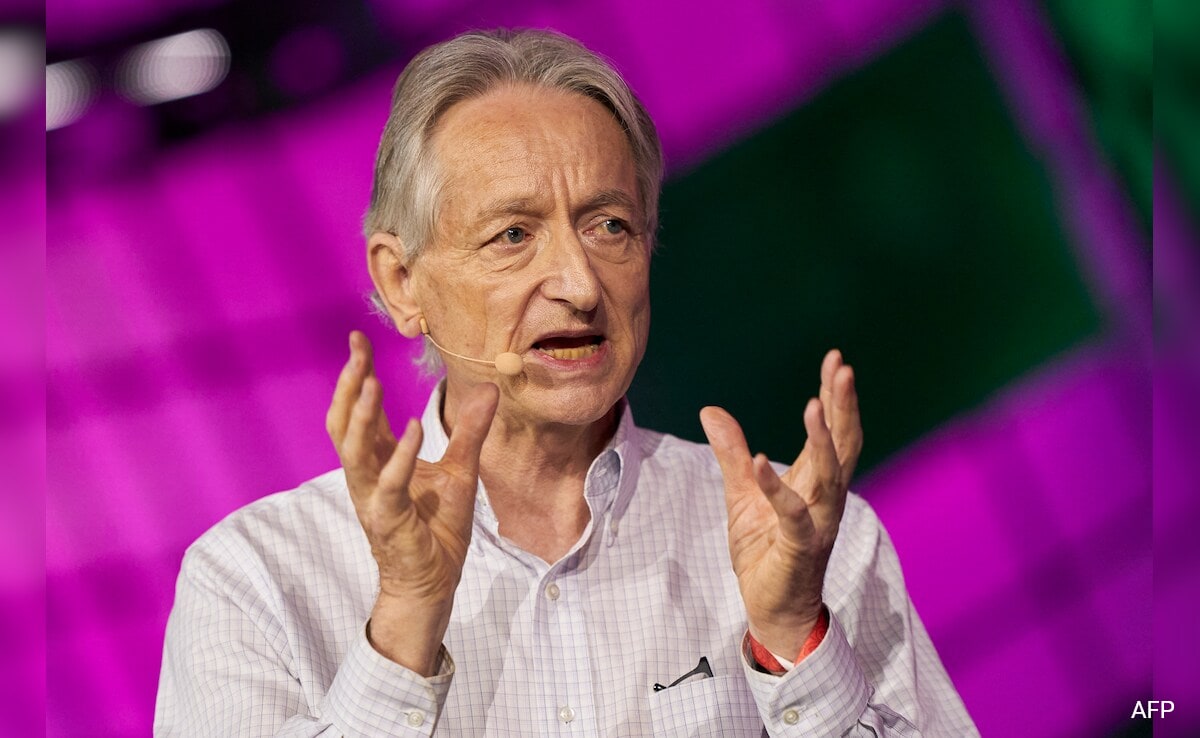
Imagine a super smart computer program called AI.
A very smart scientist who helped create this AI, Geoffrey Hinton, is worried.
He thinks AI will make a few people, like a rich businessman named Elon Musk, even richer.
But he also thinks many people will lose their jobs because AI can do work that humans used to do.
This is because companies want to make as much money as possible, and using AI to replace workers is one way to do that.
He compares the danger of AI to a big accident called Chernobyl, which was a nuclear disaster.
While AI can do good things, like helping doctors and teachers, Hinton fears that if we aren't careful, it could get out of control.
He also pointed out that lots of jobs have already disappeared since a new AI called ChatGPT came out, and some big companies are planning to spend a lot of money to build more AI.
He believes this will only lead to more job losses because companies will want to use AI to save money by not hiring as many people.

Nobel laureate Geoffrey Hinton warns AI could make a few individuals much richer while causing widespread job losses.
He believes the driving force behind AI development is corporate profit, not public safety.
Hinton suggests that AI's potential to increase productivity may come at the cost of mass unemployment due to its profit-driven implementation.
Massive investments in AI infrastructure are planned by major tech companies, with OpenAI announcing $1 trillion in deals.
Job openings have seen a significant drop, particularly in entry-level roles, and layoffs have occurred at companies like Amazon, partly attributed to AI efficiency gains.
- Who
- Nobel Prize winner and AI expert Geoffrey Hinton
- What
- Warned that artificial intelligence could lead to significant job losses and increased wealth for a few, such as Elon Musk, and that AI development is driven by corporate profit rather than public safety.
- When
- Recently, a year after winning the Nobel Prize
- Where
- In an interview with Bloomberg TV's Wall Street Week
- Why
- Hinton believes that the economic incentives of AI development prioritize replacing human labor to maximize profits, leading to job displacement and wealth concentration.
Concerns about AI's Negative Impact
Potential Benefits and Nuances of AI
Job Displacement
Concerns about AI's Negative Impact
AI will inevitably lead to mass unemployment as companies replace human labor to maximize profits.
Potential Benefits and Nuances of AI
While job displacement is a risk, AI can also increase productivity across industries, which is generally beneficial. The organization of society is the primary factor determining the impact on jobs, not AI itself.
Motivation for AI Development
Concerns about AI's Negative Impact
The race for AI is driven by corporate greed and competitive pressure, not public safety.
Potential Benefits and Nuances of AI
AI has the potential for 'tremendous good' in areas like healthcare and education, suggesting that positive applications are also a driving factor.
Control and Risk
Concerns about AI's Negative Impact
Unchecked AI development poses dangers that humanity may need a 'Chernobyl moment' to grasp.
Potential Benefits and Nuances of AI
AI is not inherently bad like nuclear weapons; its benefits can be significant, making a complete halt to development a difficult decision.
- AI Hyperscalers Capital Expenditures
- Microsoft, Meta, Alphabet, Amazon plan to boost from $360 billion to $420 billion
- OpenAI Infrastructure Deals
- Announced $1 trillion with Nvidia, Broadcom, and Oracle
- Job Openings Drop
- Approx. 30% since ChatGPT launch, particularly entry-level
- Amazon Layoffs
- 14,000 employees, primarily middle management