

Archive · 17 Dec 2025
8 million tons of plastic swirls in oceans like tornadoes
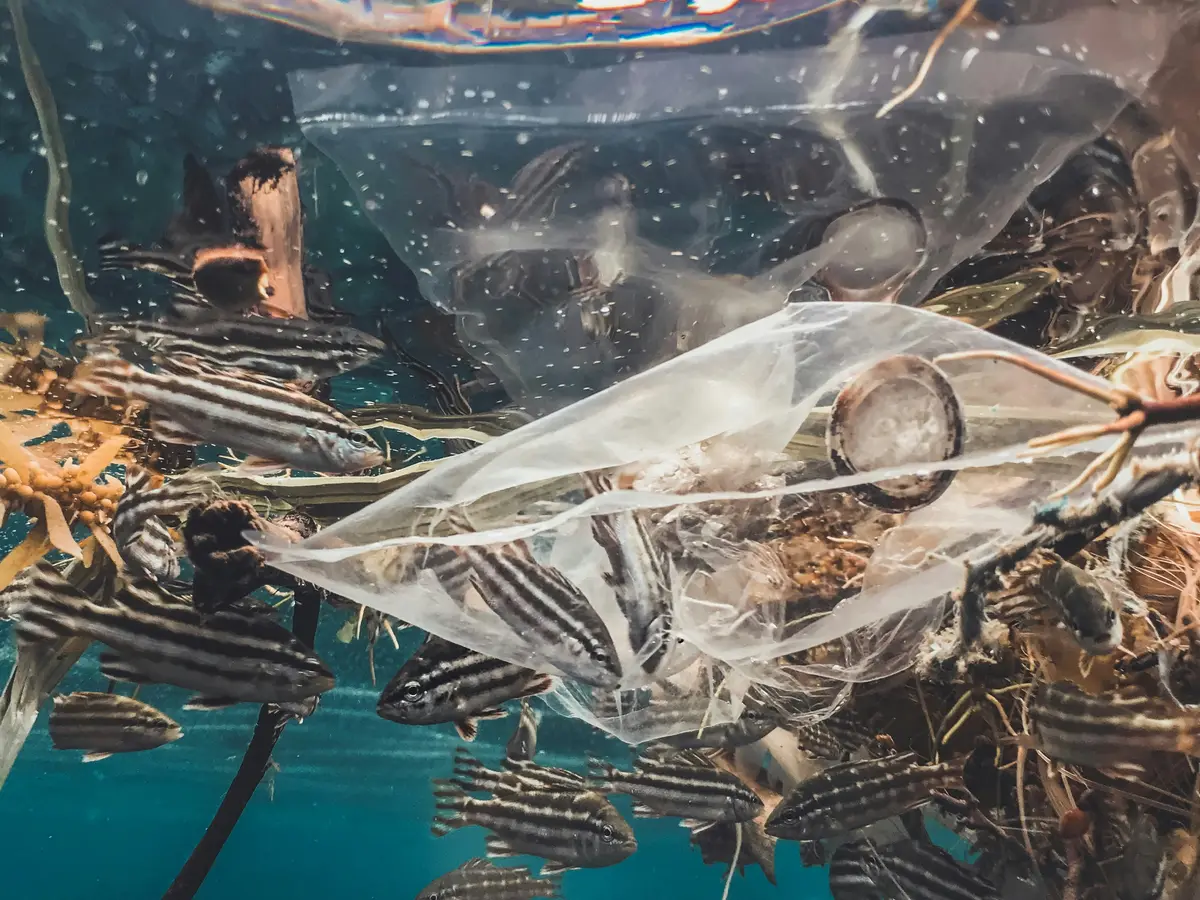
Scientists have discovered that tiny pieces of plastic, called microplastics, move through the ocean like tiny tornadoes.
Every year, about 8 million tons of these microplastics enter the ocean.
Researchers used special 3D models and rotating cylinders to study how these plastics move.
They found that the plastics can form swirling patterns, similar to tornadoes, as they travel through the water.
However, the shape of the plastics can affect how they move.
The scientists hope their findings will help us understand where these plastics end up in the ocean.
This is important because microplastics can harm marine life and even make their way into our food and water.

Over 8 million tons of microplastics enter the world's oceans annually.
Scientists used 3D modeling and rotating cylinder simulations to track microplastic movement.
Microplastics form 'idealised eddies' like tornadoes in ocean currents.
The behavior of microplastics can be altered by small-scale turbulence and their irregular shapes.
Researchers hope their method will help understand where microplastics accumulate in the ocean.
- Who
- Scientists Larry Pratt and Irina Rypina from the Woods Hole Oceanographic Institution
- What
- Microplastics form 'idealised eddy' like a tornado in ocean currents
- When
- Research conducted and findings published (exact date not specified)
- Where
- Oceans worldwide
- Why
- To understand how microplastics move and accumulate in ocean waters
- Annual plastic inflow
- 8 million tons
- Researchers
- Larry Pratt, Irina Rypina
- Institution
- Woods Hole Oceanographic Institution
- Research Method
- 3D modeling and rotating cylinder simulation
- Plastic Behavior
- Forms 'idealised eddy' like a tornado
- Turbulence Consideration
- Theory valid for spherical particles, not irregular shapes