

Archive · 20 May 2025
Air India Flight Toilets: How They Work and Why They Fail
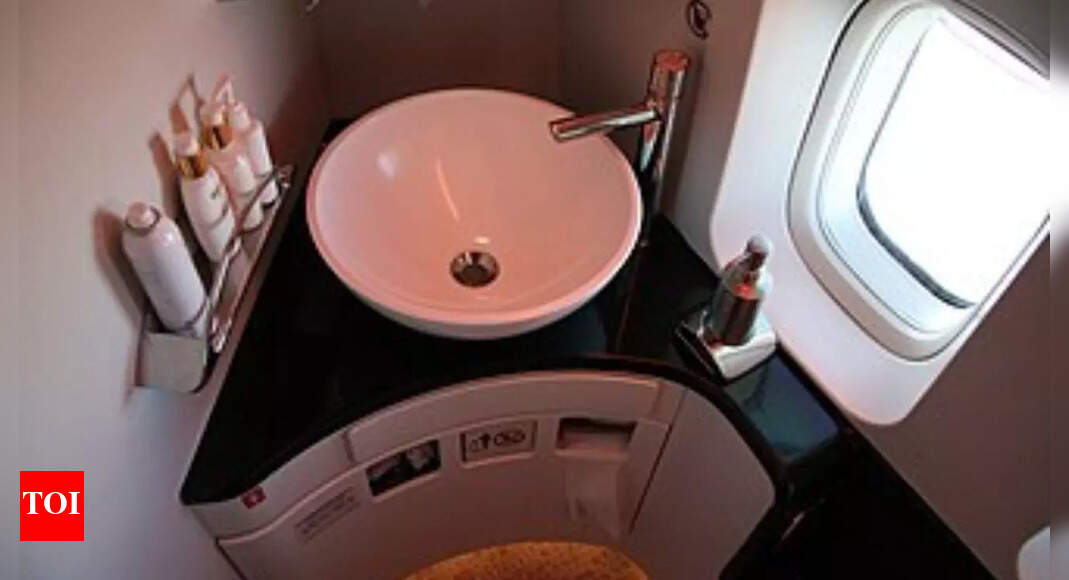
Airplane toilets use a vacuum system, unlike home toilets.
Cabin air pressure is higher than outside, creating a vacuum to suck waste into a holding tank.
When a toilet is flushed, a valve opens, and the pressure difference pulls waste into a tank.
Sometimes, multiple toilets clog at once because they share drain lines connected to the same waste tank, which can get blocked by items like bags or cloth.
Solutions like adding mesh are being considered to prevent clogs.

Air India flights have experienced multiple toilet malfunctions, causing delays and diversions.
Aircraft toilets use vacuum systems, utilizing pressure differences for flushing.
Clogs often result from foreign objects, such as plastic bags, blocking drain lines.
The design of the system, with multiple toilets connected to one tank, can cause several toilets to fail.
Airlines are exploring solutions like mesh filters to prevent clogs.
- Who
- Air India passengers, aircraft maintenance engineers, and airline companies.
- What
- Recurrent disruptions on Air India flights due to overflowing or non-functional lavatories.
- When
- Recent months, with instances in March and this month.
- Where
- Flights on international routes, such as those operated from Chicago and Toronto to Delhi.
- Why
- Clogging from foreign objects, system design, and pressure differentials.
- Affected Airline
- Air India
- Aircraft Type (Examples)
- Boeing 777 (B777), Boeing 737 MAX, Airbus A320
- Toilet System Type
- Vacuum
- Common Clog Cause
- Foreign Objects (bags, cloth, etc.)
- Cabin Pressure
- 11-12 psi
- Waste Tank Location
- Unpressurized compartment underneath the floor.