

Archive · 8 Aug 2025
James Webb Telescope Discovers Universe's Oldest Black Hole
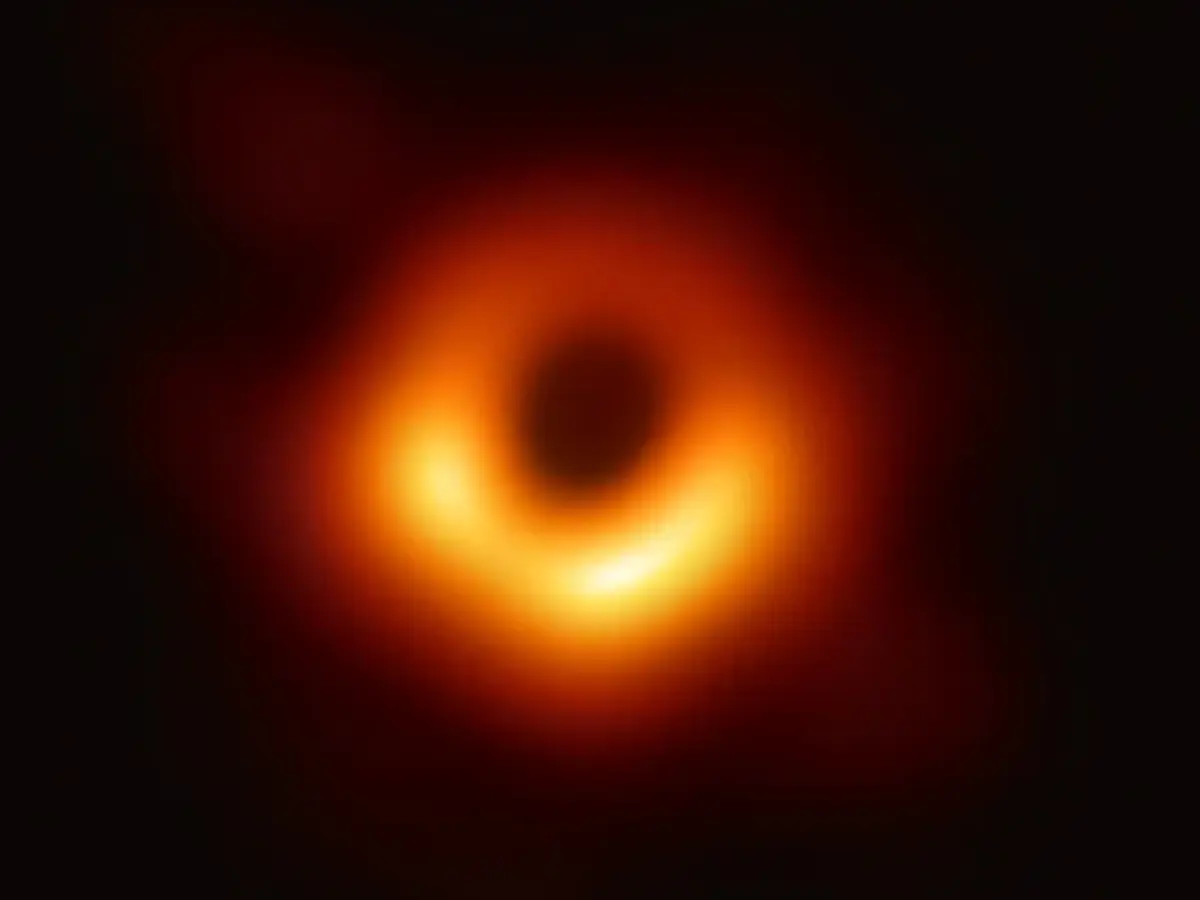
Imagine the universe as a baby.
Scientists have found the oldest 'tummy ache' – a black hole that existed when the universe was very young.
The James Webb Space Telescope found it in a galaxy called CAPERS-LRD-z9.
This black hole is super old, about 13.3 billion years.
Scientists noticed strange red dots, which turned out to be galaxies.
These galaxies had the black holes, and scientists could tell because of how the black hole interacted with gas around it.
The gas moves in a special way because of the black hole, which helped scientists find this ancient black hole.

The James Webb Space Telescope discovered the universe's earliest black hole.
The black hole existed just 500 million years after the Big Bang.
It was found in the distant galaxy CAPERS-LRD-z9, and is around 13.3 billion years old.
The discovery came from the study of 'Little Red Dot' galaxies, which appeared different from galaxies observed by Hubble.
A distinct spectroscopic signature, produced by the interaction of black holes with gas clouds, confirmed the discovery.
- Who
- Discovered by scientists using the James Webb Space Telescope.
- What
- Discovery of the earliest black hole.
- When
- The black hole existed approximately 500 million years after the Big Bang.
- Where
- In the distant galaxy CAPERS-LRD-z9.
- Why
- To understand the early universe and the formation of black holes.
- Telescope
- James Webb Space Telescope
- Black Hole Age
- Approximately 13.3 billion years
- Galaxy
- CAPERS-LRD-z9
- Discovery Timeframe
- 500 million years after the Big Bang
- Study Type
- Spectroscopy data from Webb’s CAPERS program