

Archive · 25 Jan 2026
Goa Assembly Debate on Vande Mataram
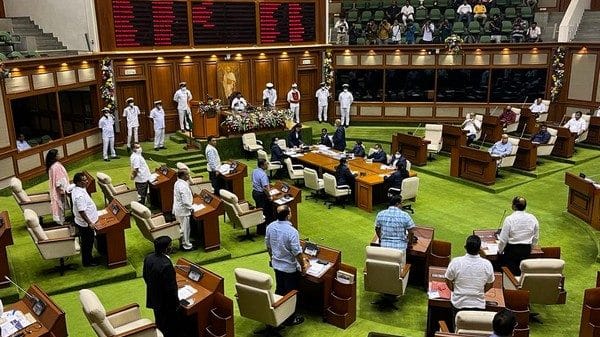
In the Goa Legislative Assembly, a big argument happened about the song Vande Mataram.
Instead of talking about important things like the environment and jobs, some people used the song to test others' loyalty.
The Chief Minister and others shouted and made a big scene.
Some people think this was a way to avoid talking about real problems.
The song Vande Mataram was meant to be a poem about love for the country, not a way to force people to obey.
The argument showed that some people in power use symbols like this song to make themselves look strong when they are not doing a good job.
It's like using a big, loud song to cover up problems instead of fixing them.
The people who didn't join in the shouting were not being disloyal; they were standing up for democracy and fair governance.

A heated debate in the Goa Legislative Assembly centered around the chanting of Vande Mataram.
The debate was seen as a way to test loyalty and deflect from governance issues like environmental devastation and unemployment.
The Chief Minister and others engaged in a shouting match, lacking decorum and statesmanship.
Vande Mataram was originally a poetic invocation, not a tool for coercion or discipline.
Those who refused to participate in the chant were defending constitutional democracy against coerced loyalty.
- Who
- Members of the Goa Legislative Assembly, including the Chief Minister and AAP leader
- What
- A heated debate over the chanting of Vande Mataram, revealing deeper issues of governance and dissent
- When
- During a session of the Goa Legislative Assembly
- Where
- Goa Legislative Assembly
- Why
- To test loyalty and deflect from uncomfortable questions about governance and social issues
- Location
- Goa Legislative Assembly
- Main Issue
- Debate over Vande Mataram
- Key Figures
- Goa CM, AAP leader
- Underlying Issues
- Environmental devastation, land alienation, unemployment, crony tourism
- Historical Context
- Vande Mataram as a poetic invocation, not a disciplinary instrument
- Political Context
- Symbolic substitution when governance fails
- Constitutional Context
- Defending constitutional democracy over coerced loyalty