

Archive · 26 Jun 2025
Swiss Scientists Create Living Material to Absorb CO2
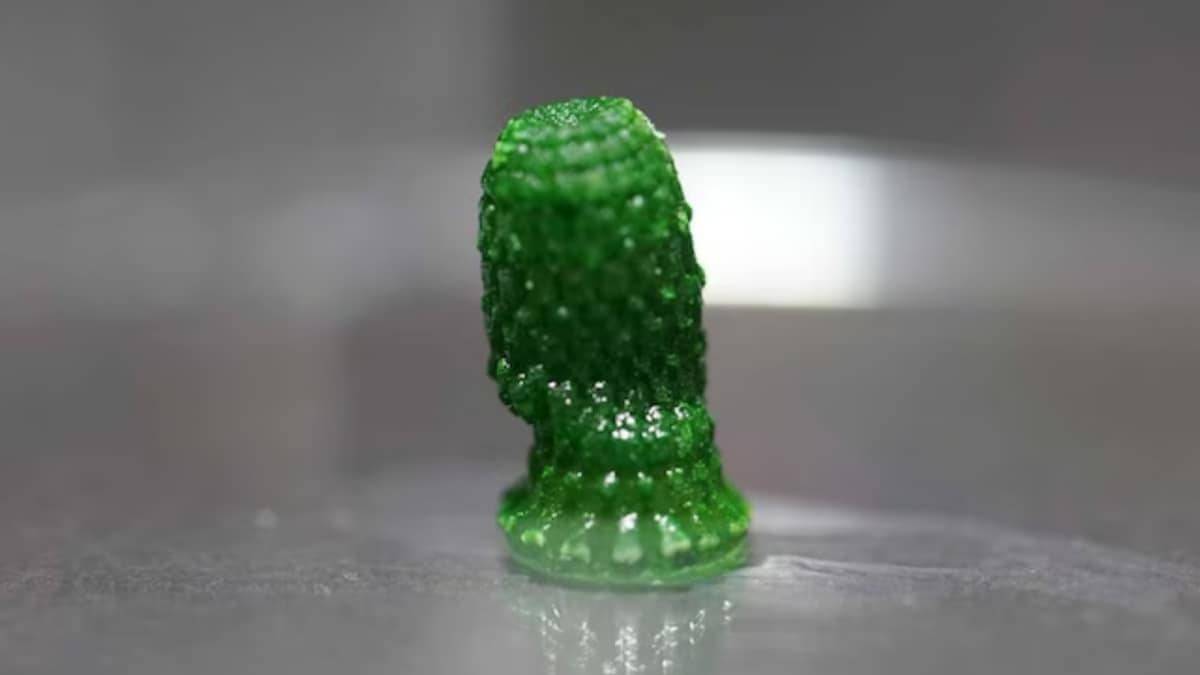
Scientists made a new building material that's like a living thing!
It uses tiny plants called algae to suck up carbon dioxide (CO₂) from the air, like a tree does.
These algae turn the CO₂ into things like oxygen and minerals, which make the material strong.
It's made with a special gel that lets in air, water, and light so the algae can live.
This material could be used on buildings to help clean the air and fight climate change, storing CO₂ and making buildings more eco-friendly.

Swiss scientists created a 'living' building material using algae.
The material absorbs carbon dioxide (CO₂) from the atmosphere.
It converts CO₂ into oxygen, sugars, and solid minerals like limestone.
The material is 3D-printable and made with a hydrogel and cyanobacteria.
It has the potential to reduce carbon emissions and be used for building walls.
- Who
- Swiss scientists.
- What
- A 'living' building material that absorbs carbon dioxide.
- When
- The material was developed in June 2025.
- Where
- Switzerland.
- Why
- To create a sustainable building material that reduces carbon emissions.
- Material Type
- 3D-printable, 'living' material
- Main Ingredient
- Blue-green algae (cyanobacteria)
- Function
- Absorbs CO₂ from air
- Byproduct
- Oxygen, sugars, minerals
- CO₂ Storage
- 26 milligrams per gram of material over 400 days
- Potential Use
- Building walls, CO₂ reduction