

Archive · 5 Oct 2026
MPSC Protests Intensify as Rahul Gandhi May Meet Aspirants
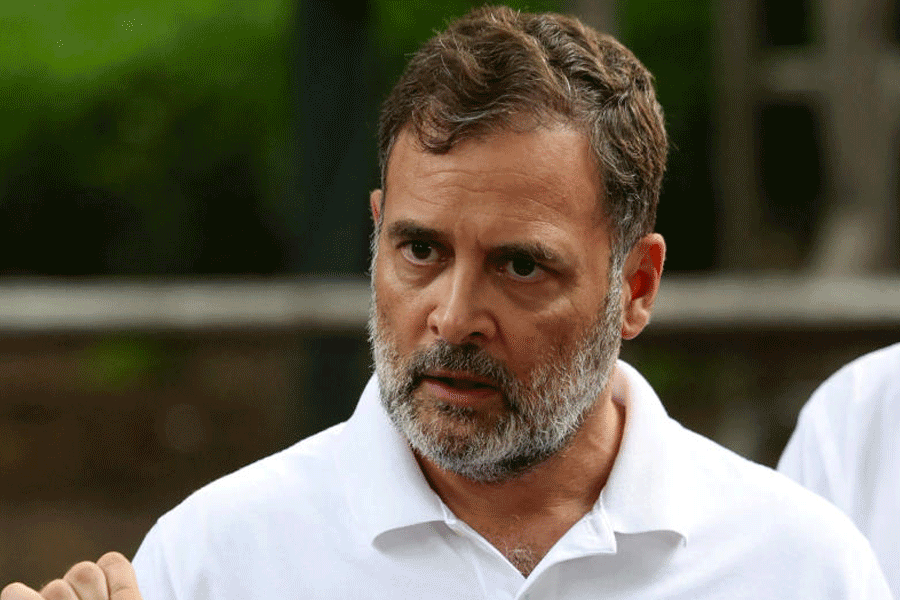
People preparing for Maharashtra government jobs are protesting in Pune.
They are asking for changes to the MPSC exams and for the commission’s chairman to resign.
They have also raised concerns about alleged exam paper leaks and recruitment irregularities.
NCP (SP) MLA Rohit Pawar said Rahul Gandhi may meet them on October 7 or 8, but that visit has not been confirmed.
Other political leaders and activist Manoj Jarange have also shown support.
Protesters may discuss a road blockade or a march to Mumbai if they are unhappy with the government’s response.
The government has ended the deputation of an MPSC secretary.
It has also announced an inquiry into the commission’s past and current leadership, with further action to depend on the inquiry’s findings.

MPSC aspirants are protesting at three locations in Pune, with demands including changes to the examination format and the resignation of chairman Vivek Bhimanwar.
The protests are linked to allegations of paper leaks and irregularities in recruitment examinations.
NCP (SP) MLA Rohit Pawar said Rahul Gandhi may meet the protesters on October 7 or 8; the articles do not confirm a visit.
Aaditya Thackeray said he would join the protest, while Raj Thackeray and Manoj Jarange visited the main venue and voiced support.
The state government ended MPSC secretary Mahendra Uttamrao Harpalkar’s deputation and announced a judicial inquiry within three months; it said further action would depend on the findings.
- Who
- MPSC aspirants are protesting; political figures including Rohit Pawar, Rahul Gandhi, Aaditya Thackeray, Raj Thackeray and activist Manoj Jarange are mentioned.
- What
- The aspirants are seeking MPSC reforms, including the chairman’s resignation, amid allegations of paper leaks and recruitment irregularities.
- When
- The reports describe the protest as being in its fifth day; Rahul Gandhi may visit on October 7 or 8, according to Rohit Pawar.
- Where
- Three protest locations in Pune, Maharashtra.
- Why
- Aspirants are demanding changes to MPSC examinations and action over alleged paper leaks and concerns about recruitment.
Aspirants and supporters
Government response
Accountability for the commission
Aspirants and supporters
Protesters’ main demand is the resignation of chairman Vivek Bhimanwar, amid allegations of paper leaks and recruitment irregularities.
Government response
The government announced a judicial inquiry into the functioning of former and incumbent MPSC chairpersons and members, and said further action would follow its findings.
How to respond to the protest
Aspirants and supporters
Rohit Pawar said protesters may consider a road blockade or march to Mumbai if the government does not decide in students’ favour.
Government response
The government has announced an inquiry; the reports do not state that it has agreed to the protesters’ demand for the chairman’s resignation.
Government jobs
Aspirants and supporters
Aspirants are protesting for reforms and jobs; Manoj Jarange urged them to continue pressing their demands.
Government response
Raj Thackeray said the demand for recruitment to 70,000 government posts was unlikely to be fulfilled and argued that privatization was reducing available government jobs.
- Protest locations
- Three locations in Pune
- Main demand
- Resignation of MPSC chairman Vivek Bhimanwar
- Other exam demand
- Aspirants have differing demands, including an objective or descriptive examination format
- Possible Gandhi visit
- October 7 or 8, according to Rohit Pawar; not confirmed in the reports
- Possible protest actions
- A road blockade or a march to Mumbai, to be discussed with protesters
- Government personnel action
- The government ended Mahendra Uttamrao Harpalkar’s deputation as MPSC secretary
- Judicial inquiry
- Announced within three months into the functioning of former and incumbent MPSC chairpersons and members under Article 317 of the Constitution
- Further government action
- The government said further action would be based on the inquiry’s findings
