

Archive · 29 Nov 2025
New Analysis Hints at Dark Matter Detection
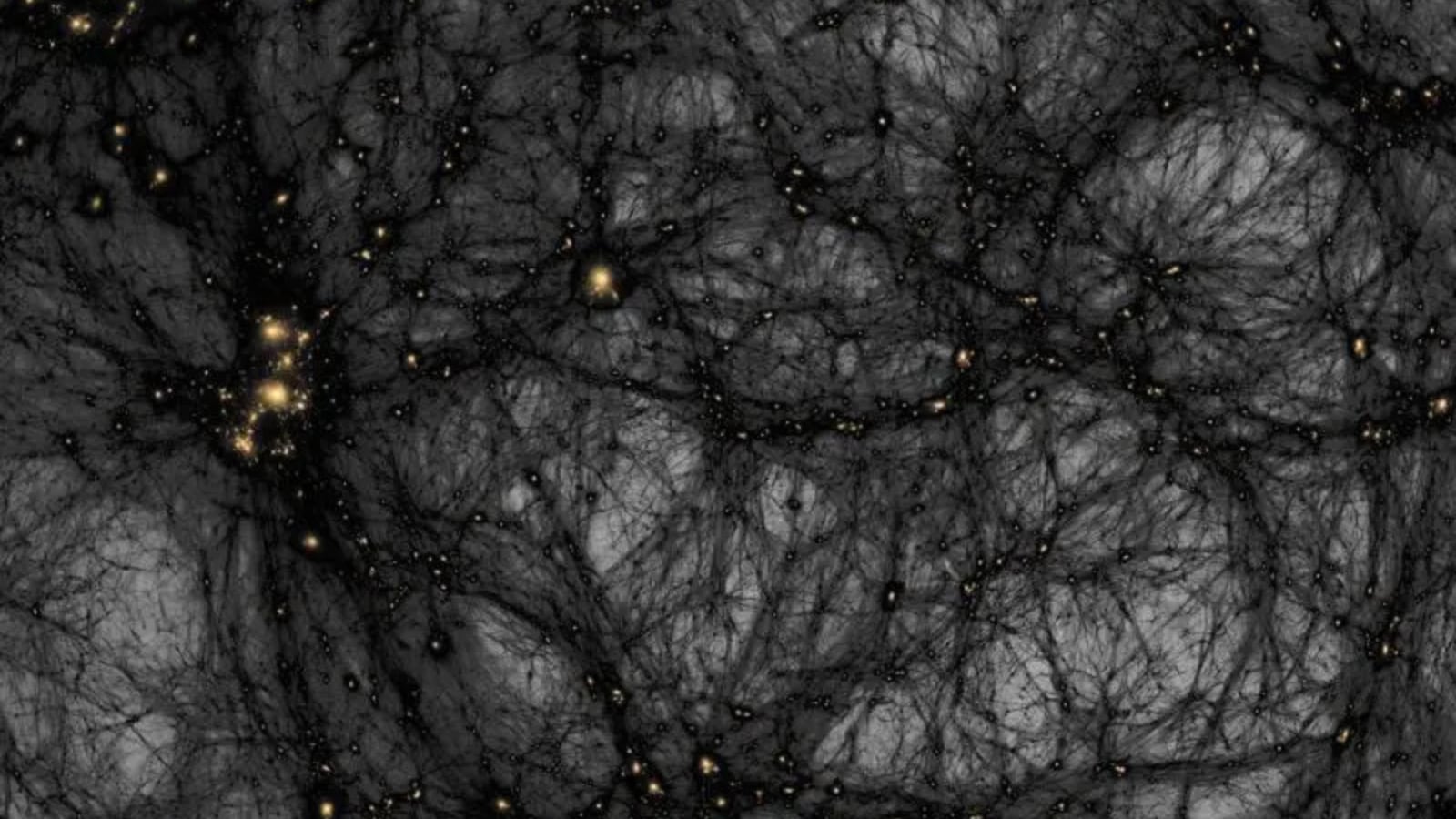
Scientists have been trying to understand dark matter, which makes up most of the universe's mass but can't be seen.
A new study by Prof Tomonori Totani suggests that gamma rays from the center of our galaxy, the Milky Way, might be a sign of dark matter.
Using data from a special telescope, they found a pattern that matches what dark matter might look like.
If this is true, it would be the first time we've 'seen' dark matter, and it could mean that dark matter is made of particles much bigger than protons.
However, other scientists need to check this work before we can be sure.

Dark matter makes up about 85% of the universe's total mass and does not emit or absorb light.
A new study suggests gamma rays from the center of the Milky Way may indicate the presence of dark matter.
The analysis used data from NASA’s Fermi Gamma-ray Space Telescope to identify a pattern matching the dark matter halo.
If confirmed, this would be the first time humanity has 'seen' dark matter, potentially revealing a new particle not included in the current Standard Model of particle physics.
The results need to be verified through independent analysis before any conclusions can be drawn.
- Who
- Prof Tomonori Totani and his team
- What
- Potential detection of dark matter through gamma rays
- When
- Not specified
- Where
- Center of the Milky Way
- Why
- To understand the nature of dark matter and its role in the universe
- Dark Matter Composition
- 85% of the universe's total mass
- Detection Method
- Gamma rays from Milky Way's center
- Instrument Used
- NASA’s Fermi Gamma-ray Space Telescope
- Potential Particle Mass
- At least 500 times more massive than protons
- Researcher
- Prof Tomonori Totani, University of Tokyo