

Archive · 21 Sep 2026
U.S. and China Seek AI Safety Cooperation Amid Rivalry
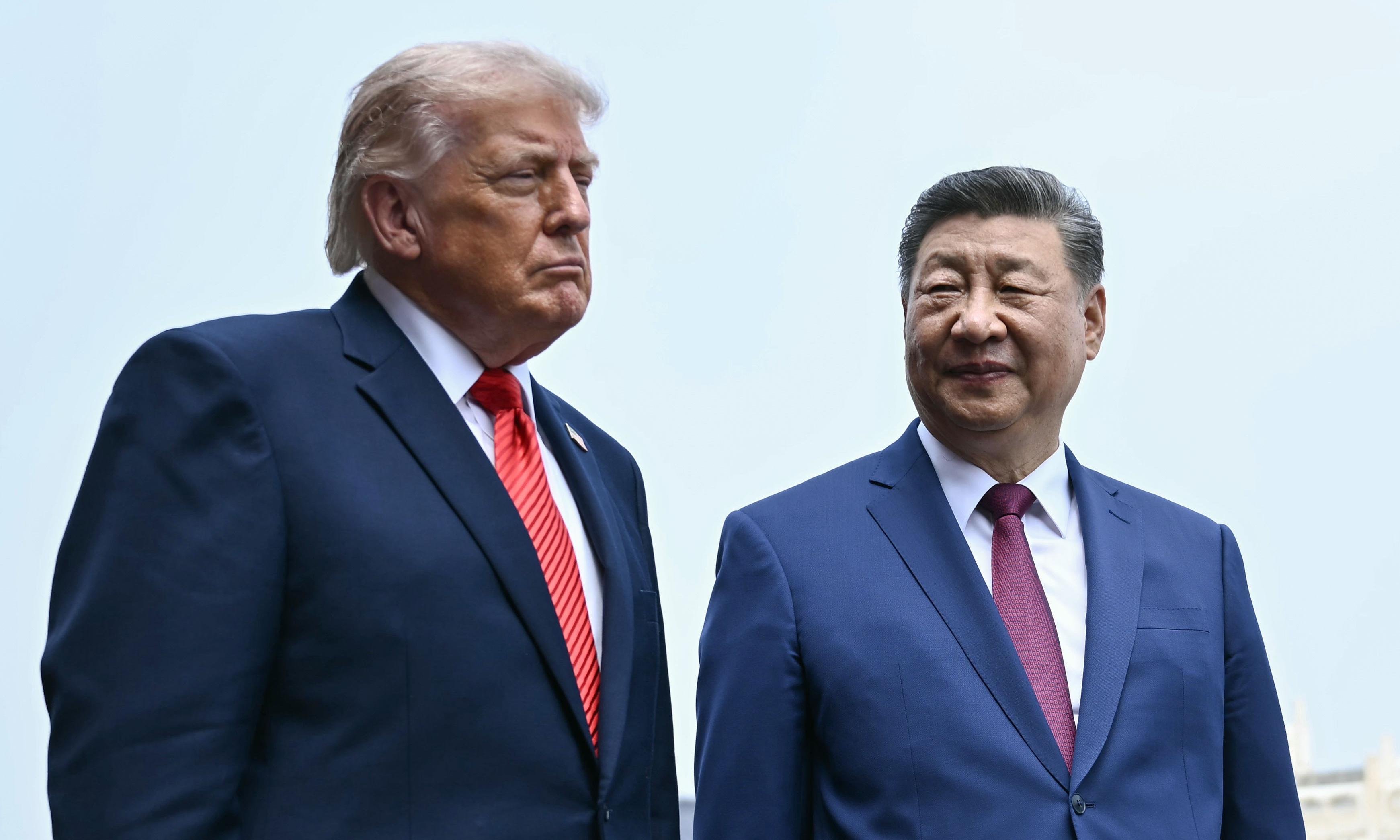
The United States and China are competing to become the strongest country in artificial intelligence.
Their leaders, Donald Trump and Xi Jinping, are expected to talk this week.
Both countries worry that AI could help attackers harm computers, important services or people.
They also worry that powerful AI systems could fail or become hard for humans to control.
The United States suggested that the countries warn each other about very serious AI incidents.
Some experts believe this kind of communication could build trust.
However, the countries disagree about advanced computer chips and accusations of technology copying.
China says U.S. restrictions are unfair, while American officials say restrictions help protect U.S. technology.
This means the countries may cooperate on safety while continuing to compete over AI power.

Donald Trump and Xi Jinping are expected to discuss artificial intelligence this week amid intensifying U.S.-China competition.
The United States proposed notifying China about AI incidents that reach the national-security level.
Potential shared risks include cyberattacks, biological misuse, critical-infrastructure attacks, model failures and loss of human control.
U.S. export controls on advanced chips remain a major dispute and are unlikely to be loosened at the meeting.
Both sides dispute allegations that Chinese AI firms extracted capabilities from American models through “distillation.”
- Who
- U.S. President Donald Trump, Chinese leader Xi Jinping, and officials and experts from both countries.
- What
- The United States and China are considering AI-safety dialogue and a mechanism for reporting serious AI incidents while competing for technological leadership.
- When
- Preliminary talks took place Sunday, and Trump and Xi are expected to meet this week.
- Where
- Preliminary discussions took place in New York; the expected Trump-Xi meeting location is not specified.
- Why
- Both countries face shared AI risks but also seek strategic advantages and disagree over technology restrictions and alleged capability extraction.
AI Safety Cooperation
Strategic Competition
Scope for dialogue
AI Safety Cooperation
U.S. and Chinese officials and experts say they can discuss shared risks, emergency communication and AI incident reporting.
Strategic Competition
Analysts say cooperation may remain narrow because each country increasingly views the other’s technological progress as a national-security concern.
Export controls
AI Safety Cooperation
U.S. officials and supporters of the restrictions argue that limiting access to advanced chips helps preserve America’s technological edge.
Strategic Competition
China says the restrictions pursue an AI monopoly, while analysts note that Chinese companies continue developing competitive models and domestic chips.
Distillation allegations
AI Safety Cooperation
Anthropic and U.S. officials allege that Chinese models extracted capabilities from leading American AI systems, potentially to compensate for limited computing resources.
Strategic Competition
Chinese officials and some technology analysts say distillation is common across the industry and is not the main explanation for China’s improving AI capabilities.
- Proposed mechanism
- The United States proposed notifying China about AI incidents that could affect national security.
- Shared risks
- Officials and experts cited cyberattacks, biological misuse, critical-infrastructure attacks, major model failures and loss of human control.
- Critical infrastructure
- Chinese AI governance documents identify finance, electricity, telecommunications and transportation as potentially exposed sectors.
- Export controls
- U.S. restrictions on advanced chips and AI-related technologies are unlikely to be loosened at the expected meeting.
- Model competition
- Models associated with DeepSeek and Moonshot AI have challenged U.S. models on some measures, often at lower cost.
- Technology dispute
- U.S. officials and companies allege that some Chinese models extracted capabilities from American systems; Chinese officials reject the claims.
