

6 hrs ago
NSE Set for India’s Biggest IPO Debut of 2026

The National Stock Exchange of India is about to sell its shares to the public.
This process is called an IPO.
The IPO lasted three days and attracted strong interest from investors.
Retail investors fully subscribed to their portion on the final bidding day.
The issue price was ₹1,785 per share.
At that price, NSE could be valued at ₹4.42 lakh crore and rank among India’s largest companies.
Life Insurance Corporation of India bought more shares and increased its stake to 10.81%.
After listing, investors will watch how institutions and other shareholders trade the stock.

The National Stock Exchange of India is set to make its public-market debut within hours.
The three-day IPO was the biggest in India in 2026 so far and the second-largest in the country’s capital-markets history.
At an issue price of ₹1,785 per share, NSE’s projected market capitalisation is ₹4.42 lakh crore.
Life Insurance Corporation of India bought an additional ₹450 crore stake, raising its overall holding to 10.81%.
Investors will watch post-listing institutional demand, possible selling by wealthy clients, and potential foreign-index inclusion.
- Who
- The National Stock Exchange of India, its investors, and Life Insurance Corporation of India.
- What
- NSE is set to list its shares following a three-day initial public offering.
- Where
- The listing updates are being tracked from the Bombay Stock Exchange.
- When
- The listing is expected within a few hours of the update; the specific date is not stated.
- Why
- The IPO is raising public-market capital and converting NSE into a publicly traded company.
Key facts
- Issue price
- ₹1,785 per share
- Projected market capitalisation
- ₹4.42 lakh crore
- IPO status
- Three-day offering with strong institutional and non-institutional subscription
- Retail subscription
- The retail portion was fully subscribed on the final bidding day
- LIC additional purchase
- ₹450 crore
- LIC overall stake
- 10.81%
- Potential post-listing factors
- Wealth-client supply, institutional appetite, and possible foreign-index inclusion
Sources
Related news
NSE IPO Reaches 55% Subscription on Day Two

SEBI Clears NSE’s ₹30,000-Crore IPO After Decade-Long Wait
NSE IPO Surpasses Hyundai, LIC and Paytm Subscription Records

NSE IPO May Enter India’s Top Ten Companies on Debut
NSE’s Rs 22,569-Crore IPO Opens With 9% Subscription

NSE Shares Debut Higher After Decade-Long Listing Delays

Hero Motors Shares Hit Record High Amid Market Crash
Sensex, Nifty Tumble as Crude Oil Surges Above $100
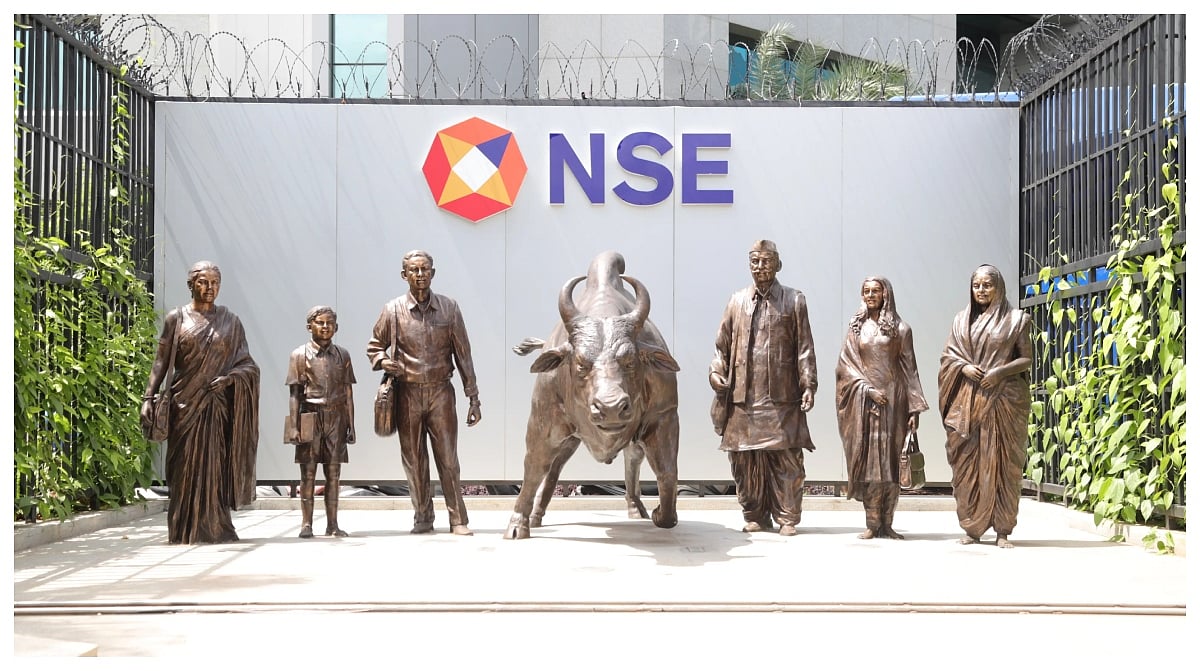
NSE IPO Makes Muted Debut, Shares Rise Over Five Percent

NTPC Pays ₹3,394 Crore Final Dividend for FY26
