4 hrs ago
NTSB Says Amazon Cargo Pilots Lacked Wind Warning

An Amazon cargo plane was landing in Miami when it went too fast.
It touched down far along the runway and could not stop before reaching the end.
The plane then hit vehicles on the ground.
Five people in a van used by airplane-cleaning workers died, and several others were hurt.
The NTSB said an air traffic controller did not tell the pilots about wind conditions that rules required them to receive.
One pilot warned the other that the plane was moving too fast, but the warnings were not consistently acknowledged.
Investigators also found that some braking systems were not used during the landing.
The report is preliminary, so investigators are still determining exactly how the different factors caused the crash.

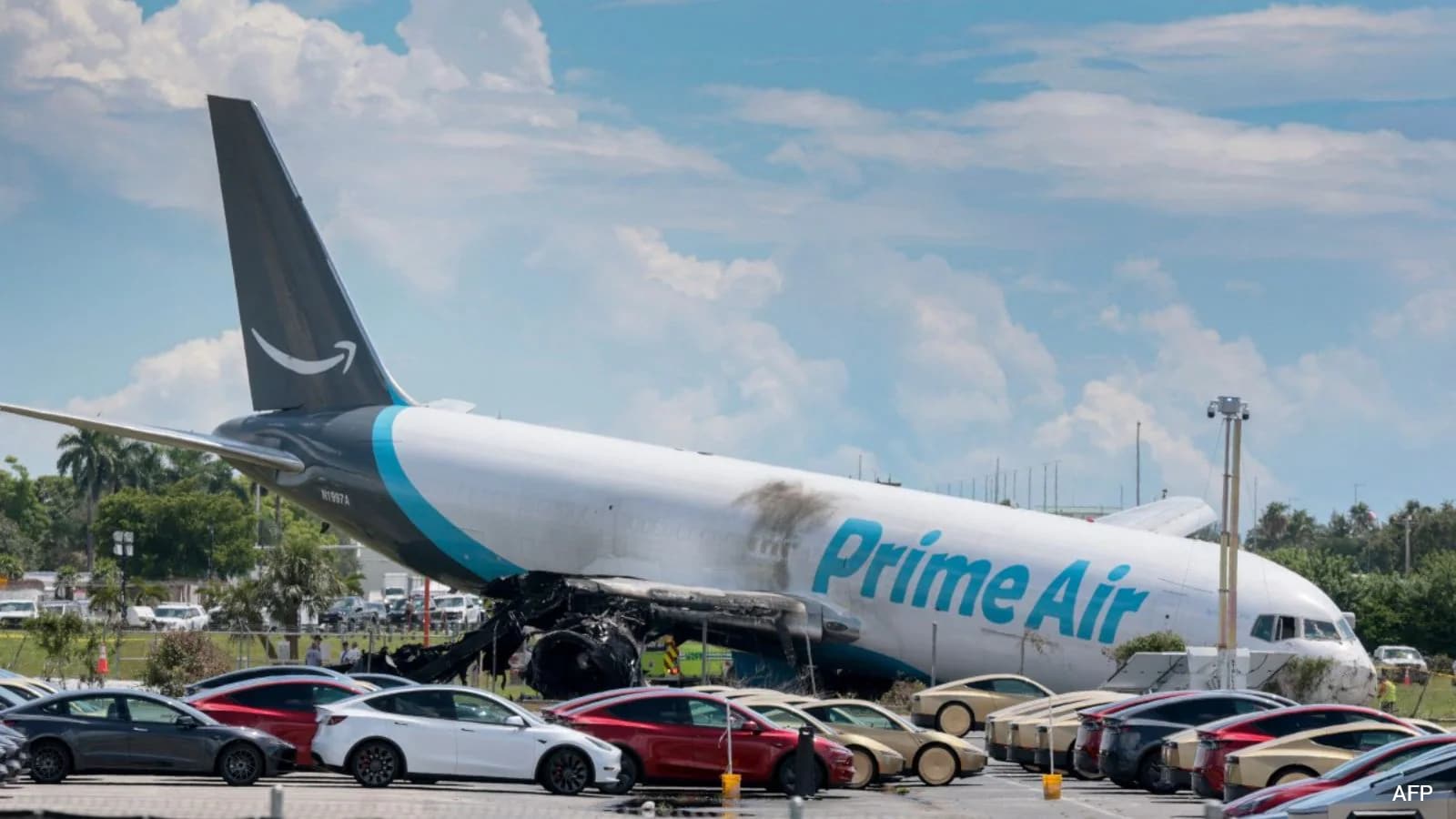
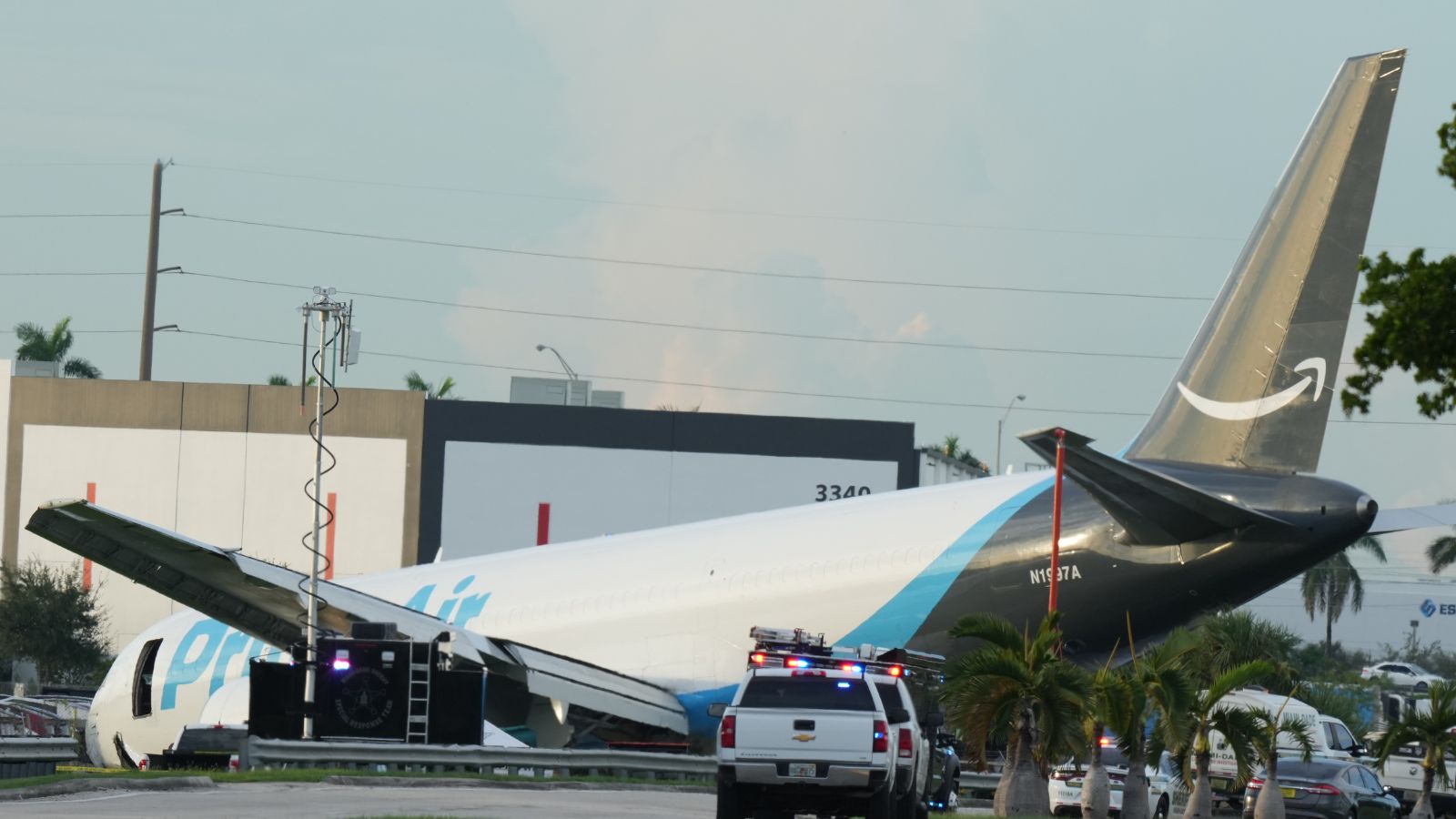
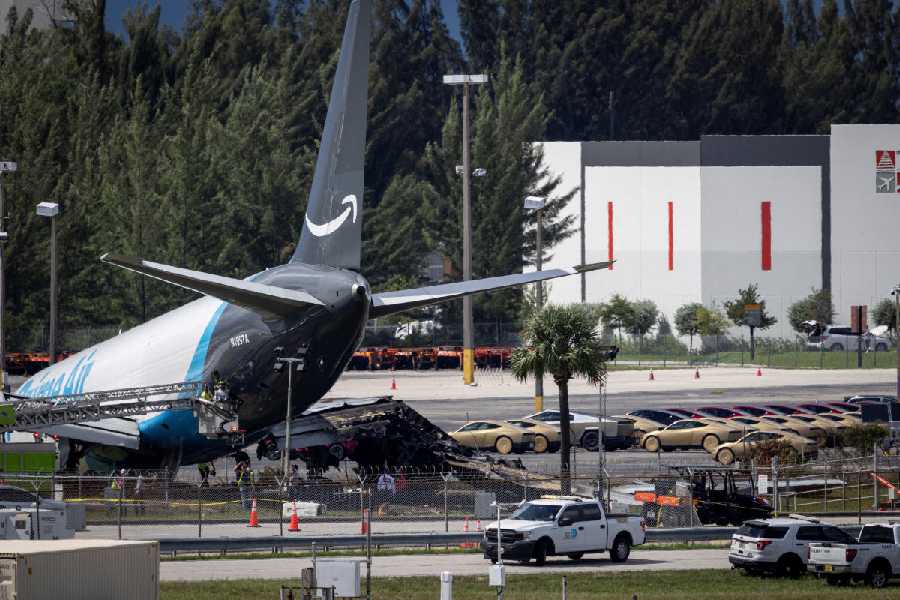
A 21 Air-operated Boeing 767 cargo plane overran a runway at Miami International Airport on Sept. 6.
The NTSB said an air traffic controller did not provide required wind information before clearing the plane to land.
The aircraft touched down about 3,750 feet past the runway start at roughly 160 knots and traveled about 1,200 feet beyond the runway.
Five people in an airplane-cleaning company van died, while others, including the pilots, were injured.
Investigators cited excessive speed, late touchdown, unused speed brakes and thrust reversers, cockpit warnings, and limited crew experience as possible contributing factors.
- Who
- A 21 Air-operated cargo flight for Amazon Air, its two pilots, an air traffic controller, and people in vehicles on the ground were involved.
- What
- A Boeing 767 overran the runway while landing, struck vehicles, killed five people, and injured others.
- Where
- Miami International Airport in Miami, Florida.
- When
- The crash occurred on Sept. 6; the NTSB preliminary report was reported on Thursday, Oct. 1.
- Why
- The preliminary report identified missing wind information, excessive speed, a late touchdown, unused braking systems, cockpit coordination issues, and other factors as potentially contributing to the crash.
Investigation Findings
Operator Responses
Potential causes
Investigation Findings
The NTSB identified missing wind information, excessive speed, a late touchdown, unused speed brakes and thrust reversers, cockpit warnings, and limited experience flying together as relevant factors.
Operator Responses
21 Air said it was reviewing the preliminary report and would take appropriate safety action based on established facts.
Responsibility and next steps
Investigation Findings
The NTSB said FAA rules required wind direction and velocity to be provided when a tailwind component existed, and reported that the controller did not provide the information to the Amazon crew.
Operator Responses
The FAA did not immediately comment; Amazon said it remained committed to supporting the ongoing NTSB investigation.
Key facts
- Aircraft
- A 32-year-old Boeing 767-300 freighter that was converted from passenger use to cargo service in June 2016.
- Operator
- 21 Air operated the flight for Amazon Air; Amazon later paused its use of 21 Air.
- Wind information
- About four minutes earlier, a controller told another flight that winds were from 190 degrees at 19 knots, with gusts to 22 knots; the Amazon flight was not on that radio frequency.
- Landing
- The plane touched down about 3,750 feet past the runway start at a groundspeed of 160 knots.
- Runway overrun
- The aircraft traveled roughly 1,200 feet beyond the runway end.
- Casualties
- Five people died; two van occupants and a car driver suffered serious injuries, while the pilots had minor injuries.
- Flight route
- The aircraft was on its third flight of the day after flying from Cincinnati to Miami and then Miami to San Juan.
Quotes

National Transportation Safety Board
Federal agency investigating the Miami cargo plane crash
“both wind direction and velocity were required to be stated when authorizing use of a runway when a tail wind component exists”
 livemint.com

21 Air
The cargo airline operating the aircraft for Amazon Air
“will take all appropriate action to improve our safety based on the facts as they are established.”
 theprint.in
Sources
Related news

Amazon Cargo Pilot Warned of Speed Before Fatal Miami Crash

Investigators Probe Fiery Amazon Cargo Jet Crash in Miami
Amazon Pauses 21 Air Operations After Fatal Miami Crash
Five Killed as Amazon Cargo Plane Overruns Miami Runway
Black Boxes Recovered as Miami Amazon Cargo Crash Investigation Continues

Amazon Cargo Plane Overruns Miami Runway, Disrupting Flights

Ken Griffin Pledges Record $3 Billion to Carnegie Mellon

Andrew Schulz Joins Michael B. Jordan in Miami Vice ’85

Putin Weighs Ukraine Talks, Rules Out Conflict With Europe

Russia to Consider Trump’s G20 Invitation as EU Condemns Moscow