

Archive · 19 May 2025
PKK Disbands: Turkey Grapples with Political, Social Shifts
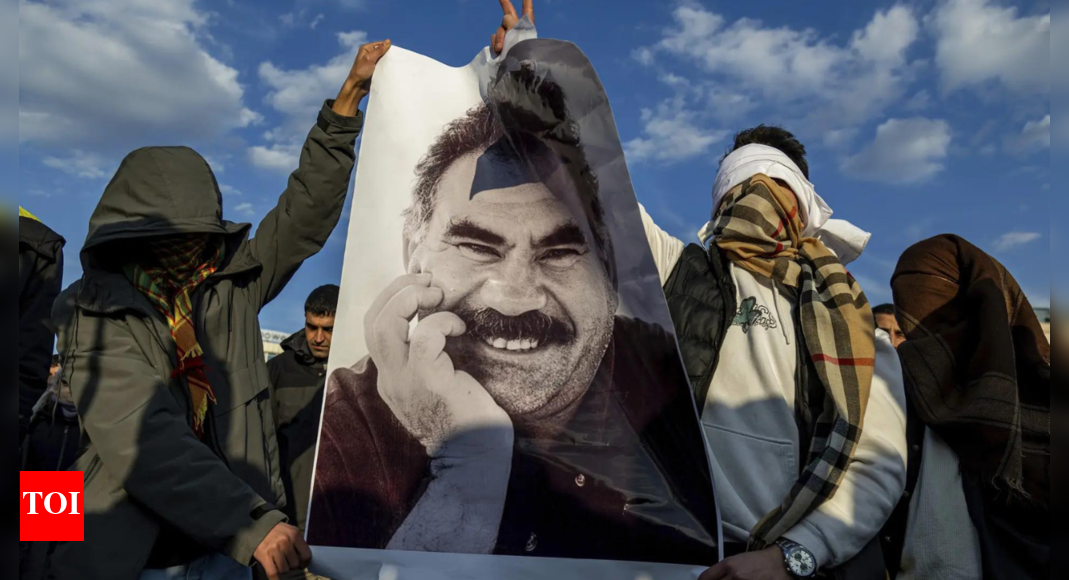
Imagine a long fight in Turkey has ended.
A group called PKK, who fought against the government, is stopping.
This changes a lot of things!
Politicians are talking about new rules and how things will work.
The government is trying to figure out what happens next, like what to do with the fighters and how to make sure everyone is safe.
It's like cleaning up after a big game; there's still a lot to sort out.

The PKK, after 41 years of armed conflict, announced its disbandment.
The decision could significantly change Turkey's political power dynamics.
Key factors influencing Turkish politics include peace with the PKK and the situation of jailed politicians.
The fate of PKK members, including fighters, remains uncertain.
The Turkish government is monitoring the impact on neighboring nations, particularly Syria.
- Who
- The PKK, Turkish government, and various political parties.
- What
- The Kurdistan Worker's Party (PKK) announced it will disband.
- When
- Announcement made recently, with details still unfolding.
- Where
- Turkey and surrounding areas, including northern Iraq and Syria.
- Why
- To end a decades-long armed conflict.
Some PKK Members
Turkish Government
PKK Dissolution Support
Some PKK Members
Some senior PKK members need convincing to dissolve.
Turkish Government
Turkish government officials welcome the end of the conflict.
Post-Dissolution Outcomes
Some PKK Members
The fate of PKK members, including fighters, is uncertain.
Turkish Government
The government is considering integration programs, but a blanket pardon is unlikely.
Kurdish Question
Some PKK Members
Constitutional changes and democratization are needed.
Turkish Government
The government is unwilling to change the presidential system.
- Estimated lives lost in conflict
- 40,000
- Estimated PKK supporters
- 60,000
- PKK's Classification by Germany
- Terrorist organization
- Uncertainty about weapon surrender process
- Ongoing