

Archive · 31 Jul 2026
Global Push for Digital Literacy to Protect Children Online
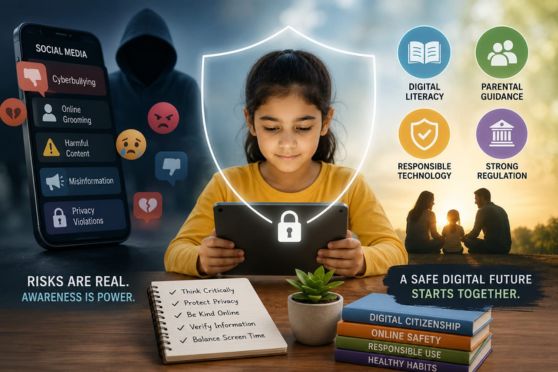
Governments around the world are making new rules to keep kids safe on the internet.
They want to stop bad things like bullying, fake news, and privacy problems.
But rules alone aren’t enough.
Kids also need to learn how to think carefully about what they see online.
Schools can teach digital citizenship, and parents can talk with their children about safe internet habits.
Companies that make apps and games should also help by making privacy settings easy to use and by giving parents tools to see what their kids are doing.
The goal is to create a safer online world for children, not just to ban social media.

Governments in the UK, Australia, and Germany are tightening online‑safety laws for children.
Key online risks for kids include cyberbullying, misinformation, and privacy violations.
Regulations alone are insufficient; digital literacy education is essential.
Schools should teach digital citizenship and parents should engage in open conversations.
Technology companies must embed child‑safety features, such as COP Parental Control, into their products.
- Who
- Governments in the United Kingdom, Australia, and Germany, and child‑safety advocate Sandeep Kumar
- What
- Tightening online‑safety regulations and promoting digital literacy to protect children
- When
- Current, ongoing policy developments
- Where
- Worldwide, with specific actions in the United Kingdom, Australia, and Germany
- Why
- To counter cyberbullying, misinformation, privacy violations, and mental‑health risks while equipping children with critical online skills
- Key Regulations
- United Kingdom, Australia, Germany
- Primary Risks
- cyberbullying, misinformation, privacy violations
- Digital Literacy Focus
- school curriculum, parental engagement
- Technology Tool
- COP Parental Control
- Author
- Sandeep Kumar