

Archive · 10 Nov 2025
India's Eye Care Heavily Private, AIIMS Survey Reveals Shortages
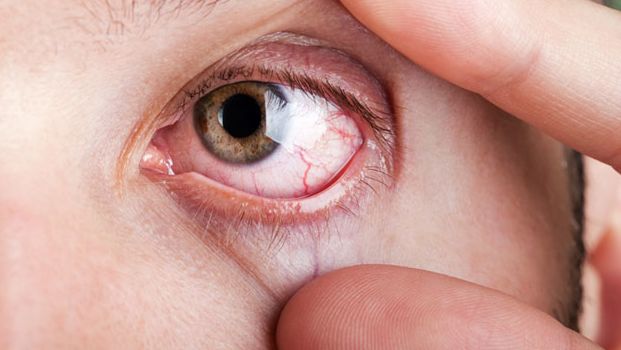
Imagine a doctor's office that takes care of eyes.
A big study in India found that most of these eye places are owned by private companies, not the government.
Only a small number are run by the government.
This means many people might not be able to get eye care they can afford.
Private places often do the surgeries that make more money, like fixing eyesight.
Government places help more with things like eye banks.
India also needs more eye doctors, and the ones they have are not spread out evenly across the country.
Some areas have lots of eye doctors, while others have very few.
To help everyone see well, India needs more government-funded eye clinics and more trained doctors, especially to find eye problems in kids early.

A national survey by AIIMS reveals that 70.6% of eye care centers in India are privately run, with only 15.6% managed by the government.
The private sector dominates profitable procedures like cataract surgeries and refractive error corrections, while government facilities handle a smaller proportion.
India faces an acute shortage of ophthalmologists and optometrists, with significant regional disparities in their distribution.
Many eye care institutions lack essential services like low-vision rehabilitation, 24-hour emergency care, and specialized pediatric eye care.
The survey calls for increased investment in public eye health and expansion of primary eye care to ensure equitable access for all citizens.
- Who
- All India Institute of Medical Sciences (AIIMS), New Delhi, in collaboration with the Union Health Ministry, All India Ophthalmological Society (AIOS), and Vision 2020 India
- What
- Conducted a national survey on eye care infrastructure and workforce, revealing the dominance of private players and significant shortages in specialists and services.
- When
- Survey conducted in 2020-21, published in November 2025
- Where
- India
- Why
- To create an extensive national database on ophthalmic infrastructure and workforce to identify gaps and inform policy for universal eye health coverage.
- Private Eye Centers
- 70.6%
- Government Eye Centers
- 15.6%
- NGO-run Eye Centers
- 13.8%
- Ophthalmologists per capita
- 1 per 65,000 people
- Eye Beds per million
- 74
- Institutions with Eye Banks
- 5.7%
- Institutions with Low-Vision Rehab
- 28.3%