

Archive · 5 Nov 2025
Fisherwomen Demand Economic Recognition and Rights
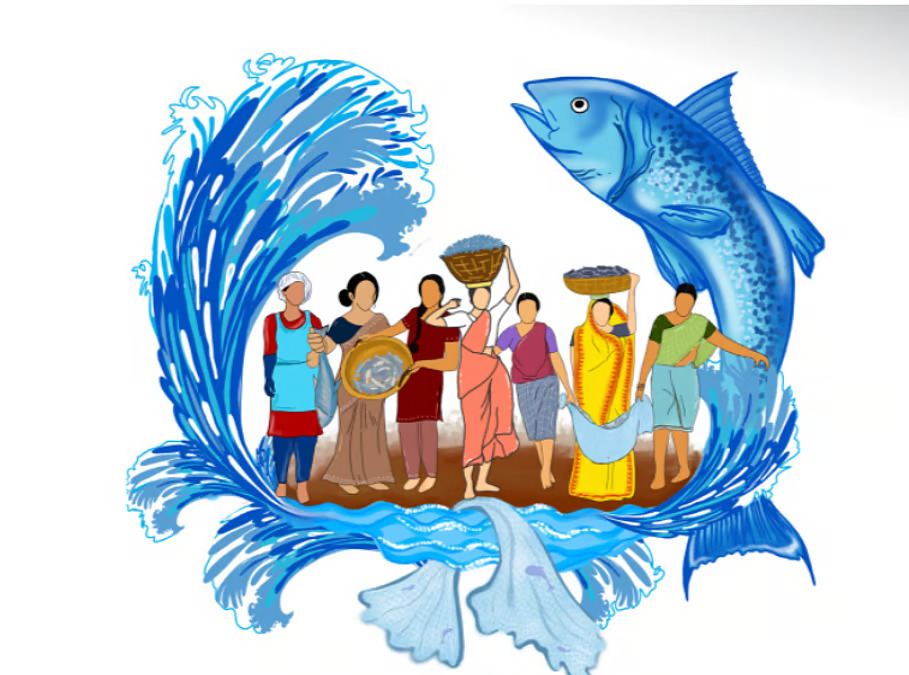
Imagine women who work near the sea or rivers catching, drying, and selling fish.
They are like the backbone for many families and communities.
While the men go out fishing, these women keep the home and local economy running by selling the fish and taking care of everything else.
Even though they do so much important work, like almost all the fish selling and preparation, not many people or laws officially recognize how much they help our country's economy.
Some groups are saying it's time to officially say 'thank you' and give these women more say in rules about fishing and the coast.
They also want to stop people from taking away their land near the water and make sure they get help if something bad happens, like a storm or an accident, and get benefits like mothers do.

Fisherwomen's contributions to the Indian economy are being highlighted on International Fisher Women's Day.
The CFTUI and AP Fish Workers Union are demanding formal recognition for fisherwomen's economic, cultural, and commercial roles.
Fisherwomen are credited with sustaining communities, preserving traditional knowledge, and processing/trading nearly 90% of fish.
Advocates are calling for fisherwomen to be recognized as stakeholders in fisheries laws, with equal access to resources and representation.
Key demands include halting forced land acquisitions, ensuring inclusion in disaster compensation, and implementing social protection benefits.
- Who
- Confederation of Free Trade Unions of India (CFTUI) and AP Fish Workers Union, advocating for fisherwomen.
- What
- Demanded formal recognition of fisherwomen as central economic contributors and rightful stakeholders in fisheries laws, alongside calls to halt forced acquisitions and ensure social protections.
- When
- Coinciding with International Fisher Women’s Day celebrations.
- Where
- Visakhapatnam
- Why
- To address the invisible and undervalued contributions of fisherwomen to the economy, culture, and environment, and to secure their rights and well-being.
Fisherwomen's Advocates
Current Governance/Policy
Economic Contribution
Fisherwomen's Advocates
CFTUI and AP Fish Workers Union argue fisherwomen are central contributors to the economy through fish markets, drying, and selling, with 90% of processing and trade done by women.
Current Governance/Policy
Their work remains invisible in policy and governance, lacking formal recognition.
Stakeholder Rights
Fisherwomen's Advocates
Fisherwomen should be acknowledged as rightful stakeholders in all fisheries' laws, with guaranteed protection in inland, coastal, and marine rights, and equal access to resources.
Current Governance/Policy
Current laws and policies do not sufficiently include fisherwomen as stakeholders or grant them equal access.
Development Impacts
Fisherwomen's Advocates
Forced land and coastal acquisitions for development must halt, as they negatively impact fisherwomen.
Current Governance/Policy
Development initiatives continue without adequately considering the impact on fisherwomen's livelihoods and resources.
- Event
- International Fisher Women’s Day celebrations
- Organization making demands
- Confederation of Free Trade Unions of India (CFTUI) and AP Fish Workers Union
- Key Demand 1
- Formal recognition of fisherwomen's economic, cultural, and commercial roles.
- Key Demand 2
- Fisherwomen as rightful stakeholders in fisheries' laws and equal access to resources.
- Key Demand 3
- Halt to forced land/coastal acquisitions.
- Key Demand 4
- Inclusion in disaster compensation, accident insurance, maternity benefits, and social protection.
- Role of women
- Sustain coastal/inland communities, preserve traditional knowledge, manage household economies, and process/trade nearly 90% of fish.