

Archive · 26 Jan 2026
Mysterious Star Disappearance in Andromeda Galaxy
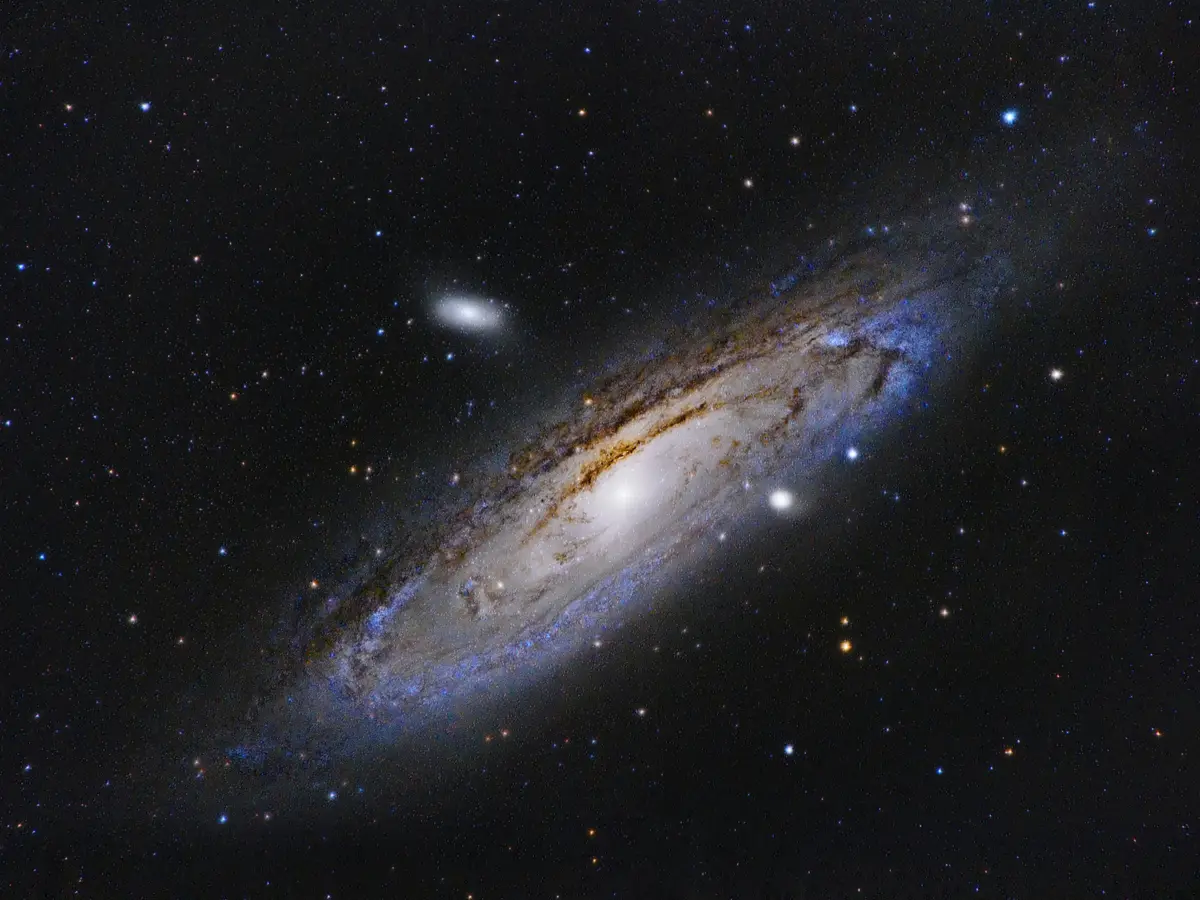
Astronomers noticed that a bright star in the Andromeda Galaxy disappeared between 2014 and 2018.
They think it might have turned into a black hole without exploding like most stars do.
However, they found a very red spot where the star used to be, which is much dimmer.
This spot is surrounded by a huge cloud of dust.
Some scientists believe this red spot is material from the star falling into the new black hole, but others are not sure because they didn't see any X-rays, which are usually expected in such cases.
Both teams are still studying the mystery to understand what really happened.

A yellow supergiant star, M31-2014-DS1, vanished from the Andromeda Galaxy between 2014 and 2018.
Astronomers found an extremely red source in place of the star, with brightness reduced to 7-8% of the original.
The red source is surrounded by a dust shell stretching 40-200 times the distance between Earth and the Sun.
One team suggests the star turned into a black hole without a supernova, but no X-rays were detected to support this.
Another team challenges the failed supernova theory due to the lack of observed brightness decline and X-ray emissions.
- Who
- Astronomers using the James Webb Space Telescope and Chandra X-ray Observatory
- What
- A yellow supergiant star, M31-2014-DS1, vanished from the Andromeda Galaxy
- When
- Between 2014 and 2018
- Where
- Andromeda Galaxy
- Why
- The star likely turned into a black hole without undergoing a supernova, but the exact cause is still debated
- Star Name
- M31-2014-DS1
- Location
- Andromeda Galaxy
- Observation Period
- 2014-2018
- Current Observation
- Extremely red source
- Brightness Change
- 7-8% of original
- Dust Shell Size
- 40-200 times Earth-Sun distance
- X-ray Detection
- None detected