

Archive · 23 Jul 2025
Experts Call for IBC Reform Amidst Rising Resolution Timelines
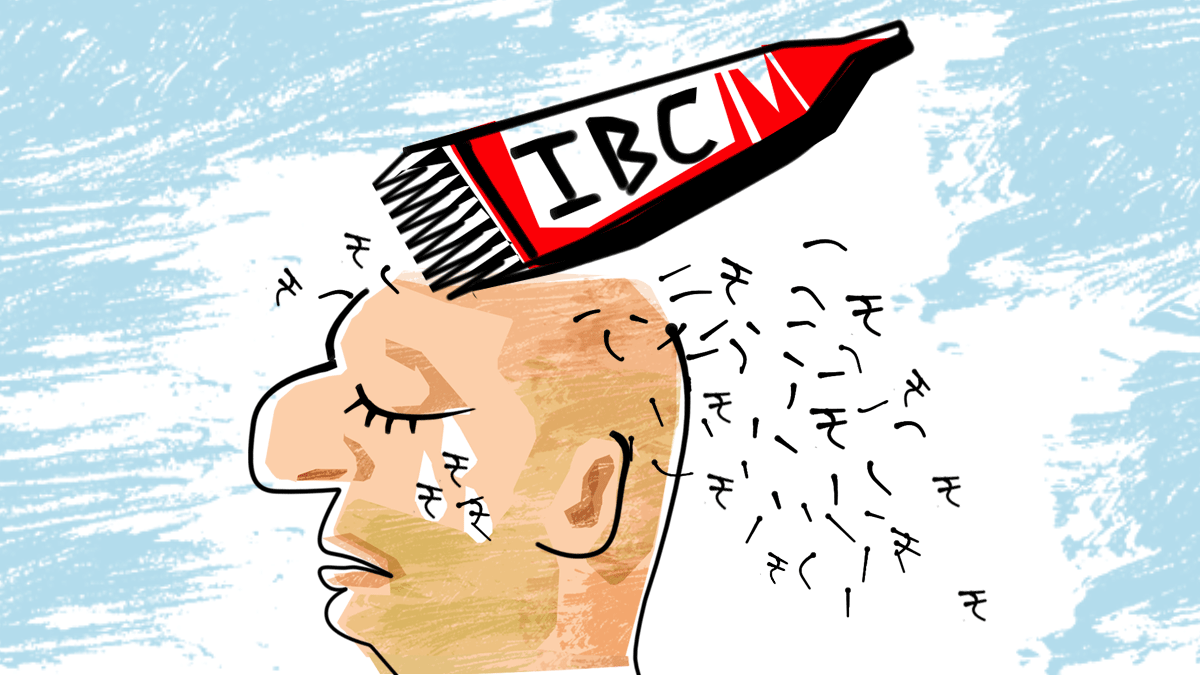
The IBC, a law to help resolve company debts, is taking too long.
Think of it like waiting for a court case – it's dragging on.
Experts suggest making changes like speeding up courts and using new ways to solve problems quickly.
This helps companies pay back what they owe and keeps things running smoothly.
Current processes for debt resolution are too slow, and the current system needs updating for more efficiency.
This includes quicker resolutions to recover money faster.

Experts suggest the Insolvency and Bankruptcy Code (IBC) faces challenges, with increasing resolution timelines.
Amendments and dedicated benches are needed to expedite case resolutions.
Stakeholders call for stricter procedural norms and digital case-tracking.
Recovery rates are affected by the time bad loans remain on banks' books.
Experts want pre-packaged insolvency resolution process (PPIRP) to resolve issues
- Who
- Stakeholders including Rajeshwar Rao (RBI), Ashwini Kumar Tewari (SBI), Aniruddha Sen, and Shivraj Patil.
- What
- Issues with the Insolvency and Bankruptcy Code (IBC) and suggestions for improvements.
- When
- The issues have been observed over the first decade of IBC's existence.
- Where
- Ahmedabad, India; National Company Law Tribunals (NCLT).
- Why
- To make the IBC more efficient in resolving bankruptcy cases and improving recovery rates.
Key Issues Highlighted
Solutions and Suggestions
Need for Reform
Key Issues Highlighted
Stakeholders feel the current resolution process is slow, requiring amendments.
Solutions and Suggestions
There are challenges in admitting cases at NCLT.
- Corporate Insolvency Resolution Process (CIRP) Timeline (FY25 - Financial Creditors)
- 723 days
- CIRP Timeline (FY25 - Operational Creditors)
- 724 days
- CIRP Timeline (FY25 - Corporate Debtors)
- 577 days
- Median Recovery Rate (2019-2021)
- 24.7%