3 hrs ago
RBI Raises Repo Rate to 5.50%: Impact on Loans and Deposits
The Reserve Bank of India raised an important interest rate by 25 basis points, taking it to 5.50%.
This can make some loans more expensive, especially loans whose rates move with an outside benchmark.
One example estimates that a Rs 50 lakh home loan over 30 years could cost Rs 852 more each month at a PSU bank or Rs 867 more at a private bank.
A different example, using a 20-year loan, estimates an increase of about Rs 780 a month.
These are examples, and a borrower’s actual change depends on the loan and the lender.
Some borrowers may pay a higher monthly amount, while others may have their loan period extended.
Banks may also offer better rates on new fixed deposits, but the change may not happen quickly or equally everywhere.
Atul Monga recommends considering higher payments, extra repayments and asking the lender about repricing.

The Reserve Bank of India raised its repo rate by 25 basis points to 5.50%; its Monetary Policy Committee voted unanimously, according to one report.
For a hypothetical Rs 50 lakh loan over 30 years, estimated monthly EMIs rise by Rs 852 at a PSU bank and Rs 867 at a private bank.
A separate example estimates that a Rs 50 lakh loan over 20 years could cost roughly Rs 780 more per month; actual changes depend on loan terms and the lender’s reset mechanism.
If the higher 30-year EMIs are maintained for the full term, the additional outgo is estimated at Rs 3.07 lakh for the PSU-bank example and Rs 3.12 lakh for the private-bank example.
Floating-rate borrowers could face higher costs, while banks may raise rates on new fixed deposits; BASIC Home Loan CEO Atul Monga advises considering higher EMIs, prepayments and lender repricing.
- Who
- The Reserve Bank of India’s Monetary Policy Committee, borrowers, and bank depositors.
- What
- The RBI raised the repo rate by 25 basis points to 5.50%, potentially affecting loan costs and fixed-deposit rates.
- Where
- India.
- When
- The decision was reported on October 7, 2026; one report says the committee acted on Wednesday.
- Why
- Atul Monga described the move as reflecting a focus on containing inflation and maintaining macroeconomic stability; the articles also explain its possible effects on borrowers and savers.
Key facts
- Repo rate
- Raised by 25 basis points to 5.50%.
- MPC decision
- One report says the Monetary Policy Committee voted unanimously.
- 30-year PSU-bank illustration
- For a Rs 50 lakh loan, the assumed rate rises from 7.25% to 7.50%; the EMI rises from Rs 34,109 to Rs 34,961, an increase of Rs 852.
- 30-year private-bank illustration
- For a Rs 50 lakh loan, the assumed rate rises from 7.75% to 8.00%; the EMI rises from Rs 35,821 to Rs 36,688, an increase of Rs 867.
- Estimated additional outgo
- If the higher EMI continues for the full 30 years, the estimated additional outgo is Rs 3.07 lakh for the PSU-bank example and Rs 3.12 lakh for the private-bank example.
- 20-year illustration
- A separate article estimates an EMI increase of roughly Rs 780 for a Rs 50 lakh loan over 20 years.
- Possible effects
- Floating-rate loans may become costlier; banks may gradually raise rates on new fixed deposits. Existing fixed deposits generally retain their booked rate until maturity.
Quotes
Atul Monga
CEO and co-founder of BASIC Home Loan
“To put the real impact on borrowers in perspective, on a standard Rs 50 lakh home loan with a 30-year tenure, a 25 bps rate increase lifts monthly EMIs by Rs 852 at a PSU bank (from Rs 34,109 to Rs 34,961) and by Rs 867 at a private bank (from Rs 35,821 to Rs 36,688). Over a full 30-year cycle, this small adjustment compounds into more than Rs 3 lakh in additional outgo. If the hike extends to 50 bps, the monthly outflow rises by Rs 1,712 to Rs 1,742, taking EMIs to Rs 35,821 for PSU lenders and”
 news18.com
“While this move is likely to result in a marginal increase in home loan borrowing costs, we do not expect it to significantly alter homebuyer sentiment or long-term housing demand.”
 timesnownews.com
Sources


Related news

RBI Rate Hike Could Lift EMIs, While Housing Demand Holds
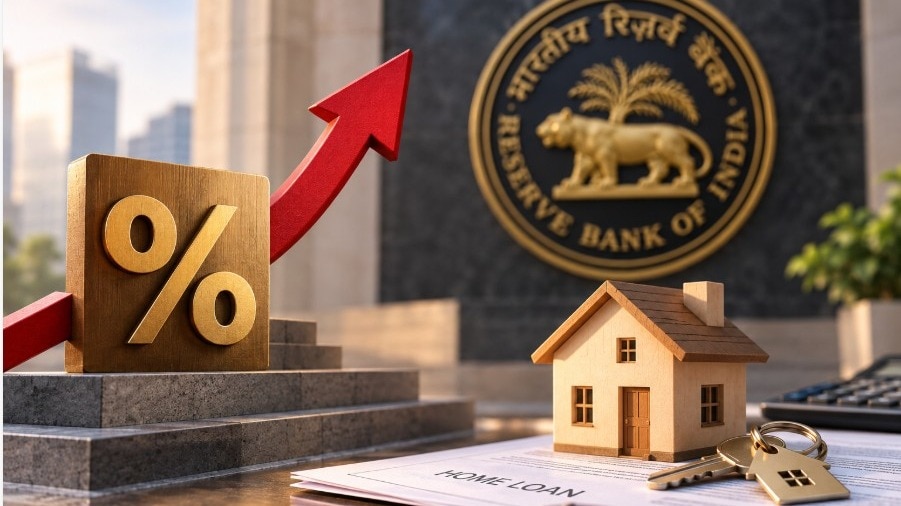
25-Basis-Point Rate Rise Could Add ₹2.45 Lakh to Home-Loan Interest

Possible RBI Repo Rate Hike May Raise Home Loan Costs

SBI Research Predicts Two RBI Repo Rate Hikes, Higher EMIs

RBI Raises Repo Rate to 5.5%: What It Means for Consumers

RBI Rate Hike Tests Festive Housing Demand, Experts See Resilience

Home loan prepayment vs investing: Where should extra cash go?

Paying Off Loans Early Does Not Guarantee Credit Score Boost

5 Mistakes That Can Increase Home Loan EMI Burden