Archive · 25 Sep 2026
Study Links 100g More Daily Ultra-Processed Food to Heart Risk
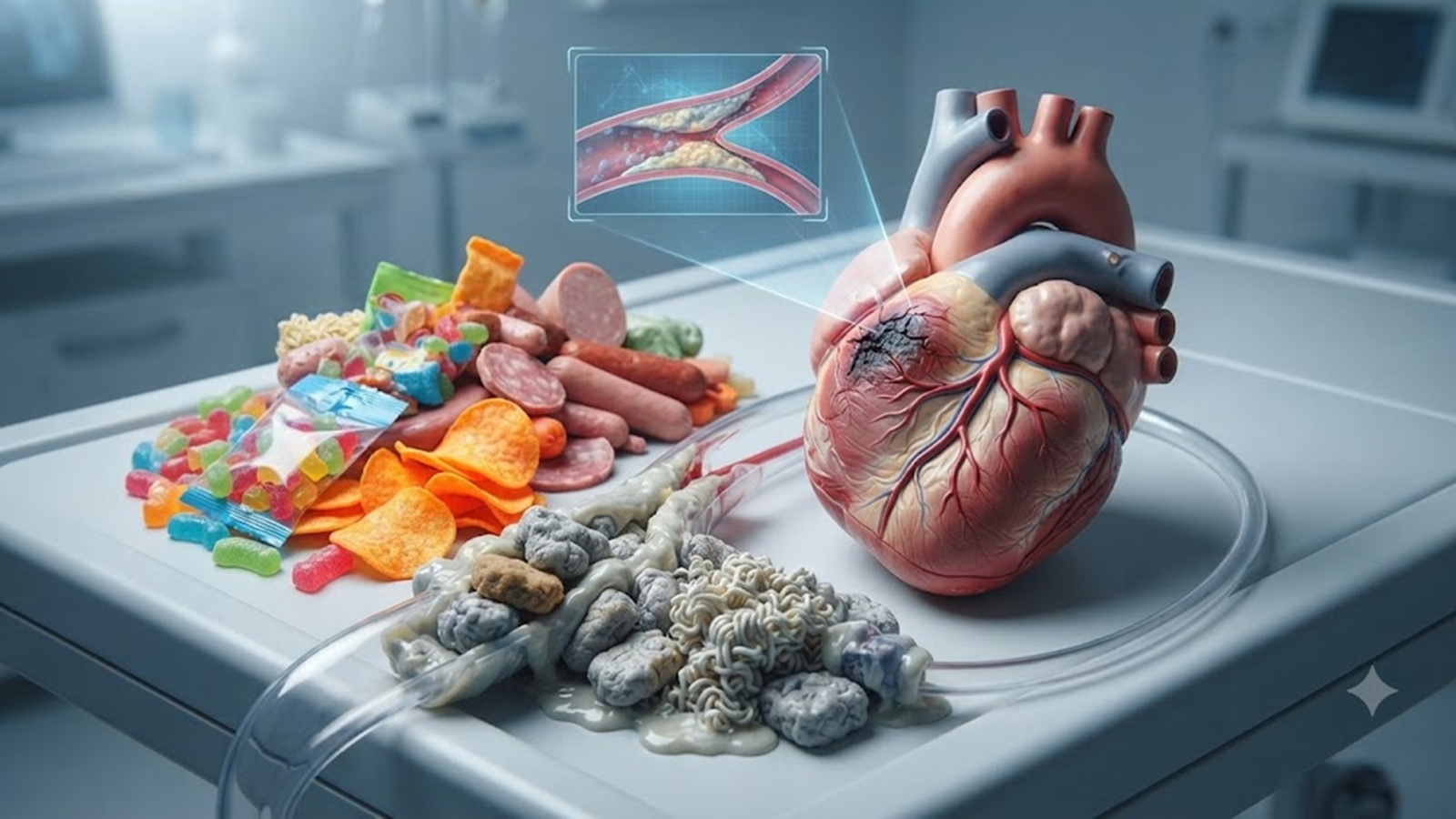
Scientists combined 51 studies to examine how ultra-processed foods may relate to health.
The studies included more than 8.8 million adults from several regions.
People who ate more of these foods had a higher risk of heart problems and other diseases.
An extra 100 grams per day was linked with a 14% higher risk of cardiovascular events.
This does not mean that eating exactly 100 grams of one snack will cause a heart attack.
The research mostly found patterns in groups of people, so it cannot prove that the food itself caused the illnesses.
Ultra-processed foods can include sugary drinks, packaged snacks, some processed meats, and ready-to-eat meals.
Not every packaged food is unhealthy, because processing exists on a spectrum.
Experts suggest eating more vegetables, fruits, pulses, whole grains, nuts, seeds, and other minimally processed foods.

A meta-analysis of 51 prospective studies included 8,819,894 adults followed for two to 32 years.
Each additional 100 grams of ultra-processed food per day was associated with a 14% higher risk of cardiovascular events.
Higher ultra-processed food intake was also associated with increased risks of cancer, obesity or overweight, metabolic disease, digestive disease, depression or anxiety, and death.
Researchers said the findings show associations rather than proving that ultra-processing directly causes disease.
Experts recommended making minimally processed foods the foundation of the diet while limiting highly processed products high in salt, sugar, or unhealthy fats.
- Who
- Researchers conducting a dose-response meta-analysis of 51 prospective cohort studies involving 8,819,894 adults.
- What
- The study examined associations between ultra-processed food consumption and cardiovascular events and other chronic health outcomes.
- When
- The analysis included studies published up to April 2026, with participants followed for two to 32 years.
- Where
- Participants came from the Americas, Europe, Asia, and Oceania.
- Why
- Researchers sought to assess whether greater ultra-processed food consumption was associated with major chronic diseases.
Concern About Ultra-Processed Foods
Caution About Interpretation
Meaning of the findings
Concern About Ultra-Processed Foods
Higher ultra-processed food intake was associated with greater cardiovascular, metabolic, cancer, digestive, mental-health, and mortality risks.
Caution About Interpretation
The evidence mainly shows population-level associations, and broader dietary and lifestyle factors may be difficult to separate from ultra-processed food consumption.
Possible biological effects
Concern About Ultra-Processed Foods
Researchers are investigating whether additives, altered food structures, high-temperature processing byproducts, or gut-microbiome changes could contribute to inflammation or metabolic dysfunction.
Caution About Interpretation
The proposed mechanisms, including a possible combined or 'cocktail effect' from multiple additives, remain an emerging area of research and do not show that every additive is harmful.
Dietary advice
Concern About Ultra-Processed Foods
People should reduce reliance on highly formulated products high in salt, added sugar, saturated fat, or calories and prioritize minimally processed foods.
Caution About Interpretation
Not all packaged or processed foods are unhealthy, and an occasional packaged food is unlikely to determine an individual's cardiovascular health.
- Studies analyzed
- 51 prospective cohort studies
- Participants
- 8,819,894 adults
- Follow-up
- Two to 32 years
- Cardiovascular association
- Each additional 100 grams of ultra-processed food per day was associated with a 14% higher risk of cardiovascular events.
- Other dose-response findings
- Each additional 100 grams per day was associated with a 4% higher cancer risk, 3% higher all-cause mortality risk, and 2% higher metabolic syndrome or diabetes risk.
- Higher-consumption comparisons
- Higher intake was associated with increased risks of cardiovascular events, obesity or overweight, metabolic syndrome or diabetes, depression or anxiety, digestive diseases, cancer, and all-cause mortality.
- Evidence limitation
- The overall evidence was classified as low or moderate certainty, and the largely observational studies cannot establish causation.