1 week ago
Supreme Court Sets Aside NGT Order on Yamuna Festival
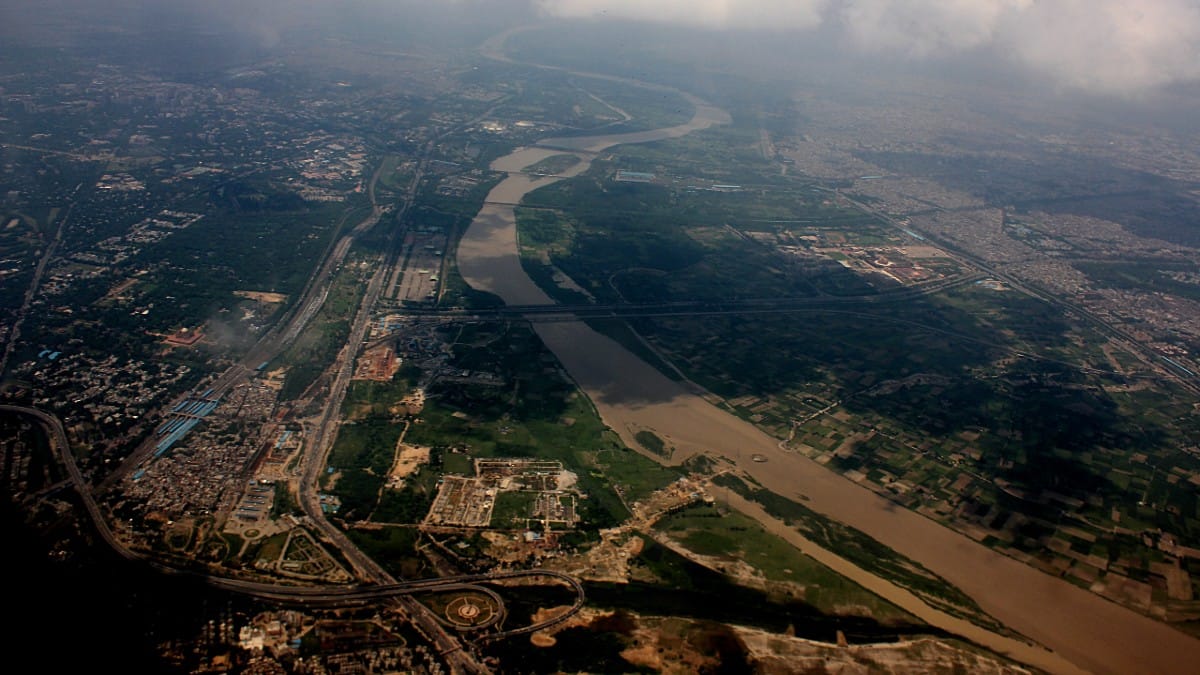
The Supreme Court reviewed a dispute about a large Art of Living festival held beside the Yamuna River in 2016.
The NGT had said the festival organisers were responsible for damaging the floodplain.
The Supreme Court said the land was already damaged or in poor condition before the event.
It also said the evidence did not clearly show that the festival caused new damage.
The Court found problems with some expert reports, photographs and satellite imagery.
It also questioned a large estimate for restoring the area.
The organisers will get back the ₹5 crore they had deposited.
The Delhi Development Authority must still continue managing and rehabilitating the floodplains.

The Supreme Court set aside the NGT’s 2017 order holding Art of Living’s legal entity liable for damage to the Yamuna floodplains.
The Court said no clear, evidence-based link showed that the 2016 World Culture Festival caused fresh damage to the site.
It questioned inconsistent expert reports, unclear photographs, unverified imagery and the disputed ₹100–120 crore restoration estimate.
The Court rejected applying no-fault liability and the polluter-pays principle because actual damage attributable to the organisers was not established.
The DDA must refund the ₹5 crore deposit within four weeks and remains responsible for floodplain rehabilitation, although the Court did not approve its event permission.
- Who
- The Supreme Court, the National Green Tribunal, Vyakti Vikas Kendra India, the Art of Living Foundation, the Delhi Development Authority and environmental activist Manoj Misra were involved.
- What
- The Supreme Court overturned the NGT’s environmental compensation order against the organisers of the 2016 World Culture Festival and ordered a refund of ₹5 crore.
- Where
- The event took place on about 25 hectares of the Yamuna floodplains in Delhi, New Delhi.
- When
- The festival was held from March 11 to 13, 2016; the NGT issued its final judgment on December 7, 2017; and the Supreme Court judgment was dated August 22, 2026.
- Why
- The Court found that the evidence did not establish fresh damage caused by the festival or a causal link between the organisers’ actions and the alleged degradation.
Supreme Court’s Findings
Earlier NGT and Organisers’ Dispute
Cause of damage
Supreme Court’s Findings
The Court held that the evidence did not establish fresh damage caused by the festival and noted that the site was already degraded or damaged.
Earlier NGT and Organisers’ Dispute
The NGT concluded that the festival caused significant damage to the floodplains and wetlands; the organisers argued that the site was already degraded.
Expert evidence
Supreme Court’s Findings
The Court found shortcomings in the reports, including inconsistent conclusions, unclear photographs and reliance on a single 2015 Google Earth image without adequately testing it against other evidence.
Earlier NGT and Organisers’ Dispute
The NGT relied on the expert committee’s reports, including a post-event report describing the floodplains as severely damaged. The organisers challenged the reports as inconsistent and unscientific.
Environmental liability
Supreme Court’s Findings
The Court rejected no-fault liability and the polluter-pays principle because actual degradation attributable to the organisers was not proved; it said the State retains responsibility for public-resource rehabilitation.
Earlier NGT and Organisers’ Dispute
The NGT applied no-fault liability, directed that the ₹5 crore deposit be used for restoration and allowed the DDA to recover additional costs if necessary.
DDA’s event permission
Supreme Court’s Findings
The Court said its ruling did not approve the DDA’s decision to permit an event on an active floodplain and left the authority’s broader duties intact.
Earlier NGT and Organisers’ Dispute
The event proceeded after the NGT’s interim order permitted it subject to the ₹5 crore deposit; the legality of the DDA’s permission was not decided in this appeal.
Key facts
- Appellant
- Vyakti Vikas Kendra India, the legal entity associated with the Art of Living Foundation.
- Festival
- The World Culture Festival was held on the Yamuna floodplains from March 11 to 13, 2016.
- Initial deposit
- The NGT ordered the organisers to deposit ₹5 crore as environmental compensation two days before the event.
- Refund deadline
- The Delhi Development Authority must return the ₹5 crore within four weeks.
- Restoration estimate
- An early estimate put restoration costs at approximately ₹100–120 crore; the committee chairman described the figure as unscientific.
- Later rehabilitation plan
- A November 2016 report proposed a ₹42-crore rehabilitation plan over 10 years while stating that complete restoration was impossible.
- Continuing responsibility
- The DDA remains responsible for managing, rehabilitating and ecologically restoring the Yamuna floodplains.
Quotes
Supreme Court bench of Justices S.C. Sharma and N.K. Singh
The two-judge Supreme Court bench that reviewed the NGT’s compensation order.
“In our view, the Tribunal fell in error in equating the distinct concepts of rehabilitation and restoration. Going by its plain meaning in the context of environmental jurisprudence, rehabilitation refers to complete reparation of the affected area in a manner that it becomes fully functional and provides optimum ecological services.”
 theprint.in
“In a judicial proceeding, it was expected of the Tribunal to have tested the report and solitary satellite image with other contemporaneous evidence on record before giving a stamp of judicial approval to the opinion of the committee.”
theprint.in
Sources
Related news

Supreme Court Overturns NGT Floodplain Ruling, Orders Refund

Supreme Court Overturns NGT Order Against Art of Living

NGT Dismisses Plea Against Vasai School Over Environmental Allegations
Kerala High Court Rejects ₹20,000 Compensation Cap

NGT orders action over Bhopal tree damage, sewage, wetlands
PUCL Urges CJI Action Over Rajasthan High Court Allegations

Supreme Court Questions IPS Deputation for CAPF Leadership Positions

Supreme Court Quashes 20-Year Conviction, Reaffirms Juvenile Legal Protections

Two Years After RG Kar Doctor's Rape-Murder, Case Remains Unresolved

ED widens Chhattisgarh probes with two arrests and searches