

Archive · 2 Oct 2026
Dome Homes Offer Potential Resilience, But Require Rigorous Engineering
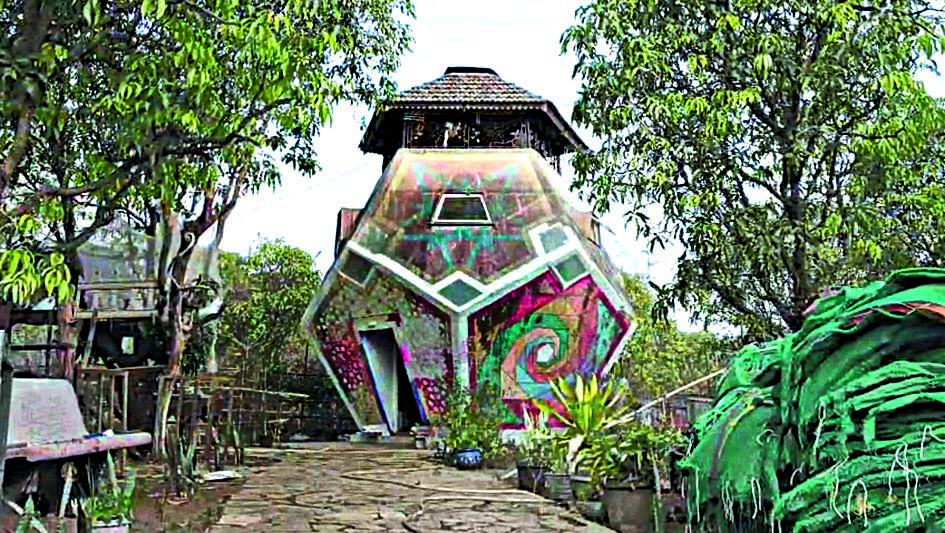
Dome homes have rounded shapes that may help them handle strong winds.
Their curved surfaces let wind move around them instead of hitting flat walls.
Some domes use many connected triangles, while others use one continuous shell.
However, a dome is not automatically safe from every disaster.
Earthquake safety depends on good engineering, strong connections and suitable foundations.
Flood safety also depends on location, drainage, doors, electrical systems and the height of the living space.
The materials used to build a dome also affect whether it is environmentally friendly.
Experts say domes could become useful resilient homes, but they need testing, standards, affordability and community acceptance.

Curved dome surfaces can distribute wind forces more effectively than conventional flat walls and roofs.
Geodesic domes use interconnected triangles, while monolithic domes rely on continuous structural shells.
Dome shape alone does not make homes earthquake-proof or flood-proof; foundations, connections, drainage and engineering remain crucial.
Sustainability depends on materials and construction methods, since concrete domes can still have substantial environmental costs.
In India, domes are increasingly used in experimental homes but remain more common in resorts and wellness spaces.
- Who
- Architectural and disaster-resilience experts, including Sukant Panigrahy, Prashant Dupare and Abhishek Lal, discuss dome housing.
- What
- The article examines whether dome homes could provide more resilient housing during cyclones, hurricanes, floods, earthquakes and heatwaves.
- When
- No specific publication date is provided.
- Where
- The discussion focuses particularly on the use of dome structures in India.
- Why
- Dome homes are being considered as potential alternatives to conventional housing because their curved forms may distribute forces more effectively, though broader engineering and social factors remain important.
Dome Housing Advocates
Engineering And Resilience Cautions
Disaster protection
Dome Housing Advocates
Curved, aerodynamic forms can distribute wind forces and may offer advantages in cyclone- and storm-prone areas.
Engineering And Resilience Cautions
A dome is not automatically earthquake-proof or flood-proof; safety depends on detailed engineering, foundations, drainage and site selection.
Sustainability
Dome Housing Advocates
Low-material earth or masonry shells may provide a more environmentally conscious construction approach.
Engineering And Resilience Cautions
A material-intensive concrete dome can still carry significant environmental costs, so the dome shape itself does not establish sustainability.
Housing potential
Dome Housing Advocates
Well-designed domes can create comfortable, expressive and memorable homes and are gradually appearing in India.
Engineering And Resilience Cautions
Most Indian examples remain in hospitality, wellness and experimental settings, and broader adoption requires testing, standardisation, affordability and social acceptance.
- Dome types
- The article identifies geodesic domes, made from interconnected triangular frames, and monolithic domes, formed as continuous shells.
- Wind performance
- Curved surfaces may allow wind to move around and over a dome rather than concentrating pressure on flat walls.
- Earthquake safety
- Safety depends on connections, foundations, openings, materials and engineering; the shape alone cannot guarantee protection.
- Flood resilience
- Site level, drainage, anchoring and the position of habitable floors are critical to flood performance.
- Sustainability
- Material choice matters; concrete domes are not automatically sustainable, while lower-material earth or masonry shells may reduce environmental impact.
- Current Indian use
- Domes are largely found in resorts, glamping sites, temporary event structures, meditation spaces and experimental architecture.
- Future requirement
- Experts say engineering validation, testing and standardisation are needed before domes become a serious disaster-response housing system.