

Archive · 23 Jul 2026
India's Solar Push Hits China Roadblock
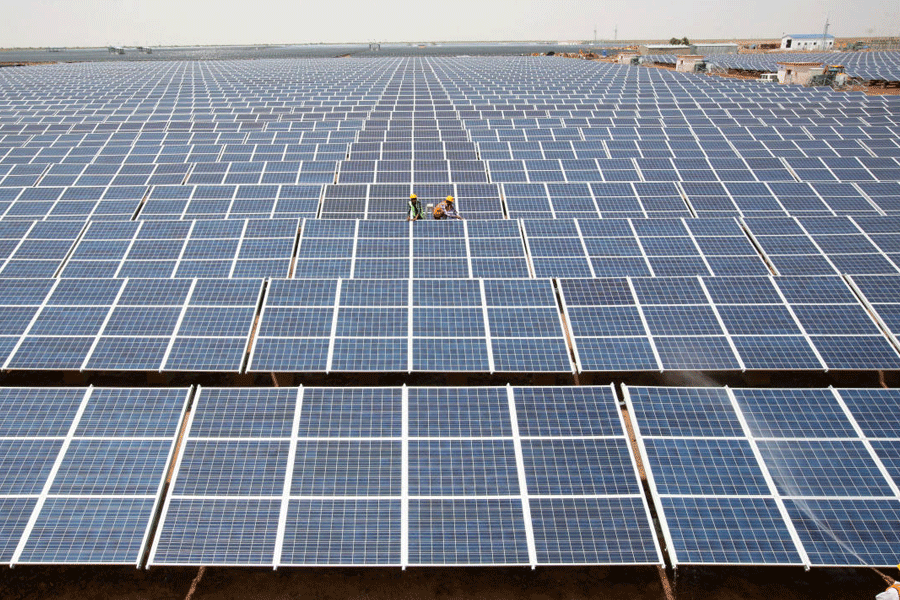
India is trying to make more solar panels at home instead of buying them from China.
But this is causing problems because Indian companies don't have enough parts to make the panels.
Many factories have to close or work less, which could mean fewer jobs and more expensive solar power.
The government wants to fix this in a few years, but it's not easy because China controls a lot of the technology and parts needed.
This could slow down India's plans to use more clean energy by 2030.

Indian solar panel makers face shortages of domestic solar cells due to new government rules.
Nearly a third of small- and medium-sized solar panel makers have halted production.
Domestic cell manufacturing capacity is insufficient, with effective capacity around 16-18 GW.
China controls 95% of India's solar cell imports and has curbed exports of technology and equipment.
The shortage threatens jobs, investments, and India's 2030 target to boost solar energy capacity.
- Who
- Indian solar panel manufacturers, Indian government, Chinese government
- What
- Shortage of domestic solar cells due to government regulations and Chinese export curbs
- When
- June 1, 2024 (implementation of new rules), with long-term implications
- Where
- India
- Why
- To boost domestic manufacturing and reduce reliance on Chinese imports, but facing supply chain and technological challenges
Government's Domestic Manufacturing Push
Industry's Supply Chain Challenges
Domestic Manufacturing Goals
Government's Domestic Manufacturing Push
The Indian government aims to boost domestic solar cell manufacturing to reduce reliance on Chinese imports and achieve energy independence.
Industry's Supply Chain Challenges
The industry faces significant challenges in scaling up domestic production quickly due to technology, capital, and supply chain constraints.
Impact on Jobs and Investment
Government's Domestic Manufacturing Push
The government expects adequate cell manufacturing capacity within six months, aiming to protect jobs and investments.
Industry's Supply Chain Challenges
Manufacturers report that bringing new cell manufacturing capacity online takes much longer than expected, threatening jobs and investments.
Cost Implications
Government's Domestic Manufacturing Push
The government believes that domestic manufacturing will eventually reduce costs and boost the solar industry.
Industry's Supply Chain Challenges
Currently, the cost of domestically made solar panels is nearly double those using Chinese cells, raising costs for power producers.
- Current Solar Capacity
- 162 GW
- Target Solar Capacity by 2030
- 292 GW
- Domestic Cell Manufacturing Capacity
- 16-18 GW (effective)
- Chinese Solar Cell Imports
- 95% of India's imports
- Job Impact
- 75,000 jobs at risk in standalone module makers
- Cost Increase for Power Producers
- 35% short-term increase in capital expenditure