Archive · 7 Nov 2025
Supreme Court Justices Scrutinize Trump's Tariff Authority

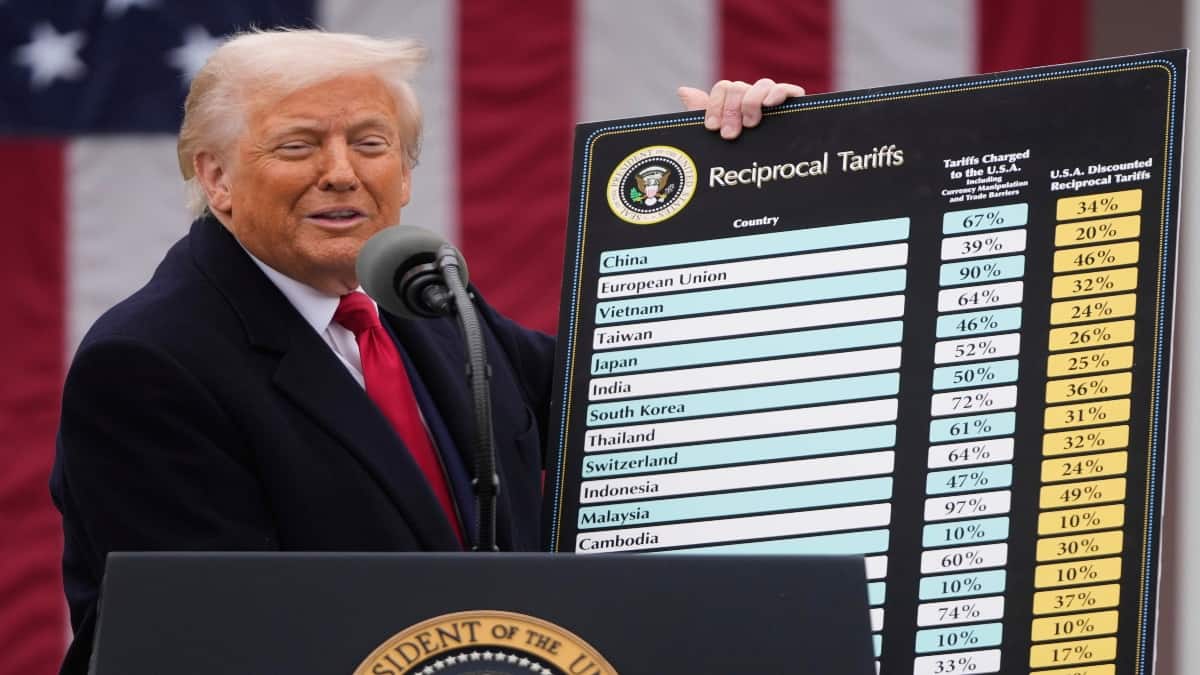
Imagine the President made a rule to tax imported goods, like charging extra money for toys coming from another country.
He used a special law from 1977 to do this.
But, when he went to the country's highest court, the judges asked if that old law really lets him do that.
They pointed out that the law doesn't actually say the word 'tax' or 'tariff' when it talks about controlling imports.
It just says the President can 'regulate' them.
The President's lawyers said that 'regulating' imports means he can put taxes on them.
However, the judges wondered if that's true, especially because no other President has used this law for tariffs before.
Some judges who usually follow the exact words of laws seemed unsure if this was allowed.
The court is now deciding if the President has this power or if Congress needs to be more specific when giving him authority.

Supreme Court justices questioned the Trump administration's authority to impose tariffs using the International Emergency Economic Powers Act (IEEPA) of 1977.
Justices noted that the IEEPA statute does not explicitly use the word 'tariffs' or similar terms like 'duties' or 'taxes.'
The administration argued that the power to 'regulate importation' under IEEPA allows for tariff imposition.
The court also considered whether Congress had sufficiently delegated tariff-imposing authority to the President.
Justices pointed out that no previous president has invoked IEEPA to impose tariffs.
- Who
- Lawyers representing the Trump administration, US Supreme Court justices (including Chief Justice John G. Roberts Jr. and Justice Amy Coney Barrett)
- What
- Oral arguments were heard concerning the legality and scope of President Trump's authority to impose tariffs using the International Emergency Economic Powers Act (IEEPA).
- When
- Wednesday (during oral arguments)
- Where
- The US Supreme Court
- Why
- To determine if the 1977 International Emergency Economic Powers Act (IEEPA) grants the President the authority to impose tariffs, particularly given that the law does not explicitly use the word 'tariffs.'
Trump Administration
Supreme Court Justices
Legality of IEEPA for Tariffs
Trump Administration
The administration argued that the International Emergency Economic Powers Act (IEEPA) of 1977, despite not explicitly using the word 'tariffs,' grants the president authority to 'regulate importation,' which justifies their expansive tariff program.
Supreme Court Justices
Justices questioned whether IEEPA authorizes tariffs if the law does not use the specific word 'tariffs' or synonyms like 'duties' or 'taxes.' They also noted that no other president has invoked this law to impose tariffs in its nearly 50-year history.
Congressional Delegation of Power
Trump Administration
The administration implicitly argues that Congress has delegated sufficient power to the president to impose tariffs through existing statutes like IEEPA.
Supreme Court Justices
Justices inquired about the specificity required for Congress to delegate such authority, probing if the language in the statute was sufficient to grant tariff-imposing power.
- Law in Question
- 1977 International Emergency Economic Powers Act (IEEPA)
- Key Legal Argument (Administration)
- IEEPA's authorization to 'regulate importation' grants the President power to impose tariffs.
- Key Judicial Concern
- IEEPA does not explicitly mention 'tariffs,' 'duties,' 'taxes,' or 'imposts.'
- Historical Precedent
- No previous president has used IEEPA to impose tariffs.
- Argument Duration
- 150 minutes
- Court Composition
- At least some Republican appointees expressed concerns.
Sources
Trump’s tariffs are a massive money grab. That’s why they are in trouble.
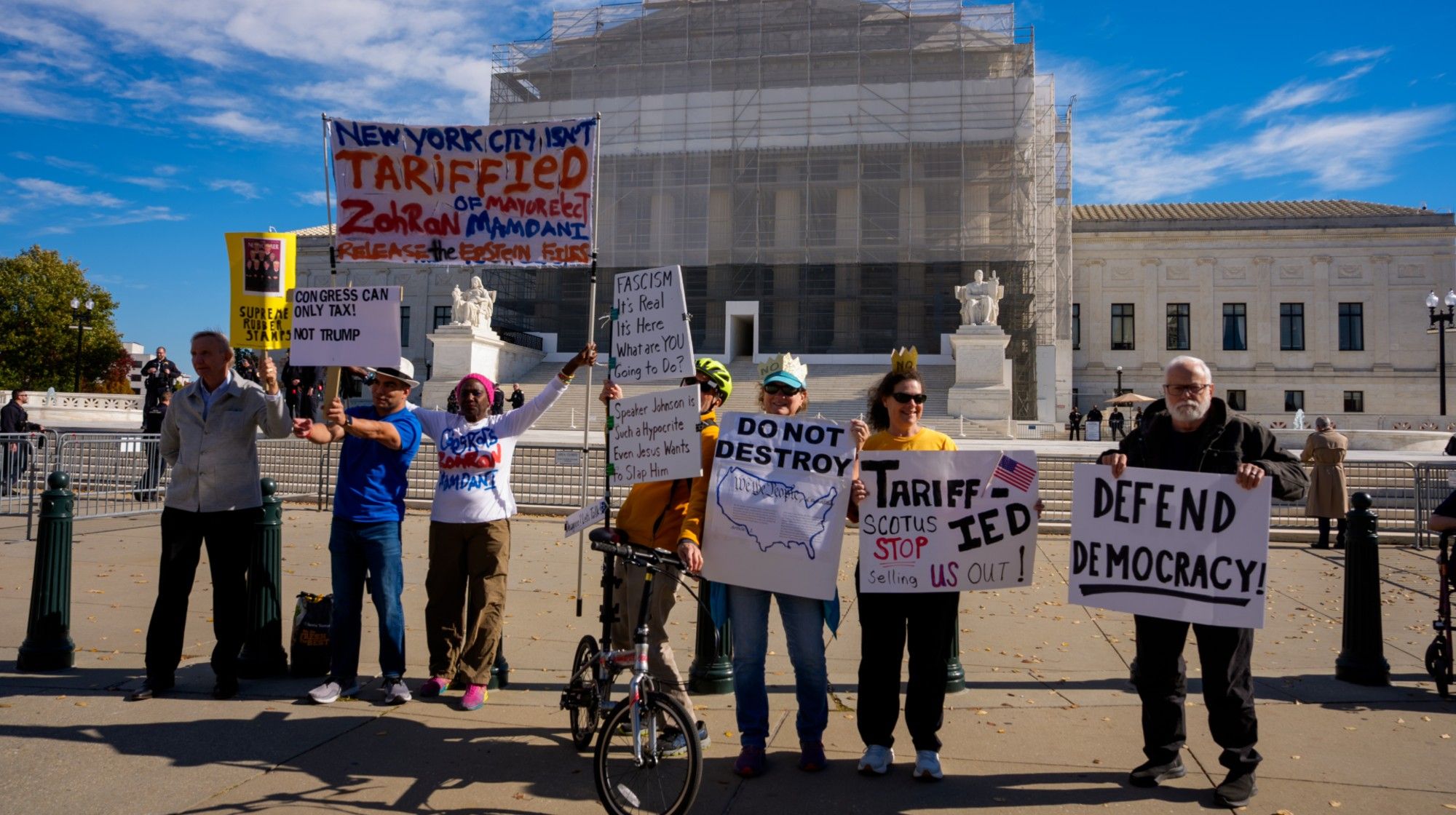
Trump tariffs face stiff scrutiny at Supreme Court
Trump Says Foreign Countries Don’t Want Him To Win Supreme Court Tariff Legality Case
Trump admits Americans ‘might be paying something’ under his tariff policy
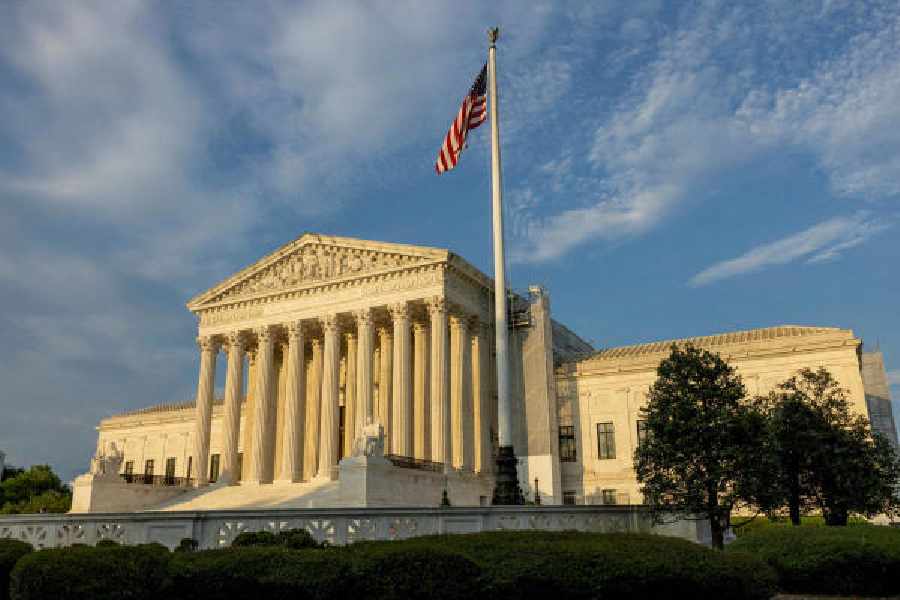
US Supreme Court questions Trump’s tariff powers, raising global trade uncertainty