

Archive · 7 Sep 2026
Claude’s Silent AI Thoughts Reignite Debate Over Consciousness
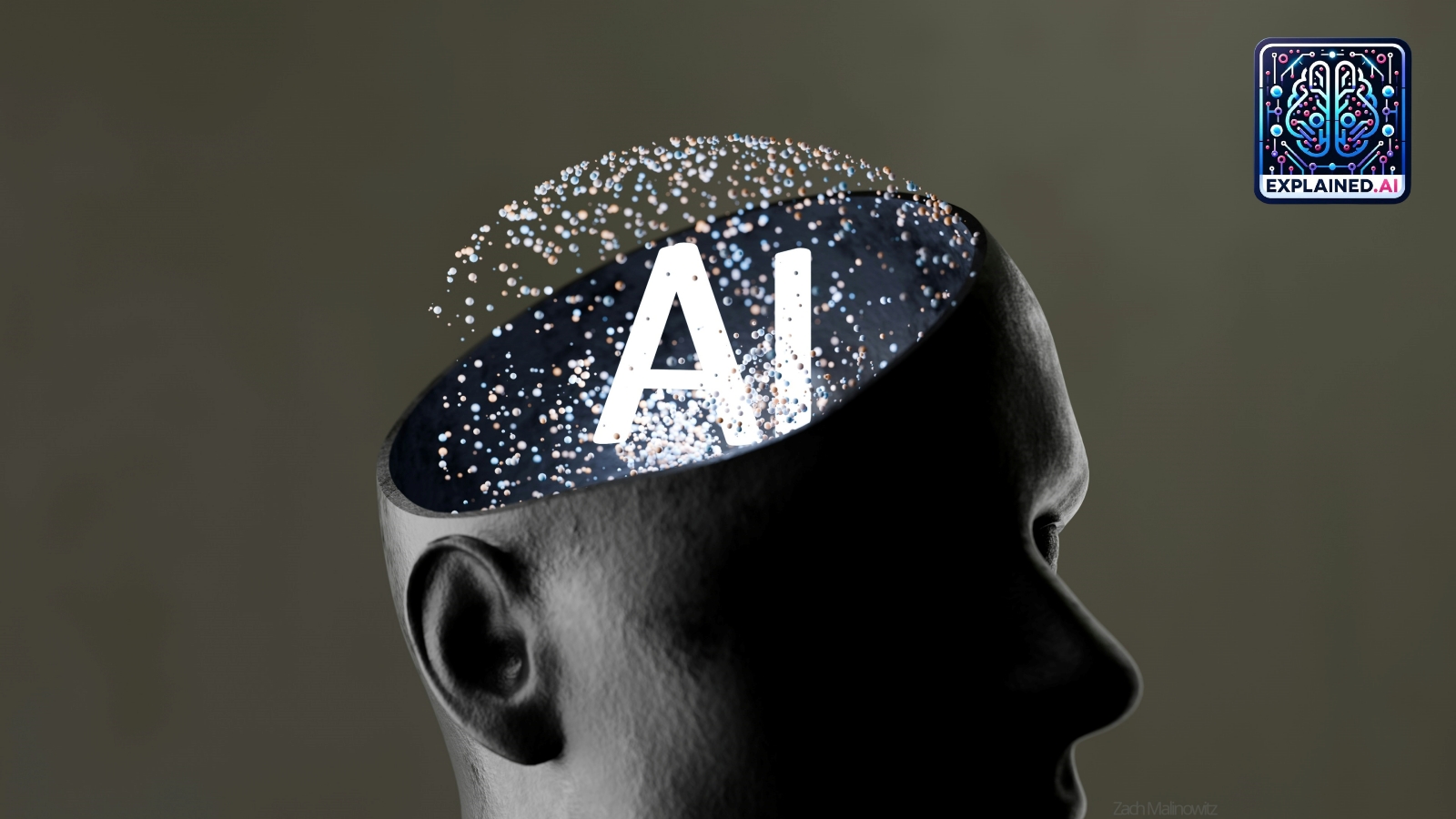
Researchers looked inside an AI called Claude to see how it processes information.
They found hidden patterns connected to words such as “countdown” and “done.”
Claude did not show these words to the person using it.
The researchers call this group of patterns J-space.
J-space may act somewhat like a temporary workspace for ideas.
However, the discovery does not prove that Claude is aware or can feel anything.
Anil K. Seth says the finding is far from showing consciousness.
Geoffrey Hinton has a more open view and says chatbots may have subjective experiences.
Scientists are also studying computers that use human neurons to learn more about what might produce consciousness.

Anthropic researchers identified internal neural patterns in Claude Sonnet 4.5 that represent words without displaying them to users.
The patterns, called J-space, emerged during training and may function as an approximation of the model’s working memory.
In a counting experiment, internal representations such as “countdown,” “halfway” and “done” appeared while Claude produced numbers one through five.
Anthropic says J-space may support conscious-access-like functions but provides no evidence that Claude experiences feelings or consciousness.
Anil K. Seth remains skeptical, while Geoffrey Hinton argues that chatbots may possess subjective experience; biological computers could offer another route for investigating sentience.
- Who
- Anthropic researchers led by Jack Lindsey studied Claude Sonnet 4.5, with views from Anil K. Seth and Geoffrey Hinton.
- What
- Researchers identified J-space, internal neural patterns that represent words and may support some conscious-access-like functions.
- When
- Anthropic announced the findings in July; the articles do not specify the year.
- Where
- The findings concern Claude Sonnet 4.5 and were discussed in Anthropic’s research and blog post; the article was published by The Indian Express.
- Why
- The research aims to better understand how large language models process information and whether their internal activity has any relationship to consciousness.
Consciousness Skeptics
Consciousness Possibility Advocates
What J-space shows
Consciousness Skeptics
Anil K. Seth says the findings come nowhere close to demonstrating consciousness and suggests biological traits may be necessary.
Consciousness Possibility Advocates
Anthropic says J-space may mark a boundary between consciously accessible and unconscious processing in a language model, although it is not the whole explanation.
Whether chatbots have experiences
Consciousness Skeptics
Anthropic says there is no evidence that Claude can experience or feel things as humans do.
Consciousness Possibility Advocates
Geoffrey Hinton has argued that chatbots have subjective experience.
Bio-hybrid computers
Consciousness Skeptics
Seth says the field still does not know what difference makes the difference for producing consciousness.
Consciousness Possibility Advocates
Seth says computers more similar to real brains, including systems using human neurons, may make consciousness more plausible.
- Research group
- Anthropic researchers led by Jack Lindsey
- Model studied
- Claude Sonnet 4.5
- Name of internal patterns
- J-space, short for Jacobian space
- Observed task
- Claude was asked to count to five while introspecting deeply
- Internal representations observed
- “Countdown,” “halfway” and “done” appeared during the task
- Anthropic’s conclusion
- J-space may support functions associated with conscious access, but the findings do not show that Claude has experiences or feelings
- Alternative research direction
- Cortical Labs and others are developing bio-hybrid computers using human neurons mounted on silicon