

Archive · 15 Aug 2026
How Polarisation and Hatred for the Other Drive Political Mobilisation
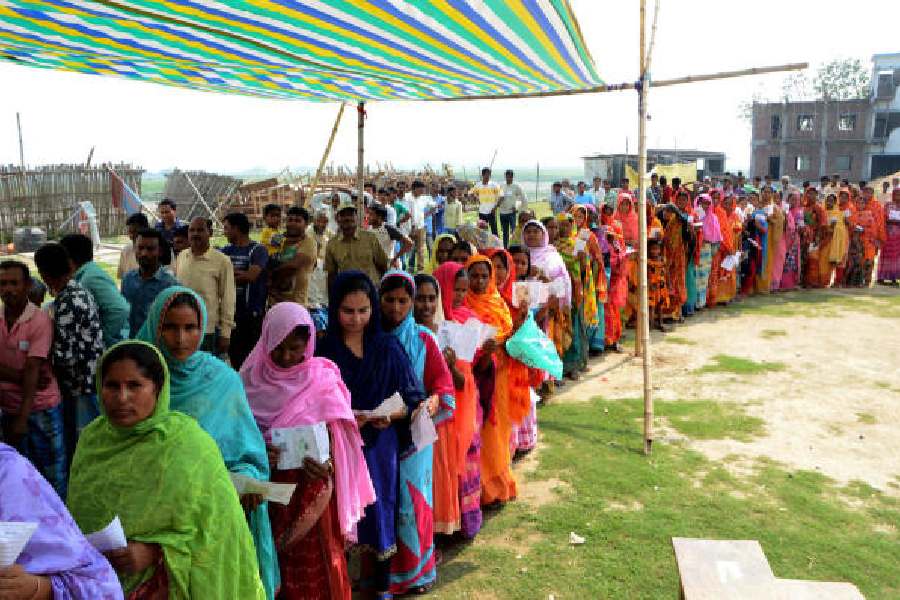
Voting is when people choose their leaders.
In many countries, fewer and fewer people are voting, which worries leaders.
But some countries are seeing more people vote than ever before.
This story says the reason may not be a good one.
People may be voting because they are angry at or scared of those who think differently from them.
When people dislike a group called 'the Other', they get excited to vote against them.
Angry voters can push up the number of people who vote.
For example, in the Indian state of West Bengal, many more people voted than before.
In New York City, the 2025 mayoral election had its highest voter turnout since 1969.
But voting because we hate others can hurt how people treat each other in a democracy.

Global voter turnout fell from 65.2% in 2008 to 55.5% in 2023, according to Reuters data cited in the article.
The article argues polarisation, driven by hatred of the 'Other', has become the most powerful engine of political mobilisation in modern democracies.
India's 2014 and 2019 general elections saw rising turnout linked to the Bharatiya Janata Party's political ascendancy and polarising rhetoric.
West Bengal's assembly election recorded a 92.7% turnout, surpassing the state's historical 81%-84% range.
The November 2025 New York City mayoral election, fuelled by Zohran Mamdani's 'government for labour, not lobbyists' campaign, saw its highest turnout since 1969.
- Who
- Analyst Aniba Junaid; author Ezra Klein, whose book 'Why We're Polarized' is discussed; the Bharatiya Janata Party in India; and New York City mayoral candidate Zohran Mamdani.
- What
- An analysis of how polarisation and hatred of the 'Other' have become the most powerful engine of political mobilisation, raising voter turnout while eroding democratic culture.
- When
- Global turnout data from 2008 to 2023; India's 2014 and 2019 general elections; the recent West Bengal assembly elections; and the November 2025 New York City mayoral election.
- Where
- Globally, with case studies in India (especially West Bengal), the United States (New York City), France, Poland, Japan and Switzerland.
- Why
- Because citizens increasingly participate not out of trust in democracy but out of fear and dislike of the opposing side, making hate a potent political motivator.
Polarisation Boosts Participation
Polarisation Corrodes Democracy
Motive for voting
Polarisation Boosts Participation
Rising turnout reflects a more engaged, participatory electorate and a live political debate.
Polarisation Corrodes Democracy
Citizens vote not out of trust in democracy but out of hatred and fear of losing their nation to the 'Other'.
Effect on democratic culture
Polarisation Boosts Participation
High turnout strengthens democratic legitimacy and civic involvement.
Polarisation Corrodes Democracy
Polarisation shrinks moral tolerance, seeks to delegitimise opponents socially and morally, and can reduce democracy to an illusory political template.
Voter character
Polarisation Boosts Participation
Not all electorates are victims of polarisation; some participate out of genuine civic duty and commitment to democratic beliefs.
Polarisation Corrodes Democracy
Given the persuasive nature of polarisation, even those not overtly polarised are still affected by it.
- Global voter turnout 2008
- 65.2%
- Global voter turnout 2023
- 55.5%
- West Bengal election turnout
- 92.7%
- West Bengal historical turnout range
- 81%-84%
- New York City mayoral turnout (Nov 2025)
- Highest in a mayoral race since 1969
- Book referenced
- Why We're Polarized by Ezra Klein
- Author
- Aniba Junaid (Assistant Professor, Adamas University; PhD scholar at IDSK)
- Data source
- Reuters