

Archive · 1 Aug 2025
Reviving Ancient Wheat: Indian Farmers Climate-Proof Future?
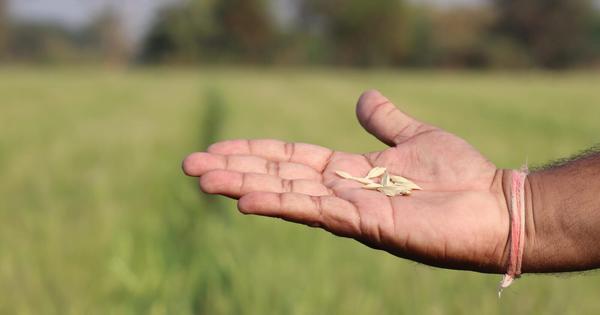
Imagine a special type of wheat called Khapli wheat, which farmers in India are starting to grow again.
It's an old grain that's good for the environment and people's health.
It's been around since ancient times.
Farmers are excited because it can handle tough weather and has lots of good stuff inside.
The challenge is that it takes more work to get the grains out of the wheat.
If they figure out easier ways to process it, more farmers might start growing it.

Farmers in Maharashtra's Jalgaon region are reviving Emmer wheat (Khapli gehu), an ancient grain.
Khapli wheat is valued for its climate resilience and health benefits.
The grain was one of the earliest cereals domesticated, dating back to the Neolithic period.
Khapli wheat cultivation is now estimated to be only 1% of all wheat grown in India.
Despite rising demand, processing challenges such as labor-intensive threshing remain a key bottleneck.
- Who
- Farmers, particularly in the Jalgaon district of Maharashtra, are reviving Emmer wheat.
- What
- Farmers in Maharashtra are reviving Emmer wheat, an ancient grain known as Khapli gehu.
- When
- Khapli wheat cultivation dates back to the Neolithic period.
- Where
- The grain is being revived in the Jalgaon region of Maharashtra, India.
- Why
- Farmers are recognizing its climate resilience, nutritional value, and potential for sustainable farming, as well as its ability to enrich the soil.
Challenges
Benefits
Processing Challenges
Challenges
Emmer wheat faces labor-intensive threshing which deters wider adoption.
Benefits
There is no opposing view in the provided articles, as the issue of processing is a well-known challenge in wider adoption.
- Local Name
- Khapli gehu
- Scientific Name
- Triticum dicoccon Schrank
- Primary Region
- Jalgaon, Maharashtra, India
- Average Rainfall in Jalgaon
- 690 mm annually
- Main Crops in Jalgaon
- Cotton and Banana
- Current Wheat Cultivation in India
- Approximately 1%
- Price
- Rs 80 per kg