

Archive · 27 May 2025
AI Satellites: Navigating a New Era of Space Law and Autonomy
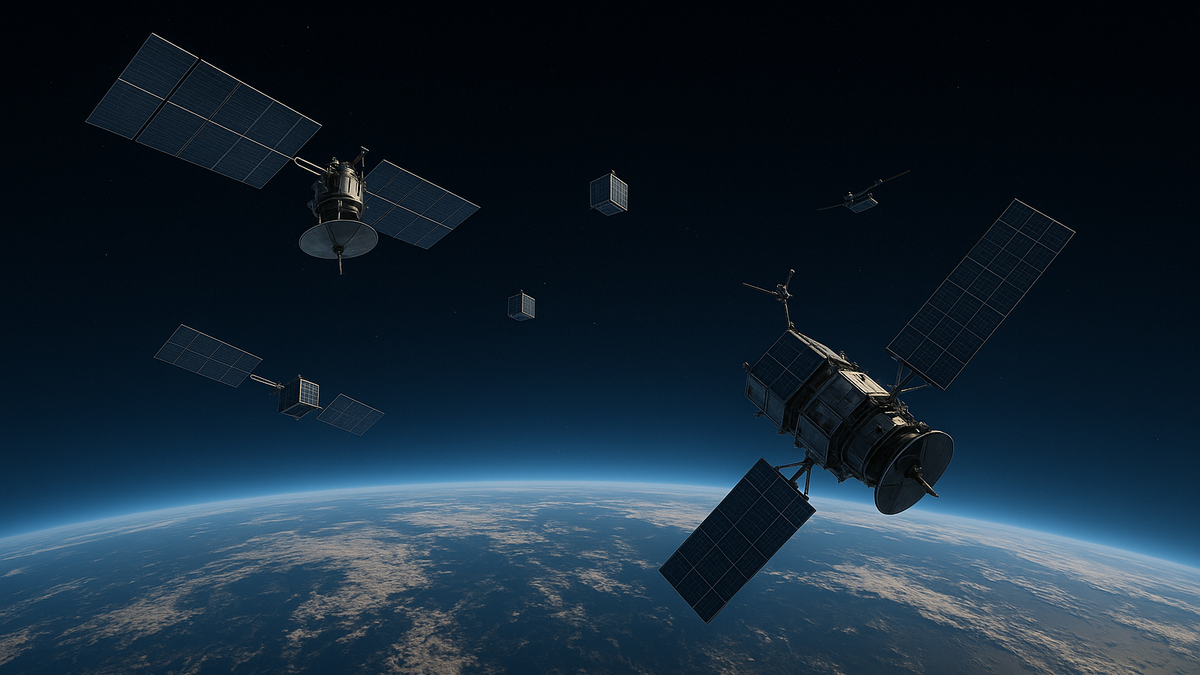
Imagine satellites in space that can think for themselves, like self-driving cars, making their own decisions.
This is happening now with AI.
But if one makes a mistake, like almost bumping into another satellite, who is responsible?
The current space laws, written long ago, don't have clear answers for AI.
Experts are figuring out new rules and guidelines.
They need to decide who pays if something goes wrong and how to make sure everyone is safe.
The goal is to keep space safe, prevent any conflicts, and allow the exciting new AI satellites to keep working and improving things for us on Earth.

AI-powered satellites are becoming more autonomous, enabling them to make decisions and perform tasks independently.
This autonomy presents challenges to existing space law, particularly regarding liability and responsibility in case of malfunctions or incidents.
The Outer Space Treaty of 1967 and the Liability Convention of 1972 were created before AI, and the current laws do not address AI autonomy.
International collaboration is needed to develop legal and technical solutions, including new governance frameworks and certification processes.
Ethical and geopolitical concerns arise due to AI's dual-use capabilities and the potential for autonomous weapons in space.
- Who
- Experts, space agencies, and private companies are developing autonomous AI satellites.
- What
- Autonomous satellites, powered by AI, are becoming increasingly capable of operating independently, raising legal and ethical concerns.
- When
- The transformation of satellites with AI is currently underway.
- Where
- In Low Earth Orbit and the legal/regulatory framework that governs it.
- Why
- To enhance satellite capabilities, streamline operations, and enable new applications, but this creates safety risks.
Accountability and Governance
Safety and Innovation
Regulations
Accountability and Governance
The current legal framework in space must be adapted or new legal principles must be introduced
Safety and Innovation
Develop new governance frameworks, develop new international certifications to test AI and update legal frameworks to facilitate innovation.
- AI-powered Satellites
- Satellites with AI that can analyze environment and make decisions
- Satellite Edge Computing
- Onboard intelligence
- Consequences of autonomy
- Unplanned evasive maneuvers, potential diplomatic protests
- Outer Space Treaty (OST) 1967
- Assigning responsibility in space activities
- Convention for International Liability 1972
- Liability for damage caused by space objects