

Archive · 23 Sep 2025
Mumbai's Vertical Growth: Slowest Urban Expansion in India
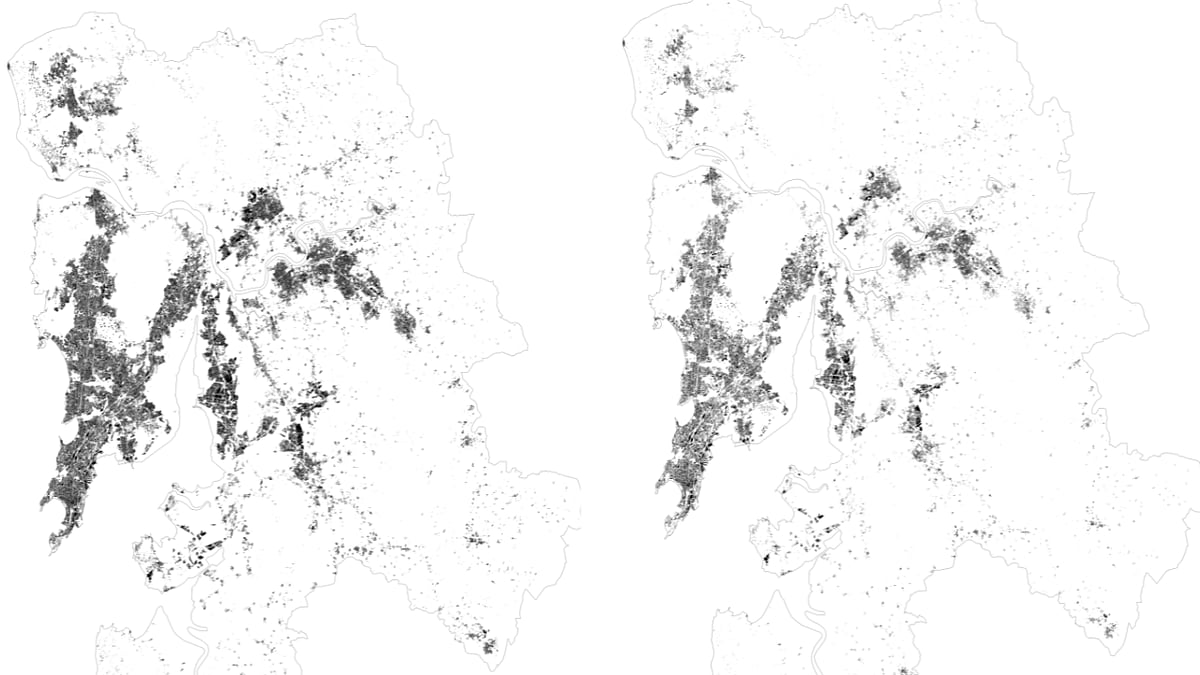
Imagine Mumbai growing upwards instead of outwards like other cities.
A recent study found that Mumbai has the slowest outward growth in India.
The sea and building redevelopment are contributing factors to building upwards.
Some urban planners favor vertical growth for efficient land use, while others have concerns.
Critics worry about infrastructure and amenities.
This contrasts with cities like Delhi and Bengaluru that are expanding horizontally.

Mumbai's urban growth is slowest among eight major Indian cities.
The study, by Square Yards, examined urban expansion.
Mumbai's population grew 56% while its urban area expanded by 43% from 1995 to 2025.
Mumbai's vertical growth is due to sea restrictions and redevelopment.
Experts debate the advantages and challenges of vertical vs. horizontal growth.
- Who
- Square Yards
- What
- A study analyzing urban expansion in major Indian cities revealed Mumbai's slower horizontal growth.
- When
- 1995 to 2025
- Where
- Mumbai and other major Indian cities.
- Why
- Mumbai's vertical growth is influenced by sea restrictions and building redevelopment.
Proponents of Vertical Growth
Critics of Vertical Growth
Land Use
Proponents of Vertical Growth
Vertical growth uses land more efficiently.
Critics of Vertical Growth
Vertical growth can strain infrastructure and amenities.
- Study Title
- 'Cities in Motion – Tracing 30 Years of Urban Expansion in Key Indian Cities'
- Study Conducted By
- Square Yards
- Study Period
- 1995-2025
- Mumbai's Population Growth (1995-2025)
- 56%
- Mumbai's Urban Area Growth (1995-2025)
- 43%